 Bird Supplies
 Bird Accessories
 Bird Cages & Carriers
 Bird Feeders
 Bird Nests & Beds
 Bird Toys
 Feeding Supplies
 Automatic Feeders
 Feeding Mats
 Pet Bowls
 Slow Feed Bowls
 Water Dispensers
 Grooming & Care
 Cleaning Tools
 Grooming Gloves
 Nail Clippers
 Pet Brushes
 Other
Other Pet Accessories
 Harnesses
 Leashes
 Tags
Tags Pet Apparel
 Cat Apparel
 Pet Costumes
 Pet Diapers
 Pet Life Jackets
 Pet Homes & Crates
 Cat Trees & Scratching Furniture
 Dog Crates
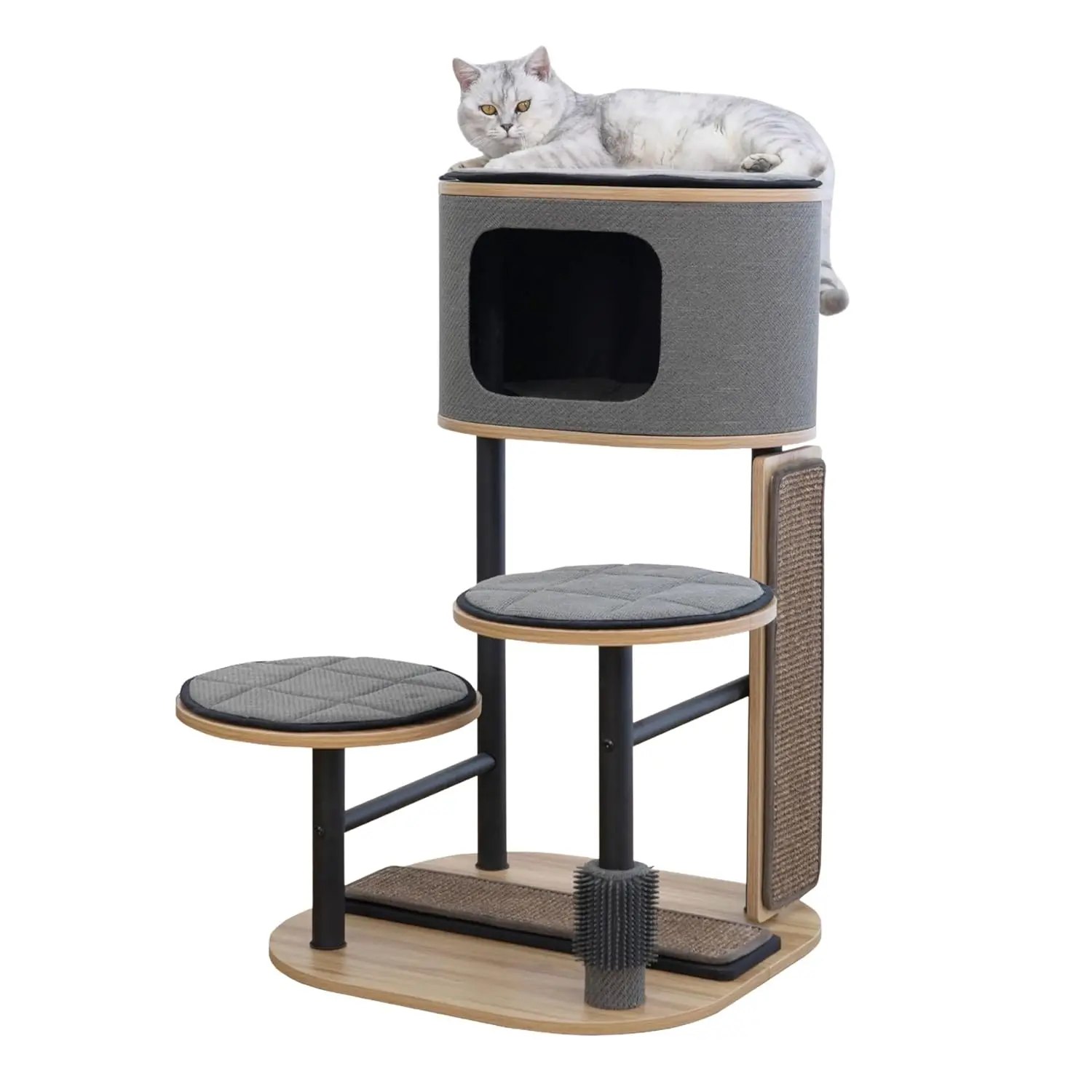 Indoor Pet Houses
 Pet Beds & Houses
 Pet Carriers
 Small Pet Habitats
 Pet Toys
 Cat Toys
 Dog Toys
 Interactive Toys
 Plush Toys
 Reptile Supplies
 Reptile Accessories
 Reptile Feeders & Bowls
 Reptile Habitats & Terrariums
 Reptile Heating & Lighting
 Reptile Hideouts & Decor
 Reptile Humidity & Climate
 Portable Water Bottles
 Travel Bags
How to Choose an Indoor Cat House With Litter Box Space for One or Multiple Cats
How to Choose an Indoor Cat House With Litter Box Space for One or Multiple Cats
An indoor cat house with litter box space works best when the enclosure is large enough for your cat count, ventilated well, and easy to clean. For most homes, the real decision is not whether the hidden setup looks nicer—it’s whether the layout gives your cat enough room to enter, turn, dig, and leave without the resting area feeling cramped or stuffy.
If you are comparing an indoor cat house with litter box storage against a separate litter corner, start with three filters: usable floor space, airflow, and cleaning access. A compact enclosure can work beautifully for one average-size cat in a small apartment, but a multi-cat setup needs significantly more room and often benefits from keeping the litter zone separate.
Quick answer: when an indoor cat house with litter box space makes sense
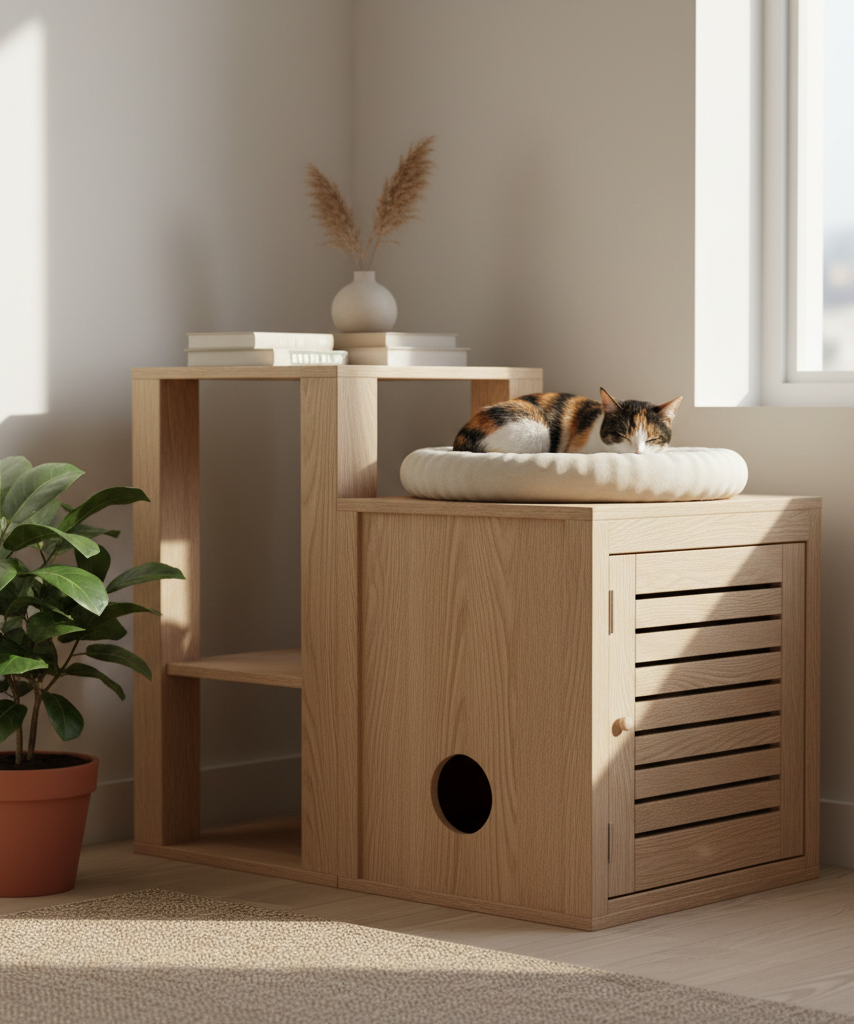
A well-designed indoor cat house is a smart choice if you want to hide the litter box, reduce visual clutter, and make a smaller room feel more organized. It tends to work best when:
- you have one cat or a calm bonded pair
- the enclosure is larger than the litter box by enough margin for easy entry and exit
- the unit has vents, slats, or airflow gaps on more than one side
- the top, side, or front opens wide enough for fast scooping and full litter changes
- the resting or lounging area is clearly separated from the toilet zone
It is usually a poor fit when the enclosure is undersized, fully sealed, awkward to open, or expected to serve too many cats at once.
Who benefits from a cat house with litter-box space
Small-apartment households
If you live in a studio, one-bedroom apartment, or shared home where every corner matters, a cat house enclosure can make the litter area feel intentional instead of messy. It hides the box, gives you one furniture-like footprint to work around, and often helps keep scattered litter more contained than an open tray sitting in plain view.
Owners who want cleaner-looking rooms
Some people do not mind an exposed litter box. Others absolutely do. If aesthetics matter in your living room, bedroom, hallway, or home office, an integrated unit can make the room feel calmer and less like a utility zone.
Cats that prefer privacy—but not stuffiness
Many cats like a bit of privacy while using the litter box, especially in busy homes. But privacy and poor airflow are not the same thing. The best cat house enclosure creates visual shelter while still letting moisture and odor escape.
Shoppers planning a furniture-style solution
If you like the idea of a hidden setup, something like this rattan-style hidden litter box enclosure shows why furniture-style designs appeal to apartment owners: they conceal the box, provide a cleaner visual footprint, and can blend in better than a basic plastic pan left in the open.
Single-cat vs multi-cat layout needs
Choosing an indoor cat house for multiple cats is not just a matter of buying a larger version of a single-cat unit. Multi-cat homes create more traffic, more odor, and more cleaning frequency, so the layout has to handle both comfort and repeated use.
For one cat
A single-cat setup can work well if the enclosure gives your cat enough room to move comfortably around the box. As a practical guide:
- leave extra side clearance so the cat does not brush the walls every time it turns
- make sure the entrance is not so narrow that a larger cat has to squeeze through
- keep a clear distinction between the litter compartment and any sleeping shelf or perch
- choose a box depth that contains scatter without making entry awkward
For one cat, the sweet spot is usually a roomy enclosure rather than the smallest cabinet you can find.
For two cats
A two-cat home is where many hidden setups start to fail. Even if both cats are friendly, they may not want to queue for a single enclosed toilet. If you want a furniture-style solution, it is often better to use one enclosed litter station plus one separate open or semi-enclosed box elsewhere.
Look for:
- wider side access or dual-entry design
- enough interior width that one cat does not feel trapped
- fast scoop access because odor builds up faster in shared boxes
- room to place a larger litter tray rather than a compact pan
For three or more cats
In most cases, a fully integrated indoor cat house is not the best primary toilet solution for three or more cats. You may still use one as part of your setup, but relying on a single enclosed cabinet can create stress, avoidance, and odor concentration. At that point, separate litter stations usually outperform a hidden all-in-one design.
Single-cat vs multi-cat comparison
| Need | One cat | Two cats | Three or more cats |
|---|---|---|---|
| Space pressure | Moderate | High | Very high |
| Odor buildup | Manageable | Faster | Fastest |
| Cleaning frequency | Daily scooping usually enough | More than once daily is often better | Multiple checks per day |
| Best setup | One roomy enclosure | One roomy enclosure plus backup box | Separate litter stations usually best |
| Risk of crowding | Low if sized correctly | Moderate to high | High |
Size, ventilation, and entry-point checklist
When evaluating an indoor cat house for large cats or multi-cat use, dimensions matter more than marketing language. A product can look spacious online and still feel tight once the litter box is inside.
Size checklist
Before buying, confirm:
- interior width and depth after doors, walls, and dividers are accounted for
- whether your chosen litter pan actually fits with extra turning space
- whether your cat can enter, pivot, and leave without backing out every time
- whether the top surface or upper nook is load-bearing if the house doubles as furniture
- whether a larger senior cat can step in comfortably
A good rule of thumb: do not shop by external dimensions alone. The usable interior footprint is what decides whether the setup feels functional or frustrating.
Ventilation checklist
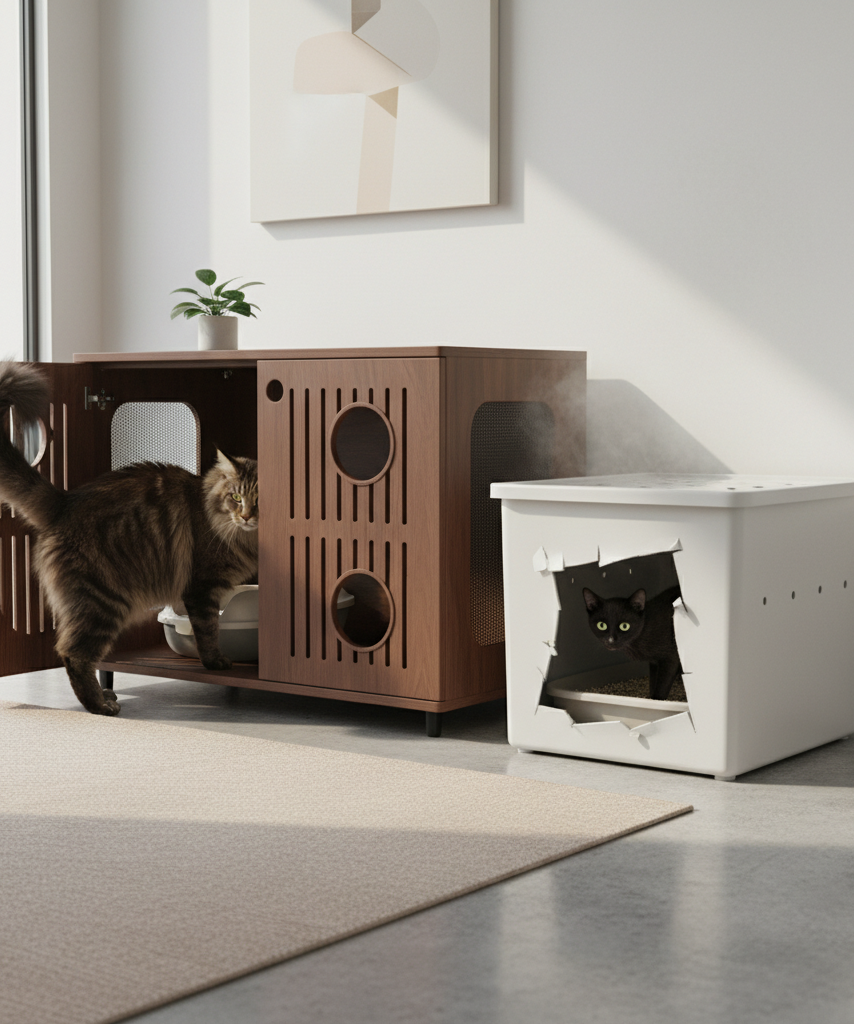
Ventilation is the detail buyers underestimate most. A hidden litter zone traps odor and moisture faster than an open box, so airflow has to be built into the design.
Look for:
- side vents, slats, cutouts, or woven panels
- some air exchange on more than one side if possible
- enough clearance around the litter box so walls are not pressed tightly against it
- materials that do not absorb odor easily
If a unit looks beautifully sealed but has minimal airflow, it may be attractive furniture and a poor litter station.
Entry-point checklist
The doorway matters more than people expect. Entry that is too small, too high, or sharply angled can discourage daily use.
Check whether the design offers:
- a low-stress step-in height for kittens, seniors, or less agile cats
- a doorway wide enough for broader shoulders and fluffy coats
- enough clearance so a nervous cat never feels cornered
- a path that avoids forcing the cat through a dark tunnel every time
Easy-clean materials and odor-control considerations
An indoor cat house only stays convenient if it is simple to maintain. If you dread opening it, you will clean it less often—and your cat will notice first.
Best material traits
The easiest units to live with tend to have:
- wipe-clean surfaces
- moisture-resistant finishes
- removable mats or liners
- smooth interiors without too many dust-catching seams
- doors or lids that stay open while you scoop
Wood-look finishes can be attractive, but they should still resist moisture. Woven or decorative exteriors are fine as long as the litter compartment itself is easy to wipe down.
Odor control without over-sealing
Good odor control comes from a balanced system:
- quality clumping litter
- frequent scooping
- enough airflow
- washable surfaces
- a layout that lets moisture escape instead of trapping it
What does not work well is relying on a tight sealed box and hoping the smell stays inside. That usually makes the inside less pleasant for the cat and stronger-smelling when you finally open it.
Cleaning routine reality check
Before buying, ask yourself:
- Can I reach every corner quickly?
- Can I remove the litter tray without scraping the frame?
- Can I do a full litter refresh without moving furniture?
- If my cat misses the edge occasionally, can I clean the panel easily?
If the answer is no, the setup may look smart but become annoying in real life.
When to choose a separate litter setup instead
A separate box is often the better choice when:
- you have multiple adult cats with strong territory preferences
- one cat blocks or stalks another near enclosed spaces
- your cat is very large and cabinet-style interiors feel tight
- your cat already dislikes covered litter boxes
- your cleaning routine is inconsistent and you need the most forgiving setup possible
- you need more than one litter station in different parts of the home
In those cases, an indoor cat house can still work as a bed, hideout, or storage piece—but not necessarily as the main toilet solution.
Selection checklist before you buy
Use this fast checklist to decide whether a specific model is a good fit:
FAQ
Do cats like enclosed houses with litter boxes?
Some do, especially cats that prefer privacy, but most still need airflow, enough interior room, and easy access. A cramped or stuffy design is far more likely to cause rejection than the idea of enclosure itself.
How much space does a multi-cat indoor cat house need?
More than most buyers expect. Two-cat homes usually need a wider enclosure with generous interior clearance, and many do best with one hidden box plus at least one additional separate litter station.
Is an indoor cat house with litter box better for small apartments?
Often yes, because it hides clutter and can make one corner of the home feel tidier. It is only better, though, if the enclosure still gives the cat enough room and does not make cleaning harder.
Final takeaway
The best indoor cat house with litter box space is not the prettiest one on the page—it is the one that stays comfortable for your cat and practical for you. For one cat in a small home, a well-ventilated, easy-clean enclosure can be a strong space-saving upgrade. For multiple cats, the smarter move is usually a larger layout with backup litter access rather than forcing every cat into one hidden compartment.