 Bird Supplies
 Bird Accessories
 Bird Cages & Carriers
 Bird Feeders
 Bird Nests & Beds
 Bird Toys
 Feeding Supplies
 Automatic Feeders
 Feeding Mats
 Pet Bowls
 Slow Feed Bowls
 Water Dispensers
 Grooming & Care
 Cleaning Tools
 Grooming Gloves
 Nail Clippers
 Pet Brushes
 Other
Other Pet Accessories
 Harnesses
 Leashes
 Tags
Tags Pet Apparel
 Cat Apparel
 Pet Costumes
 Pet Diapers
 Pet Life Jackets
 Pet Homes & Crates
 Cat Trees & Scratching Furniture
 Dog Crates
 Indoor Pet Houses
 Pet Beds & Houses
 Pet Carriers
 Small Pet Habitats
 Pet Toys
 Cat Toys
 Dog Toys
 Interactive Toys
 Plush Toys
 Reptile Supplies
 Reptile Accessories
 Reptile Feeders & Bowls
 Reptile Habitats & Terrariums
 Reptile Heating & Lighting
 Reptile Hideouts & Decor
 Reptile Humidity & Climate
 Portable Water Bottles
 Travel Bags
Dog Harness Size Chart Guide: How to Measure by Weight, Breed, and Chest Size
Dog Harness Size Chart Guide: How to Measure by Weight, Breed, and Chest Size
Getting the right dog harness size starts with chest girth, not a guess based on breed or weight alone. Measure the widest part of your dog’s chest first, then use a dog harness size chart, body weight, and breed build as supporting checks before confirming the final fit with the two-finger test.
A good dog harness size guide helps you avoid the two most common buying mistakes: choosing a harness that slides around because it is too loose, or picking one that pinches behind the legs because it is too tight. If you want a snug fit that stays secure without restricting movement, measurements matter more than assumptions.
Quick Size Chart Guide
Use this chart as a starting point, then compare it to the brand’s own size chart before you buy.
| Harness Size | Typical Chest Girth | Typical Weight Range | Common Breed Examples |
|---|---|---|---|
| XS | 11–15 in (28–38 cm) | 5–10 lb (2–4.5 kg) | Chihuahua, toy breeds, very small puppies |
| S | 15–20 in (38–51 cm) | 10–20 lb (4.5–9 kg) | Yorkshire Terrier, Maltese, Pomeranian, Mini Dachshund |
| M | 20–27 in (51–69 cm) | 20–45 lb (9–20 kg) | Beagle, Cocker Spaniel, French Bulldog, small Border Collie |
| L | 27–32 in (69–81 cm) | 45–70 lb (20–32 kg) | Labrador Retriever, Boxer, Standard Poodle |
| XL | 32–42 in (81–107 cm) | 70–110+ lb (32–50+ kg) | German Shepherd, Golden Retriever, Rottweiler, large mixed breeds |
How to Use the Chart Correctly
A dog harness size chart works best when you treat it as a filter, not a final answer.
- Chest girth is the main measurement because it tells you how much room the harness needs around the rib cage.
- Weight helps narrow the likely size if your dog falls between two measurements.
- Breed helps you judge body shape, because a stocky dog and a lean dog at the same weight may need different fits.
- Brand sizing can vary, so always compare your numbers to the product page before checking out.
Why Chest Measurement Matters Most
Chest girth matters most because that is the part of the body most harnesses wrap around and secure. Neck size, breed label, and body weight can be useful clues, but chest size is the number that most directly predicts whether a harness will sit correctly.
For example, a muscular French Bulldog and a slim Beagle can weigh a similar amount, but their chest shape is often very different. That relationship matters: weight can suggest a size range, but chest girth determines whether the harness actually fits the dog’s frame.
If you size by breed alone, you risk buying a harness that looks right on the label but shifts, rubs, or restricts shoulder movement in real use.
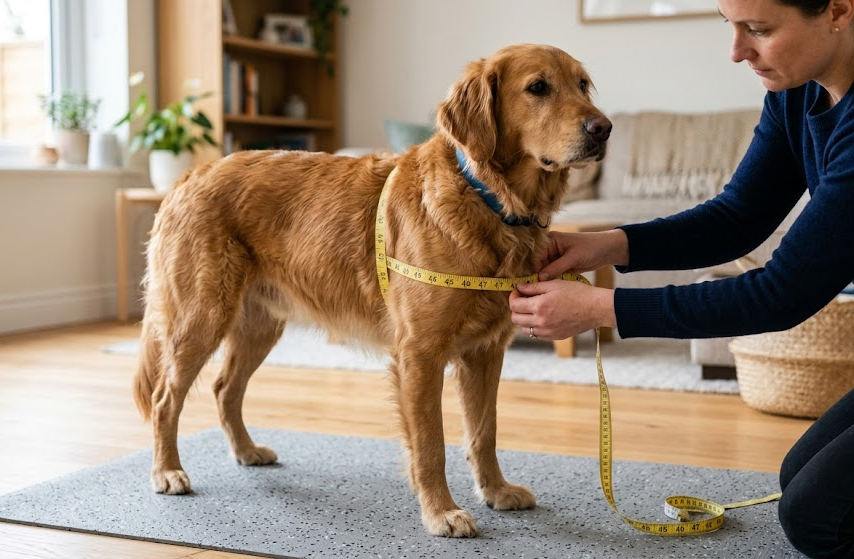
How to Measure a Dog for a Harness Step by Step
1. Let Your Dog Stand Naturally
Have your dog stand on all four paws in a relaxed posture. Do not measure while your dog is sitting, twisting, or lying down, because that can distort the chest measurement.
2. Find the Widest Part of the Chest
Wrap a soft measuring tape around the deepest part of the rib cage, usually just behind the front legs. This is your dog’s chest girth.
Tip: keep the tape level all the way around so it does not ride up toward the shoulders or drop too far back toward the belly.
3. Use the Snug-Fit Rule While Measuring
The tape should feel close to the body without compressing the coat or pressing into the dog. You want an accurate number, not an artificially tight one.
4. Record the Measurement and Round Carefully
Write down the number in inches or centimeters. If your dog is between measurements, do not automatically size down. Compare the number to the harness brand’s official size chart and look at the adjustability range.
5. Check Weight and Breed as Secondary Filters
After you have chest girth, look at your dog’s weight and general build. A broad-chested dog may need the larger option between two sizes, while a slim dog with lots of adjustment room may fit the smaller option better.
Dog Harness Size by Weight and Breed: Useful, but Secondary
Shoppers often search for a dog harness size chart by breed or a dog harness size by weight table because those are easy references. They are useful for narrowing the field, but they should never replace a real measurement.
When Weight Helps
Weight helps most when:
- you already know your dog’s chest girth and need a tie-breaker
- your dog is still growing and you want to estimate short-term room for adjustment
- a brand gives both weight and chest ranges on the product page
When Breed Helps
Breed helps most when body structure is a big factor. For example:
- Deep-chested breeds may need more room through the rib cage.
- Broad, muscular breeds often need more chest space even if they are not very tall.
- Long, slim breeds may fit a narrower shape despite moderate weight.
- Mixed breeds should almost always be sized by measurement first because body proportions vary so much.
Practical Example
If a dog measures 26 inches around the chest, that dog is usually in a medium or large range depending on the brand. If the dog also weighs 42 pounds and has a broad chest, moving up to the larger of the two options is often safer than choosing the tighter fit.
That is where a well-adjustable option can help. For dogs that need flexible chest room and a simple everyday fit, a breathable reflective dog chest harness can make the final fit check easier because the chest area is the main decision point rather than a rigid breed guess.
What a Properly Fitted Harness Should Look Like
A properly fitted dog harness should look secure, balanced, and comfortable during real movement.
Signs of a Good Fit
- The harness sits snugly without shifting side to side.
- You can do the two-finger test under the straps without forcing your fingers in.
- The chest panel lies flat instead of bunching or hanging loose.
- The harness does not dig into the armpits.
- Your dog can walk, sit, and turn naturally.
- The back attachment point stays centered instead of sliding off line.
Signs the Harness Is Too Tight
- Strap marks or flattened fur after a short walk
- Resistance when your dog moves forward
- Rubbing behind the front legs
- Limited shoulder motion
- Tension even when the harness is fully loosened
Signs the Harness Is Too Loose
- The harness rotates around the body
- The front chest section hangs away from the body
- A leg can start slipping through
- The dog backs up and nearly escapes
- The harness rides too far forward or too far back
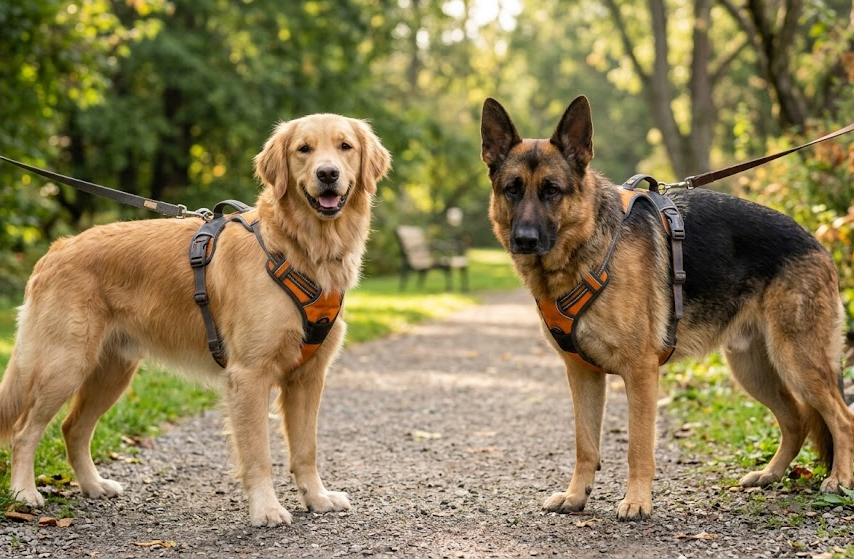
Common Harness Sizing Mistakes to Avoid
Buying by Breed Name Alone
A label that says a harness is ideal for Labradors, Beagles, or French Bulldogs is only a rough guideline. Dogs within the same breed can vary a lot in chest girth, coat thickness, and body condition.
Measuring Over Thick Clothing
If your dog wears sweaters or coats, measure the body first. Bulky clothing can make the number look larger than it really is and lead to a poor everyday fit.
Ignoring the Adjustment Range
A harness can technically match your dog’s chest size but still fit poorly if the adjustment points are already maxed out or almost fully tightened. A good fit leaves some room to fine-tune.
Forgetting Movement Matters
A harness that looks fine while your dog is standing still may shift once your dog starts walking, sniffing, pulling, or turning. Always check fit in motion before deciding it is correct.
If Your Dog Is Between Harness Sizes
When your dog falls between two harness sizes, choose based on build, coat, and adjustability—not just the label.
A simple rule:
- choose the smaller size if your dog is slim, short-coated, and near the lower end of the larger size range only by a small amount
- choose the larger size if your dog is broad-chested, fluffy, still growing, or near the upper end of the smaller size range
If the harness has minimal adjustment, sizing up is often safer than forcing a too-snug fit. If the harness has generous chest and neck adjustment, either option may work depending on your dog’s proportions.
Fit Checklist Before You Keep the Harness
Use this quick checklist after the harness arrives:
- Chest girth matches the product size chart range
- Harness sits flat on the chest
- Two-finger test works under key straps
- No rubbing behind the legs after a short walk
- Dog moves freely through the shoulders
- Harness stays centered during normal walking
- No slipping or backing out during gentle tension
If two or more of these points fail, the size or style is probably wrong even if the harness technically closes.
FAQ
How do you measure a dog for a harness?
Measure around the widest part of the chest, usually just behind the front legs, while your dog stands naturally. That chest girth number is the main measurement you use with a dog harness size chart.
Should I size a dog harness by weight or chest size?
Size by chest size first. Weight is a helpful secondary reference, but chest girth is the better predictor of real fit because it reflects the dog’s actual body shape.
What if my dog is between harness sizes?
If your dog is between sizes, compare body build and adjustment range. Broad-chested, fluffy, or growing dogs usually do better with the larger size, while slim dogs may fit the smaller option if there is still enough room for a snug fit.
Summary Takeaway
The best way to size a dog harness is simple: measure chest girth first, use the size chart second, and use breed plus weight only as supporting clues. That order gives you a better chance of getting a secure, comfortable harness on the first try and avoiding the guesswork that leads to returns.