 Bird Supplies
 Bird Accessories
 Bird Cages & Carriers
 Bird Feeders
 Bird Nests & Beds
 Bird Toys
 Feeding Supplies
 Automatic Feeders
 Feeding Mats
 Pet Bowls
 Slow Feed Bowls
 Water Dispensers
 Grooming & Care
 Cleaning Tools
 Grooming Gloves
 Nail Clippers
 Pet Brushes
 Other
Other Pet Accessories
 Harnesses
 Leashes
 Tags
Tags Pet Apparel
 Cat Apparel
 Pet Costumes
 Pet Diapers
 Pet Life Jackets
 Pet Homes & Crates
 Cat Trees & Scratching Furniture
 Dog Crates
 Indoor Pet Houses
 Pet Beds & Houses
 Pet Carriers
 Small Pet Habitats
 Pet Toys
 Cat Toys
 Dog Toys
 Interactive Toys
 Plush Toys
 Reptile Supplies
 Reptile Accessories
 Reptile Feeders & Bowls
 Reptile Habitats & Terrariums
 Reptile Heating & Lighting
 Reptile Hideouts & Decor
 Reptile Humidity & Climate
 Portable Water Bottles
 Travel Bags
Are Dog Car Seats Safe? What to Check Before You Buy One
Are Dog Car Seats Safe? What to Check Before You Buy One
If you are asking are dog car seats safe, the short answer is: they can improve comfort and reduce distraction, but they are only meaningfully safer when the seat is properly sized, securely attached to the vehicle, and used with a restraint system that limits dangerous movement in a crash. A plush booster alone is not crash protection.
For most shoppers, the safest way to think about a dog car seat is as part of a system: the seat structure, the attachment method, the tether length, the dog’s harness, and the seating position all matter together. That is why the best dog car seats for safety are not just soft and cozy—they are stable, well-anchored, appropriately sized, and realistic about their limits.
Quick Safety Checklist Before You Buy
Use this checklist before you add any dog car seat to your cart:
- Check the product’s stated dog weight range and do not “size up” casually.
- Look for clear attachment points to the vehicle seat or headrest, not vague strap language.
- Make sure the internal tether is short enough to reduce launch distance but not so short that it forces an awkward posture.
- Prefer pairing the seat with a well-fitted travel harness rather than clipping to a collar.
- Verify whether the seat is meant for front-seat use, back-seat use, or both.
- Look for a stable base, non-slip bottom, and side walls that will not collapse under your dog’s weight.
- Be skeptical of products advertised as “crash tested” unless the testing details are actually explained.
- Avoid oversized booster seats for tiny dogs and undersized seats for heavier dogs.
Do Dog Car Seats Improve Safety?
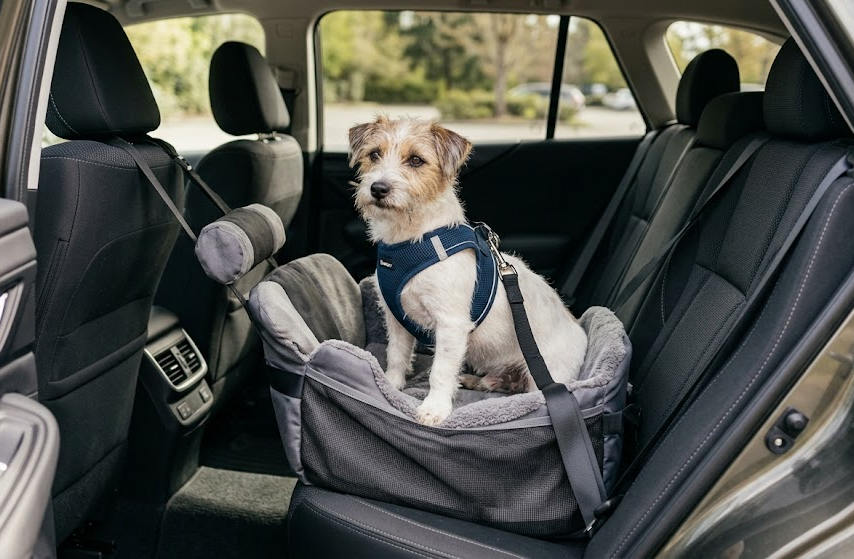
Dog car seats can improve safety in two important ways. First, they help keep a dog from roaming across the cabin, climbing into the driver’s lap, or blocking visibility. Second, they can create a more stable riding position for small dogs that become anxious or restless during travel.
That said, buyers should be careful not to confuse “better than no setup at all” with “fully protective in a collision.” Many pet car seats dogs owners buy are essentially elevated booster beds. They may help with positioning and comfort, but they do not automatically provide the same kind of force management that a high-quality restraint setup can.
A dog car seat is most useful when:
- your dog is small enough for the seat’s designed range
- the base stays stable through turns and braking
- the attachment straps keep the seat from shifting
- the tether reduces sudden movement without encouraging twisting
- the dog is clipped to a harness, not a neck collar
If those conditions are missing, the seat may still feel convenient, but its safety value drops fast.
What Safety Features Actually Matter?
When comparing best dog car seats for safety, focus less on marketing phrases and more on the hardware and geometry.
1. Vehicle attachment method
A safe seat should have a clear, repeatable way to anchor to the car. That may include:
- headrest straps
- seat-belt pass-throughs
- base anchors that tighten securely
- anti-slip bottom panels that help limit drift
If the product photos do not clearly show how the seat stays put, that is a warning sign. In a sudden stop, weak attachment points can let the whole seat slide, tip, or rotate.
2. Tether design and usable length
A safety tether is not automatically a good one. The right tether should be adjustable, sturdy, and short enough to keep your dog from being thrown far forward. A long tether can let a dog gain momentum before reaching the end of the strap.
Just as important, the clip should connect to a harness ring designed for restraint use, not to a collar. Neck loading in a crash or even a hard stop can be dangerous.
3. Stable walls and supportive base
Soft walls may look cozy, but if the structure collapses easily, the dog can roll or slump during normal driving. For dog car seats for small dogs, a supportive base and firm edges often matter more than extra padding.
4. Honest weight guidance
A seat rated “up to 25 lb” should not be treated as “probably okay” for a 30 lb dog. The dog’s weight changes how much force the stitching, anchor points, and seat shape must handle.
5. Materials that hold shape under motion
Good stitching, denser fill, reinforced seams, and durable connection points are all more meaningful than decorative finishes. Safety usually looks boring. That is fine.
Seat Type, Tether, and Attachment Points Explained
Not all dog travel seats behave the same way.
Booster-style dog car seats
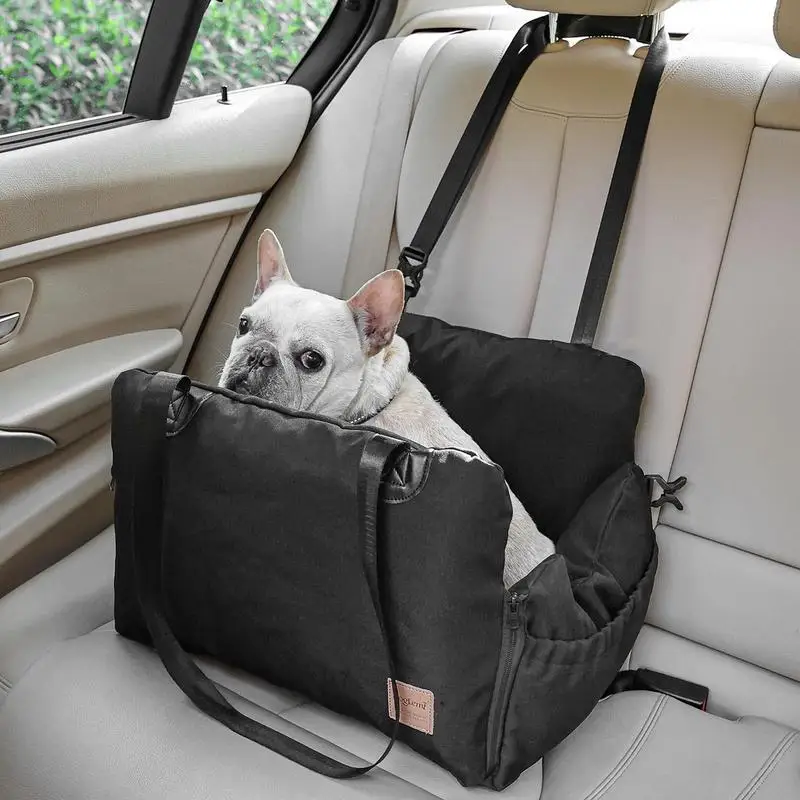
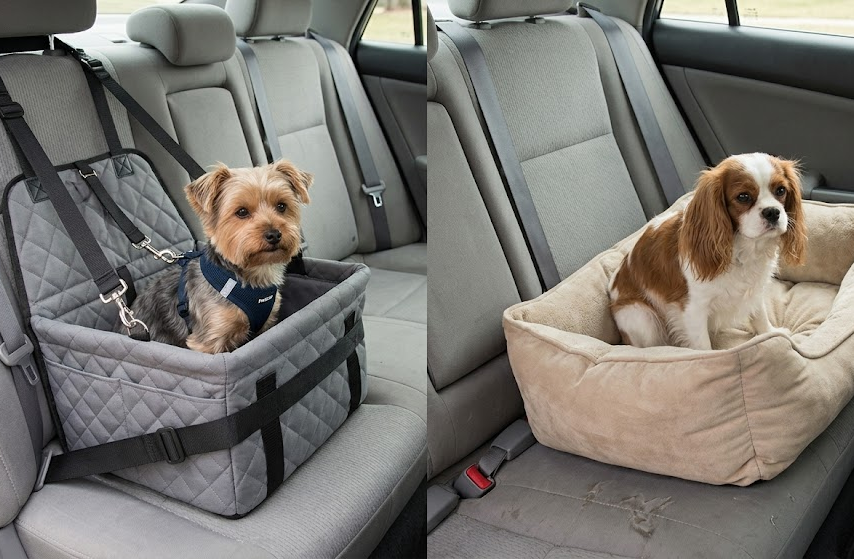
Booster seats are usually best for small dogs that want elevation and a defined riding space. They can help a nervous dog settle and help owners keep fur and movement more contained. A product like this portable dog car booster seat for small to medium dogs only makes sense if the fit is correct, the straps stay tight, and the internal tether is used with a harness rather than a collar.
What booster seats do well:
- improve ride stability for small dogs
- reduce driver distraction
- create a predictable spot for the dog to sit
- make short everyday trips easier
What booster seats do not guarantee:
- meaningful crash protection by themselves
- suitability for larger or strong-pulling dogs
- safe front-seat placement in every vehicle
Bucket or bed-style seats
These give the dog a nest-like place to lie down. They can be useful for calm small dogs on routine drives, but safety depends heavily on how well the bed is restrained to the vehicle. A plush bed with weak straps is still a weak setup.
Clip-in restraints without a seat
Sometimes a harness restraint is the better answer than a booster. That is especially true for medium or larger dogs, highly active dogs, or dogs that do not sit calmly in elevated seats.
Sizing by Dog Weight and Seat Position
Fit is one of the most overlooked parts of car seat for dog safety.
Match the seat to the real dog, not the ideal dog
Use your dog’s current weight and body shape. A dog that technically fits by weight but hangs over the seat edges can make the whole platform unstable. Likewise, a tiny dog in an oversized seat may slide around too much to benefit from the containment.
Rear seat is usually the safer default
For most dogs, the rear seat is the more conservative option. The front passenger seat may expose a dog to extra risk from airbags and dashboard impact zones, depending on the vehicle and setup. If a product is promoted mainly with front-seat photos, check whether the manufacturer actually gives safe installation guidance for that position.
Consider how your dog rides in real life
A calm dog that curls up quietly has different needs than a dog that braces, spins, or lunges toward windows. The more dynamic the dog’s movement, the more important restraint quality becomes.
When a Harness Restraint May Be the Better Option
If your dog is above the common booster-seat weight range, tends to move constantly, or dislikes being elevated, a restraint-based setup may be the smarter choice.
A harness restraint may be better when:
- your dog is medium to large
- your dog tries to jump between seats
- your dog can overpower soft booster walls
- you need better control of forward movement during sudden braking
- your vehicle seating layout does not support a stable booster installation
This is where many buyers get tripped up. They search for are dog car seats safe expecting a yes-or-no answer, but the real answer is use-case dependent. For some small dogs, a well-designed booster is a reasonable travel solution. For others, especially stronger dogs, a harness restraint gives a safer and more predictable outcome.
Red Flags Before Buying
Here are the most common warning signs when comparing safety tested dog car seats and similar listings:
Vague “tested” claims
If the listing says “safety tested” or “crash tested” but does not explain who tested it, how it was tested, or what the result means, treat that claim cautiously.
Overly long tethers
Long tethers may feel flexible, but they can increase movement in a sudden stop.
Weak strap layout
A single thin strap with unclear routing is not very reassuring. The more force a seat might face, the more important anchor quality becomes.
Soft, decorative construction with no structure
Comfort matters, but decorative padding should not be mistaken for support.
Weight-range mismatch
If reviews repeatedly mention sagging, tilting, or broken seams with dogs near the upper claimed limit, believe the pattern.
Front-seat-only marketing
A product shown only in front-seat use may be leaning harder on aesthetics than on safety guidance.
How to Choose the Best Dog Car Seat for Safety
If you want the best dog car seats for safety, buy with this order of priorities:
- Correct size and weight range
- Secure vehicle attachment
- Short, usable tether that clips to a harness
- Stable base and supportive shape
- Seating position that suits your car
- Ease of consistent installation
- Washability and storage as secondary conveniences
That order matters. Storage pockets and plush lining are nice. They are not what make a travel setup safer.
Summary Takeaway
So, are dog car seats safe? They can be safer than letting a dog ride loose, but only when the seat is stable, correctly sized, securely attached, and paired with the right restraint setup. For small dogs on routine trips, a well-installed booster seat can be a practical option. For larger or more active dogs, a harness-based restraint is often the better safety choice.
FAQ
Are dog car seats safer than letting a dog sit loose in the car?
Usually yes, because they can reduce roaming and distraction. But the safety gain depends on proper installation and restraint use.
Should a dog car seat clip to a collar?
No. A collar can put dangerous force on the neck during braking or a collision. A harness is the safer choice.
Are dog car seats only for small dogs?
Most booster-style seats are best suited to small dogs. As dog size and strength increase, harness-based restraint setups become more practical.
Is the front seat okay for a dog car seat?
The rear seat is usually the safer default. Front-seat use can introduce extra risk depending on airbag location and vehicle design.