 Bird Supplies
 Bird Accessories
 Bird Cages & Carriers
 Bird Feeders
 Bird Nests & Beds
 Bird Toys
 Feeding Supplies
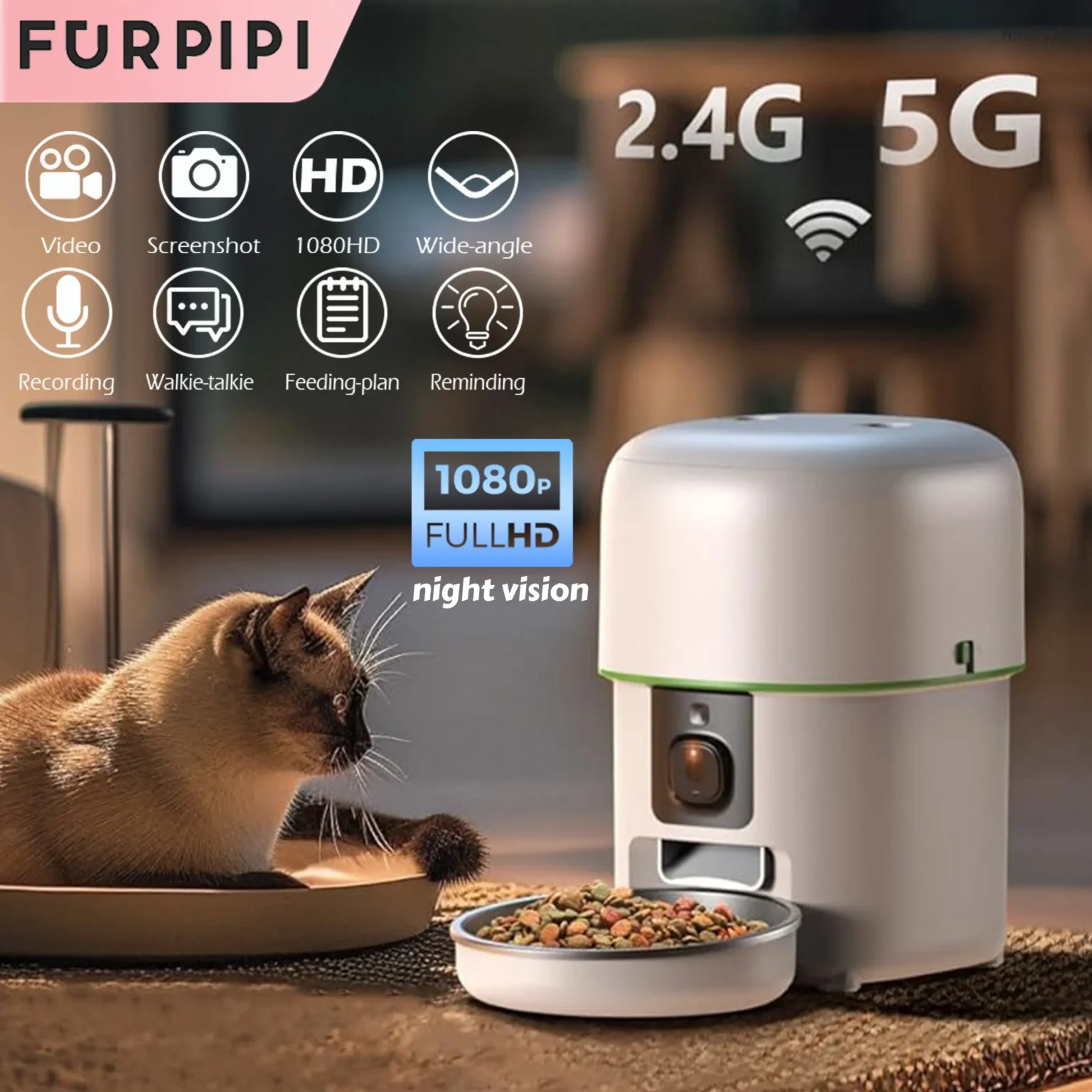 Automatic Feeders
 Feeding Mats
 Pet Bowls
 Slow Feed Bowls
 Water Dispensers
 Grooming & Care
 Cleaning Tools
 Grooming Gloves
 Nail Clippers
 Pet Brushes
 Other
Other Pet Accessories
 Harnesses
 Leashes
 Tags
Tags Pet Apparel
 Cat Apparel
 Pet Costumes
 Pet Diapers
 Pet Life Jackets
 Pet Homes & Crates
 Cat Trees & Scratching Furniture
 Dog Crates
 Indoor Pet Houses
 Pet Beds & Houses
 Pet Carriers
 Small Pet Habitats
 Pet Toys
 Cat Toys
 Dog Toys
 Interactive Toys
 Plush Toys
 Reptile Supplies
 Reptile Accessories
 Reptile Feeders & Bowls
 Reptile Habitats & Terrariums
 Reptile Heating & Lighting
 Reptile Hideouts & Decor
 Reptile Humidity & Climate
 Portable Water Bottles
 Travel Bags
Is an Automatic Wet Food Feeder Worth It for Cats? When Refrigerated Options Make Sense
Is an Automatic Wet Food Feeder Worth It for Cats? When Refrigerated Options Make Sense
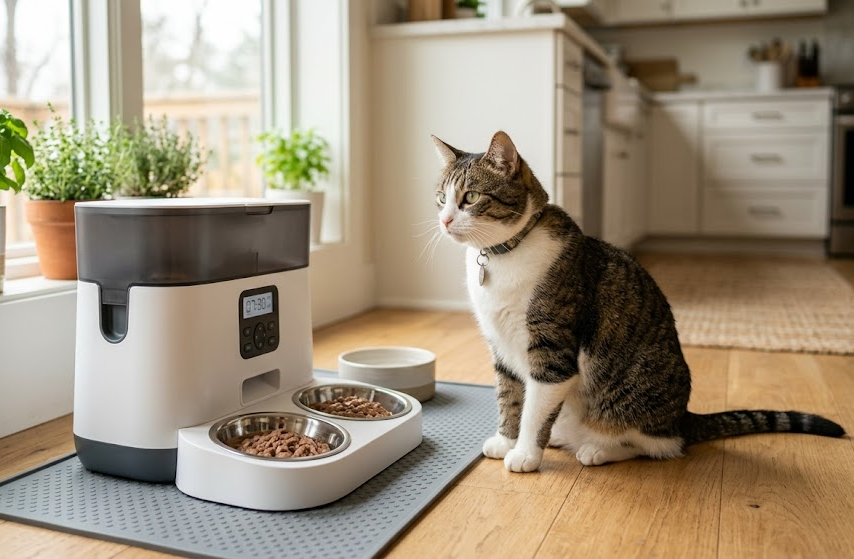
An automatic wet food feeder is worth it mainly for cats that need timed wet meals, and refrigerated or cooling models make the most sense when food will sit out longer than standard safe room-temperature windows. If your cat eats quickly, needs portioned wet meals while you are away, or does better with scheduled feeding, an automatic cat feeder wet food setup can solve a real problem. If you mostly feed one fresh meal at home and can serve it on time, it may be an expensive extra rather than a must-have.
The key is matching the feeder to the reason you want one. Wet food is less forgiving than dry kibble, so convenience, food safety, cleanup, and meal timing matter more than flashy features. That is why the real question is not just whether an automatic pet feeder wet food model exists. It is whether your cat's schedule and your routine justify the trade-offs.
Quick answer: when a wet food feeder is actually worth buying
A wet food feeder for cats is usually worth buying when:
- your cat needs a meal while you are at work or asleep
- you are trying to split food into smaller scheduled portions
- your cat wakes you early for breakfast and does better with consistent timing
- medication, weight management, or multi-cat feeding makes meal timing important
- you need a short-delay solution for wet food instead of an all-day dry feeder
It is usually not worth buying when:
- you only need to delay a meal by a short time once in a while
- your cat already eats comfortably on a simple manual schedule
- you want food to stay fresh for many hours without cooling or cleanup effort
- you are expecting a wet-food feeder to work like a large-capacity dry-food hopper
Who should consider an automatic wet food feeder
Best fit: cats that need timed wet meals
Some cats really do benefit from automation. If your cat gets wet food for digestive comfort, hydration support, appetite management, or preference, a feeder can make the schedule more consistent without forcing you to be home for every meal.
This is especially true for:
- early-morning cats that demand breakfast before you wake up
- cats that do better with two to four smaller meals rather than one large serving
- homes where work schedules shift from day to day
- owners managing calories more carefully than free-feeding allows
- cats transitioning away from constant dry-food grazing
In these situations, the value is not just convenience. It is consistency. A cat that expects wet meals on time often handles the day better when timing is predictable.
Weak fit: cats whose routine is already simple
If you are home for meals anyway and your cat eats well on a normal schedule, a feeder may not add much. Wet-food automation makes the most sense when timing friction is a real problem, not when it is solving a problem that barely exists.
That is why many buyers end up happiest when they buy for a clear use case instead of for novelty. Wet food feeders are more niche than dry hoppers, and that is fine. They just need the right job.
Scenario matrix: when the purchase makes sense
Strong buy scenario
Buy one if your cat needs a reliably timed wet meal and you cannot always be there to serve it. This is the clearest case where the feeder pays for itself in routine, sleep, and fewer missed meals.
Maybe scenario
Consider it if you only need occasional delay feeding, like serving lunch while you are out for a few hours. In that case, a simple single- or dual-compartment feeder may be enough, and full refrigeration may be overkill.
Skip scenario
Skip it if you want to load wet food in the morning and trust it to stay appetizing and safe deep into the day without cooling, cleaning, or refilling. That is where expectations usually outrun what the product can really do.
When refrigeration or cooling matters
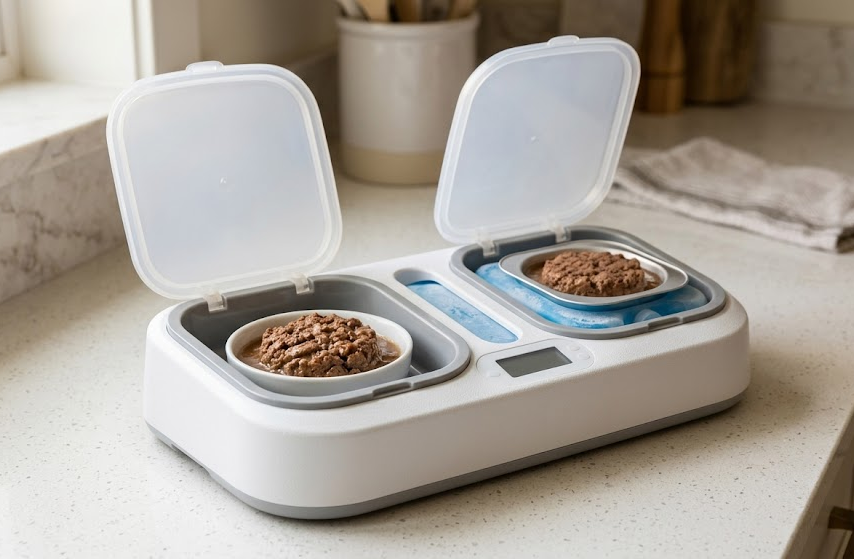
This is where many shoppers get stuck. Not every automatic cat feeder wet food refrigerated claim means true active chilling. Some products rely on ice packs or cooling trays rather than compressor-style refrigeration.
That still can be useful. If your goal is to keep one or two wet meals cooler for a limited time window, a cooling-based design may be enough. A good example is a dual-ice-pack timed cat feeder designed for wet meals, which makes sense for cat owners who need short-term timed wet meals rather than all-day storage.
Refrigerated or cooling options make sense when:
- the food may sit out beyond a normal short room-temperature window
- your home is warm for much of the day
- your cat is picky about freshness and rejects food that dries out quickly
- you want a delayed second meal rather than immediate serving
- you feed wet food regularly enough that the extra cleanup effort is acceptable
Refrigeration matters less when:
- the meal delay is short
- your home stays cool
- you only use the feeder occasionally
- you can load the food shortly before the timer opens
The big thing to understand is that cooling extends usefulness; it does not make wet food magically maintenance-free. You still need realistic expectations around timing and hygiene.
Food safety time limits and cleaning needs
Wet food is different from dry food because moisture, oils, and proteins make it spoil faster and leave more residue behind. That means food safety should drive the buying decision at least as much as convenience.
Food safety checklist
Before relying on any pet food timer automatic feeder wet setup, make sure you can answer yes to these questions:
- can the food stay at a safe temperature for the time you plan to leave it out?
- does the feeder use cooling, ice packs, or a limited open-air delay rather than an all-day hold?
- can the tray, lid, and bowl sections be cleaned thoroughly after each use?
- will leftover residue be removed before the next meal cycle?
- can you avoid leaving wet food sitting for too long in a warm room?
If the answer to most of those is no, the feeder is probably not the right tool for your routine.
Cleaning is part of the real cost
This is one reason some buyers underestimate the category. A wet food feeder is not just a timed appliance. It is a food-contact item that needs regular washing. If you know you will resent cleaning trays, seals, or lids, the product may get abandoned fast.
Single-meal vs multi-meal feeder scenarios
Single- or dual-meal feeders
These are often the best fit for wet food because they match the actual use case. Most cat owners are not trying to automate a full day of wet feeding. They usually want breakfast while sleeping in, lunch while away, or a controlled second meal later in the day.
Single- and dual-meal units are usually better when:
- you feed one cat
- you need a short delay rather than many timed openings
- you want simpler cleanup
- you care more about freshness than about capacity
Multi-meal feeders
These can make sense for cats on a structured plan with several smaller wet meals, but they raise the bar on hygiene and food-holding expectations. The more compartments and the longer the schedule, the more important cooling and cleaning become.
That is why many cat owners should think in terms of "timed wet meal helper" rather than "automatic all-day wet feeding system." The second idea sounds nice, but the first is usually more realistic.
When a dry-food feeder or manual routine is the better choice
An automatic dog feeder wet food or cat wet feeder is not always the smartest answer. Sometimes the better move is to keep wet meals manual and automate only dry food, or to stick with a manual wet routine entirely.
Choose a dry-food feeder or manual schedule instead when:
- your pet does fine with dry food for the unattended meal
- you need large-capacity multi-day automation
- you do not want to manage cooling packs or frequent washing
- the real problem is convenience, not wet-food timing specifically
- your cat is not especially sensitive to meal timing
There is no prize for buying the more complicated device. If a manual routine or dry-food feeder already solves the real problem, that is usually the better value decision.
So, is an automatic wet food feeder worth it for cats?
Yes, for the right household. It is worth it when your cat genuinely needs timed wet meals and you need a practical way to serve them without being present every time. Refrigerated or cooling designs make the most sense when food will sit out longer, the room runs warm, or your cat is fussy about freshness.
No, it is not automatically worth it for every cat owner. If your schedule is simple, your cat eats fine on a manual routine, or you expect all-day wet-food storage with almost no maintenance, you will probably be disappointed.
FAQ
Can automatic feeders handle wet cat food safely?
Yes, but only within a realistic time window and with proper cleaning. Wet food can work well in timed feeders when the delay is limited and the tray is cleaned thoroughly after use.
Do you need a refrigerated wet food feeder?
Not always. You usually need refrigeration or a cooling tray when the meal will sit out longer, the room is warm, or your cat is particular about freshness. For very short delays, a basic timed feeder may be enough.
How long can wet cat food stay in an automatic feeder?
That depends on temperature, feeder design, and whether cooling is used. The safer mindset is to treat wet food as a short-window feeding option rather than something to leave sitting all day.
Final takeaway
An automatic wet food feeder is most worth it for cats that need scheduled wet meals, not for every cat household by default. Cooling or refrigerated options make the strongest case when they directly solve a timing-and-freshness problem. If the product fits that scenario, it can be genuinely helpful. If not, a simpler feeder or manual routine is usually the smarter buy.