 Bird Supplies
 Bird Accessories
 Bird Cages & Carriers
 Bird Feeders
 Bird Nests & Beds
 Bird Toys
 Feeding Supplies
 Automatic Feeders
 Feeding Mats
 Pet Bowls
 Slow Feed Bowls
 Water Dispensers
 Grooming & Care
 Cleaning Tools
 Grooming Gloves
 Nail Clippers
 Pet Brushes
 Other
Other Pet Accessories
 Harnesses
 Leashes
 Tags
Tags Pet Apparel
 Cat Apparel
 Pet Costumes
 Pet Diapers
 Pet Life Jackets
 Pet Homes & Crates
 Cat Trees & Scratching Furniture
 Dog Crates
 Indoor Pet Houses
 Pet Beds & Houses
 Pet Carriers
 Small Pet Habitats
 Pet Toys
 Cat Toys
 Dog Toys
 Interactive Toys
 Plush Toys
 Reptile Supplies
 Reptile Accessories
 Reptile Feeders & Bowls
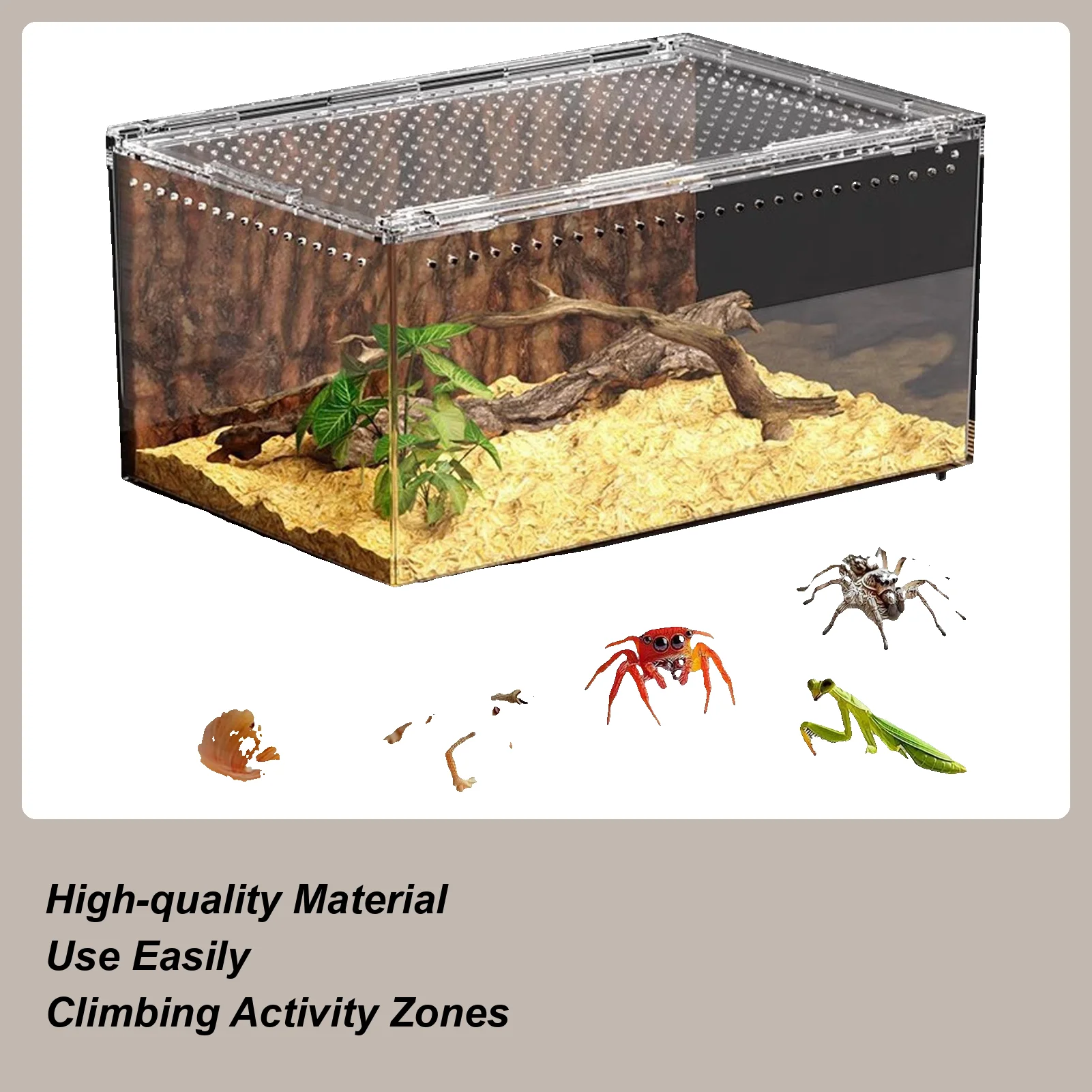 Reptile Habitats & Terrariums
 Reptile Heating & Lighting
 Reptile Hideouts & Decor
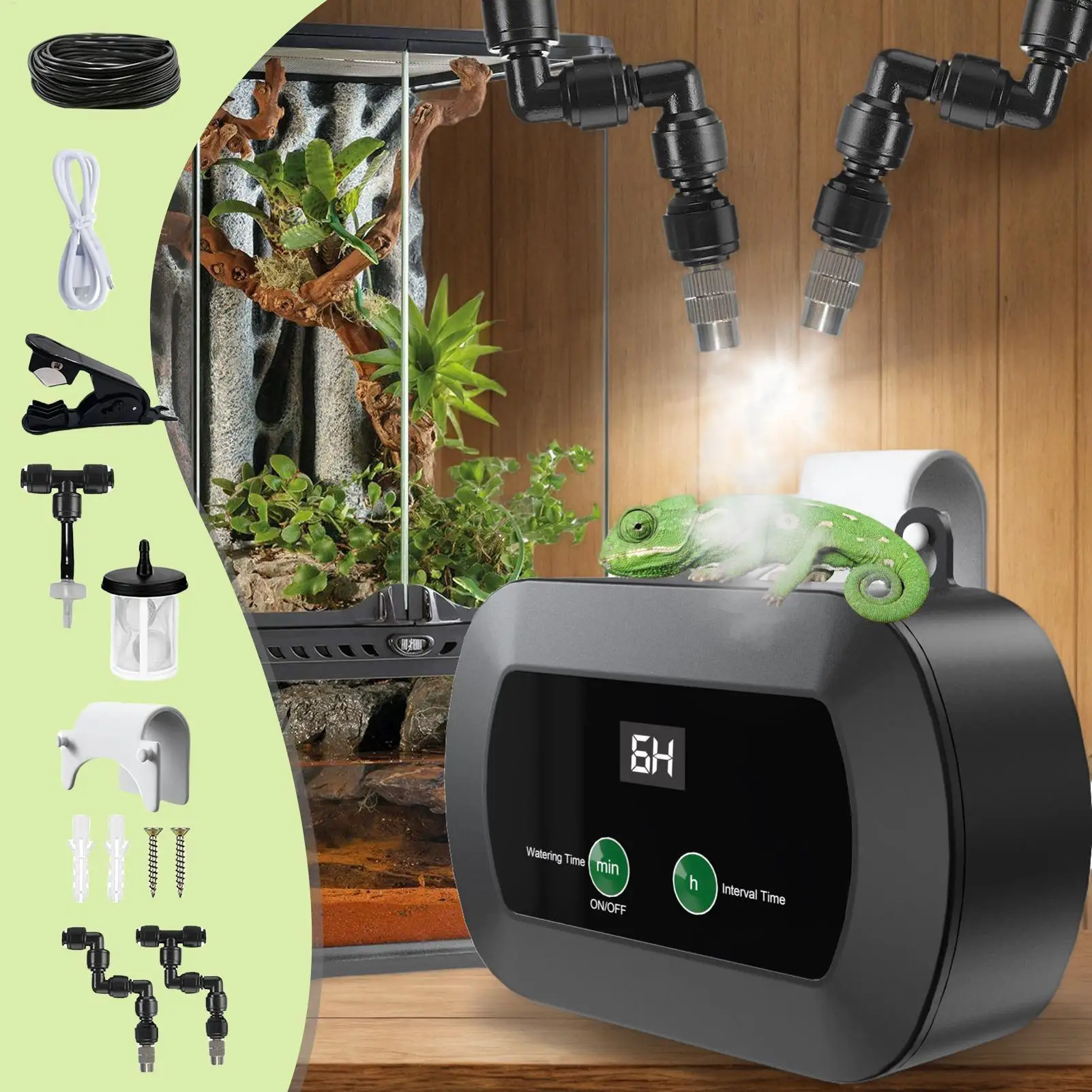 Reptile Humidity & Climate
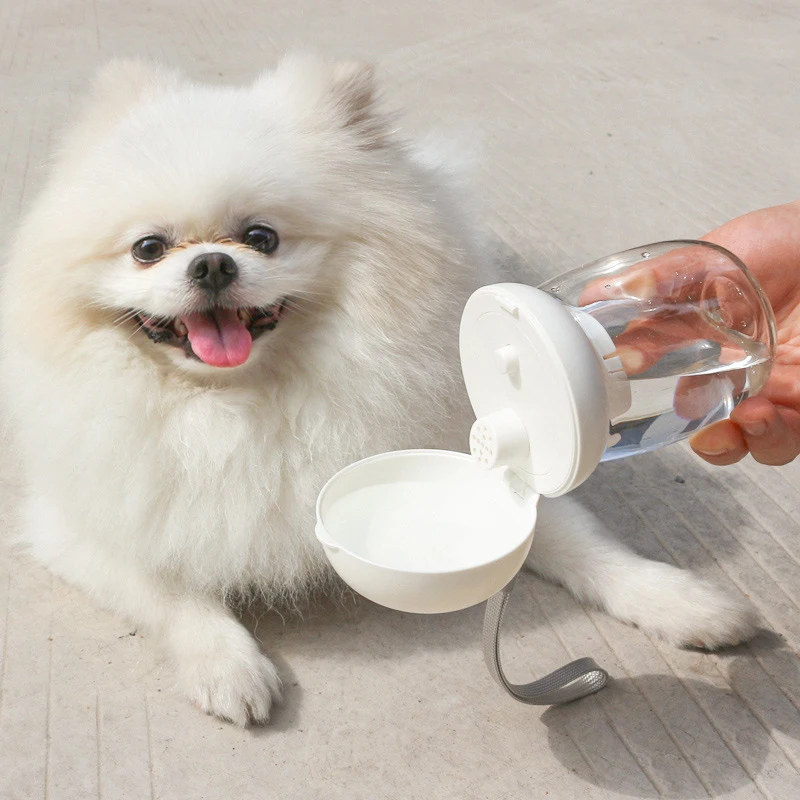 Portable Water Bottles
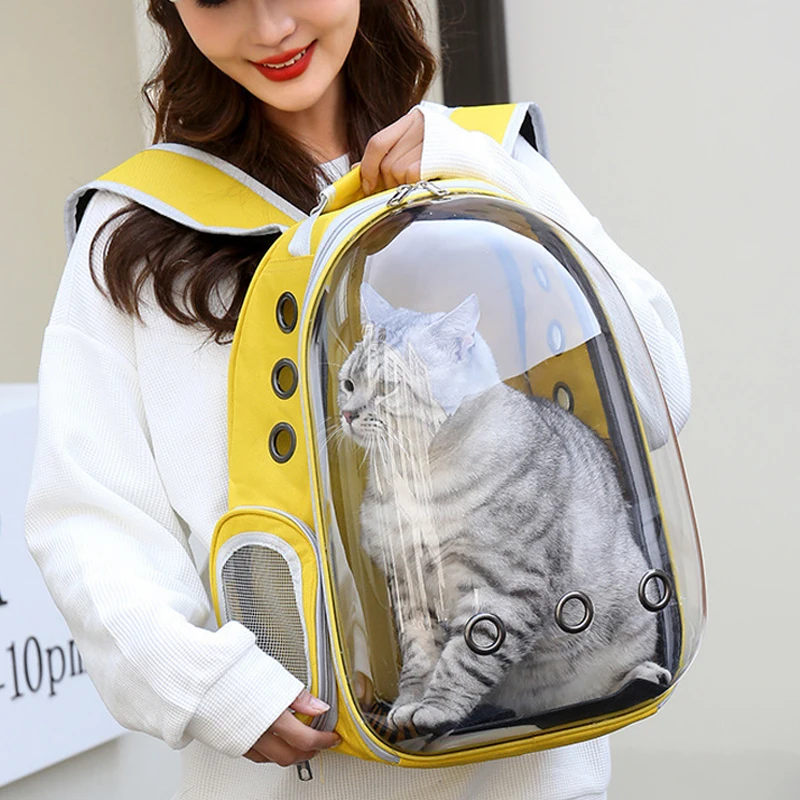 Travel Bags
Dog Crate Divider Guide: When to Use One for Puppies, Potty Training, and Growing Dogs
Dog Crate Divider Guide: When to Use One for Puppies, Potty Training, and Growing Dogs
Use a dog crate divider when your puppy's crate is bigger than the space they need for sleeping, settling, and potty training. The goal is to give your puppy enough room to stand up, turn around, and lie down comfortably without leaving so much extra crate space that one end becomes a bathroom corner.
If you are setting up a puppy crate for the first time, a divider panel helps you buy one appropriately sized crate for adult growth while still keeping the early training space small and manageable. Used correctly, a dog crate divider can support better potty habits, calmer sleep routines, and smoother crate transitions as your dog grows.
Quick Answer: When a Dog Crate Divider Makes Sense
A dog crate divider is most useful when:
- your puppy will grow into a larger adult crate
- the crate currently feels too roomy for potty training
- you want one crate setup instead of buying multiple sizes
- you need to adjust crate space gradually during growth stages
A puppy crate divider is not there to make the crate cramped. It is there to make crate space appropriate. For most puppies, the right crate space is large enough to rest comfortably but not so large that they can sleep on one side and eliminate on the other.
What a Dog Crate Divider Does and Who Needs One
A dog crate divider panel creates a temporary wall inside a larger crate. Instead of putting a very young puppy into the full interior of a large crate, you shorten the usable space until the puppy is developmentally ready for more room.
This setup works especially well for:
- young puppies still learning bladder control
- owners using a dog crate with divider for potty training
- households that want one adjustable dog crate with divider instead of replacing crates as the dog gets bigger
- growing dogs that need predictable sleep and downtime routines
If you already own a crate that matches your puppy's current size exactly, you may not need a divider right away. But if the crate is sized for adult dimensions, a divider usually makes the setup more effective and safer for training.
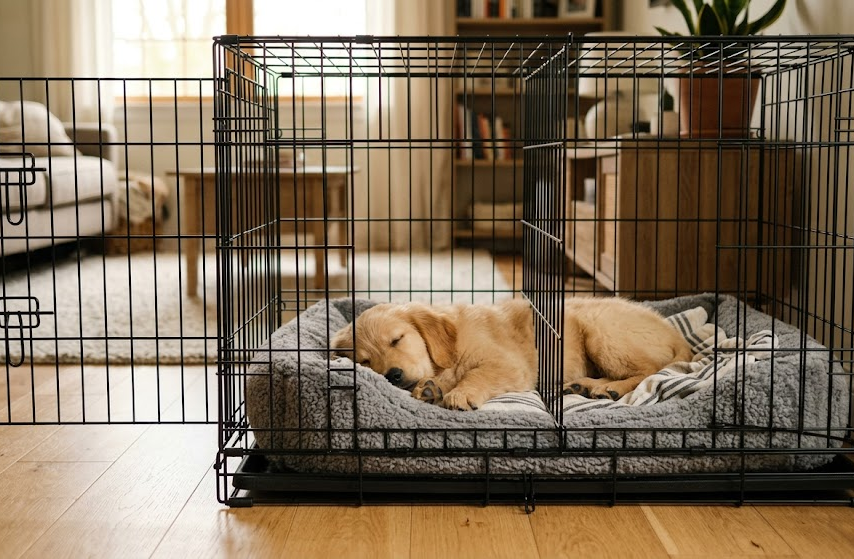
How Much Crate Space a Puppy Should Have
A puppy crate should give your dog enough room to:
- stand without crouching
- turn around easily
- lie down on their side comfortably
- shift sleeping position naturally
That is the practical standard for crate space. More room is not always better during early potty training.
Crate Space Checklist
Use this crate space checklist when placing the divider panel:
- Your puppy can fully stand up.
- Your puppy can turn around without bumping the walls repeatedly.
- Your puppy can stretch out enough to sleep comfortably.
- The crate does not leave a separate open area that can become a potty zone.
- Food bowls, bulky pads, or oversized beds are not crowding the sleep area.
A common mistake is confusing comfort with extra floor space. Puppies usually need functional room, not an oversized den. When crate space is too large, potty training can slow down because the puppy may start treating one section like a toilet area and the other like a bed.
How to Use a Dog Crate Divider Step by Step
1. Start with the adult-size crate if that is your long-term setup
If your dog will eventually need a larger crate, using that crate now with a divider panel can save money and simplify transitions later. This is where an adjustable dog crate with divider is especially practical.
2. Position the divider so the space fits your puppy today
Measure based on your puppy's actual body size, not a rough guess. The usable area should match current needs, not future growth. If your puppy looks lost in the crate, the divider likely needs to move forward.
3. Watch potty habits and sleep posture for several days
A dog crate divider how to use question is really a behavior question. If your puppy settles, sleeps well, and rarely has crate accidents, the space is probably right. If your puppy keeps eliminating in one corner, reassess the size, schedule, and bathroom breaks.
4. Expand the space gradually as your dog grows
Move the divider back in small increments, not giant jumps. Growing puppy crate setup changes work best when the dog has already shown reliable crate habits in the current space.
5. Re-check safety after every adjustment
Make sure the divider panel is secure, straight, and free of sharp edges or large gaps. Bedding should not bunch against the divider in a way that creates chewing or entrapment risk.
Using a Divider for Potty Training and Sleeping Routines
A dog crate with divider for potty training works because crate space influences behavior. Most puppies naturally avoid soiling the area where they sleep, but that instinct is weaker when the crate is oversized or when the puppy is left too long without a bathroom break.
The divider helps by keeping the sleeping zone appropriately small while you build routines around:
- regular potty trips after waking, eating, playing, and training
- consistent bedtime and nap timing
- calm crate entry instead of using the crate only when the puppy is in trouble
- short, age-appropriate crate periods
The divider panel supports potty training, but it is not a substitute for schedule management. If a puppy is having frequent accidents, the issue may be timing, stress, medical discomfort, or simply expecting too much bladder control too soon.
For owners comparing crate options, a sturdy folding dog crate can make sense when you want a long-term crate footprint and plan to control the usable interior space with a divider as your puppy matures.
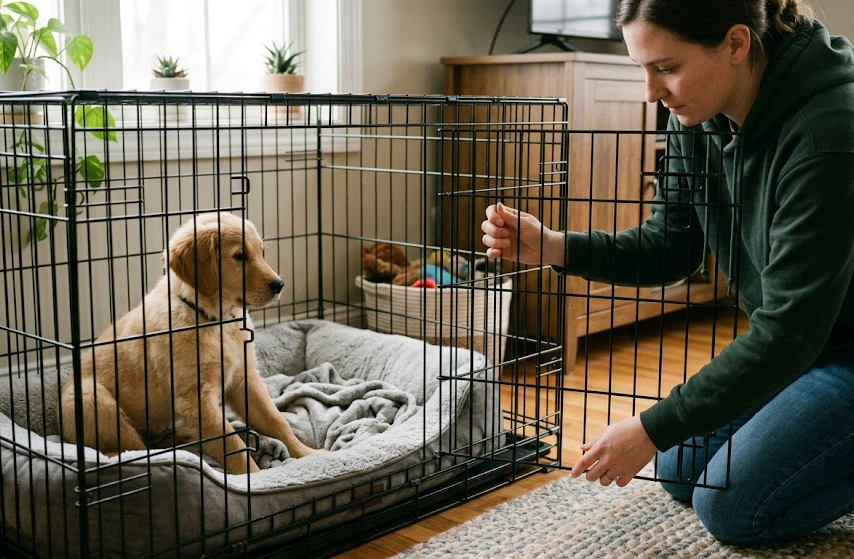
When to Move the Divider as a Dog Grows
Move the crate divider back when your puppy has physically outgrown the current space and is consistently staying clean in the crate.
Good signs it is time to expand crate space include:
- your puppy looks cramped while lying down or stretching
- turning around is becoming awkward
- growth has clearly reduced comfort
- crate accidents are not the issue and bathroom habits are already stable
Do not move the divider back just because a few days have passed. Growth-stage progression should follow the dog, not the calendar.
A simple growth-stage approach
- Early puppy stage: keep the space compact and sleep-focused
- Mid-growth stage: add a little room once the puppy is resting well and staying clean
- Later growth stage: continue enlarging the crate in steps until the full crate is appropriate
- Near adult size: remove or fully retract the divider when the dog can use the entire crate without losing good crate habits
This gradual method gives your dog a clear transition from puppy crate to adult crate without resetting house-training progress.
Common Setup Mistakes and Safety Checks
Mistake List
- making the crate much too large too soon
- setting the divider so tight that the puppy cannot stretch or turn comfortably
- leaving the puppy in the crate longer than their age and routine can support
- using the divider to compensate for poor potty scheduling
- ignoring loose wires, gaps, unstable clips, or shifting crate accessories
- stuffing the crate with oversized beds that distort the usable crate space
Safety checks to run regularly
- Confirm the divider panel is firmly attached.
- Check for pinch points or protruding wires.
- Make sure collars, tags, and accessories are not catching on the crate.
- Reassess space after visible growth spurts.
- Keep the crate clean and dry so the sleep area stays appealing.
Do All Puppies Need a Crate Divider?
No, not every puppy needs a dog crate divider. If the crate already fits your puppy's current size well, the extra panel may not add much. But when the crate is chosen for future adult size, a divider is usually the easiest way to make the setup training-friendly now.
The key question is not whether dividers are universally necessary. It is whether your current puppy crate has more room than your puppy can use appropriately at this stage.
Summary Takeaway
Use a dog crate divider when your puppy's crate is larger than needed for safe rest and potty training. Set the divider so your puppy can stand, turn, and lie down comfortably, then move it back gradually only after your dog grows and shows reliable crate habits.
FAQ
Do puppies need a crate divider?
Puppies need a crate divider when their crate is sized for future growth and currently gives them too much unused space. A properly placed divider helps make the crate feel appropriately sized without buying another crate.
How much space should a puppy have in a crate?
A puppy should have enough crate space to stand up, turn around, and lie down comfortably. They should not have so much extra room that one side of the crate becomes a consistent potty area.
When should I move the crate divider back?
Move the crate divider back when your puppy has outgrown the current space physically and is already showing reliable crate cleanliness and calm settling habits.
Can a crate divider help with potty training?
Yes, a crate divider can help with potty training by limiting excess crate space and making it less likely that a puppy will separate the crate into a sleeping side and a bathroom side. It works best alongside a good bathroom schedule and consistent supervision.