 Bird Supplies
 Bird Accessories
 Bird Cages & Carriers
 Bird Feeders
 Bird Nests & Beds
 Bird Toys
 Feeding Supplies
 Automatic Feeders
 Feeding Mats
 Pet Bowls
 Slow Feed Bowls
 Water Dispensers
 Grooming & Care
 Cleaning Tools
 Grooming Gloves
 Nail Clippers
 Pet Brushes
 Other
Other Pet Accessories
 Harnesses
 Leashes
 Tags
Tags Pet Apparel
 Cat Apparel
 Pet Costumes
 Pet Diapers
 Pet Life Jackets
 Pet Homes & Crates
 Cat Trees & Scratching Furniture
 Dog Crates
 Indoor Pet Houses
 Pet Beds & Houses
 Pet Carriers
 Small Pet Habitats
 Pet Toys
 Cat Toys
 Dog Toys
 Interactive Toys
 Plush Toys
 Reptile Supplies
 Reptile Accessories
 Reptile Feeders & Bowls
 Reptile Habitats & Terrariums
 Reptile Heating & Lighting
 Reptile Hideouts & Decor
 Reptile Humidity & Climate
 Portable Water Bottles
 Travel Bags
How to Choose a Dog Lick Mat for Anxiety Relief, Crate Time, and Mental Enrichment
How to Choose a Dog Lick Mat for Anxiety Relief, Crate Time, and Mental Enrichment
The best dog lick mat depends on your dog's size, chewing habits, and whether you need it for crate time, grooming, or calming enrichment. Choose a food-grade silicone lick mat with a texture your dog can use safely, a size that holds the right amount of spread, and a backing style that matches the surface where you plan to use it.
A lick mat for dogs is not a replacement for meals, training, exercise, or veterinary care for serious anxiety. It is a simple enrichment tool that can slow licking, extend treat time, and make predictable routines feel calmer. For many dogs, the repetitive licking motion helps turn bath time, nail trims, crate settling, or quiet afternoons into a more manageable experience.
Quick Answer: How to Choose a Dog Lick Mat
Pick a dog lick mat by matching four things: use case, texture, size, and attachment style.
- For anxiety relief or grooming, choose a suction-cup silicone mat that can attach to tile, a tub wall, or another smooth vertical surface.
- For crate time, choose a low-profile mat that fits safely inside the crate without bunching, flipping, or inviting chewing.
- For puppies, choose a smaller puppy enrichment mat with shallow texture and easy cleaning.
- For adult dogs, choose a larger or deeper-pattern mat if you want longer licking sessions.
- For strong chewers, use the mat only under supervision and avoid thin edges that can be torn apart.
The right lick mat should keep your dog engaged without becoming a chew toy, a choking risk, or a sticky mess you hate cleaning.
What a Dog Lick Mat Is and When It Helps
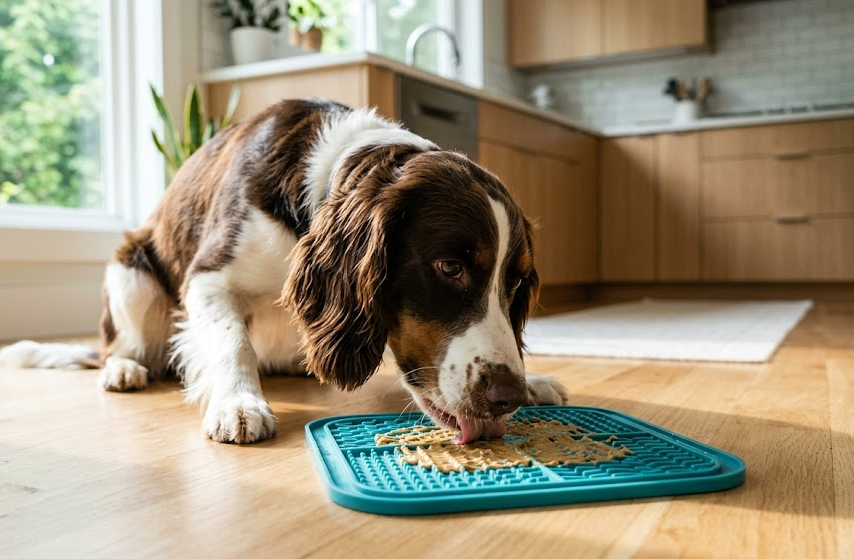
A dog lick mat is a flat or slightly shaped silicone mat with grooves, ridges, bumps, or pockets designed to hold soft food. Instead of swallowing a treat quickly, your dog has to lick the food out of the surface pattern. That slower process can provide mental enrichment and may help some dogs settle during short, predictable routines.
Common dog lick mat benefits include:
- giving dogs a calm activity during grooming or baths
- turning crate time into a more positive routine
- slowing down soft treats, yogurt, pumpkin, or wet food toppers
- offering boredom reduction without requiring a complicated puzzle toy
- supporting quiet decompression after walks, training, or visitors
A lick mat for anxiety works best for mild stress, anticipation, or routine discomfort. It should not be treated as a cure for panic, separation anxiety, aggression, or medical distress. If your dog is panicking in a crate, drooling excessively, trying to escape, or injuring themselves, the problem needs a broader behavior plan and possibly veterinary guidance.
Texture and Surface Pattern Differences
Texture controls how hard your dog has to work. A shallow pattern makes food easier to reach. A deeper or more complex surface makes the session last longer but can also be harder to clean.
Shallow grooves for beginners and puppies
Shallow grooves are best for puppies, small dogs, senior dogs, and first-time users. They let the dog understand the activity quickly and reduce frustration. A puppy enrichment mat should usually start simple because young dogs are still learning how to engage with enrichment tools instead of chewing them.
Ridges and pockets for longer enrichment
Raised ridges, honeycomb pockets, flower patterns, and maze-like textures make spreads last longer. These patterns are useful when your goal is mental enrichment rather than a quick treat. They are also better for dogs who already understand lick mats and do not try to fold or shred them.
Mixed textures for multi-use routines
Some mats combine shallow and deep areas. This is useful if you want one mat for different foods: thinner yogurt in fine grooves, thicker pumpkin or wet food in deeper pockets, and small treat crumbles pressed into larger spaces.
Suction Cup vs Flat Mat Options
The backing style matters as much as the front texture. A good dog lick mat should stay where you put it for the routine you are trying to improve.
Choose suction cups for grooming, bath time, and vertical surfaces
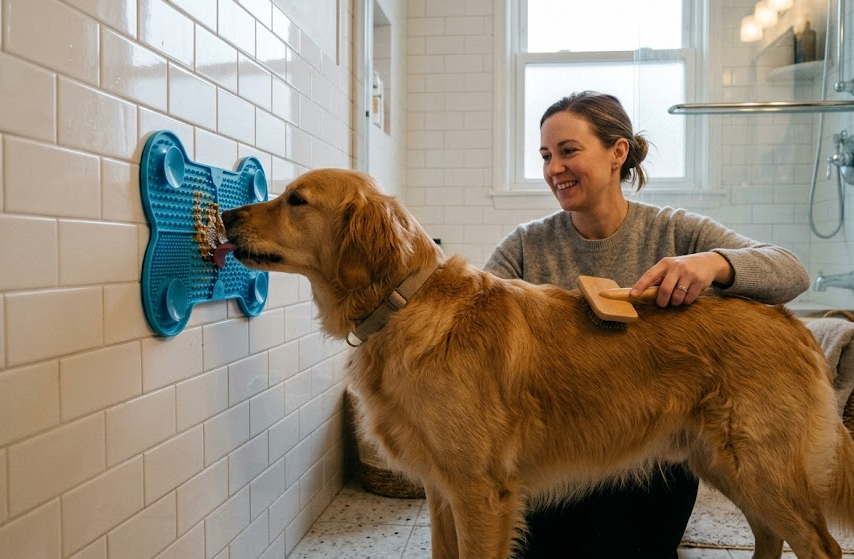
A suction-cup lick mat is useful when you want the mat attached to a bathtub wall, shower tile, grooming table, glass door, or other smooth surface. The suction cups help keep the mat at nose height so your dog can lick while you rinse, brush, or trim.
Suction cups work best on clean, smooth, non-porous surfaces. They are less reliable on textured walls, unfinished wood, fabric, or dusty surfaces. If the mat keeps falling, the issue may be the surface rather than the mat itself.
Choose flat mats for floors, crates, and calm indoor enrichment
A flat lick mat for dogs is better for floor use, crate time, and simple daily enrichment. It is easy to place, easy to move, and usually easier to wash. The tradeoff is that some dogs may push it around unless the mat has a grippy underside or enough weight from the spread.
For readers comparing real examples, a small silicone option such as this fish-shaped dog lick mat fits the kind of puppy or small-to-medium dog enrichment setup discussed here, especially when the goal is slow licking rather than replacing a full feeding bowl.
Use-Case Comparison Table
| Use case | Best mat style | What to check |
|---|---|---|
| Crate time | Flat, low-profile silicone mat | Fits without folding, does not create chewing temptation, used under supervision at first |
| Bath time or grooming | Suction-cup mat | Sticks to smooth tile or tub walls and stays at comfortable nose height |
| Puppy enrichment | Small mat with shallow grooves | Easy licking, easy cleaning, no loose parts or thin edges |
| Adult dog boredom reduction | Larger mat or mixed texture | Enough surface area for a longer session without overfeeding |
| Mild anxiety relief | Stable silicone mat matched to the routine | Dog remains calm enough to lick and does not chew, guard, or panic |
Best Sizes for Puppies and Adult Dogs
Size should match both your dog's mouth and the length of session you want. Bigger is not automatically better. A mat that is too large can encourage overfeeding if you cover the whole surface, while a mat that is too small may not hold your dog's attention long enough.
Puppies and toy breeds
For puppies and toy breeds, start with a compact mat and shallow texture. Use a thin spread rather than filling every groove heavily. The goal is to teach calm licking, not to create a huge snack session.
Good puppy lick mat priorities include:
- soft, flexible silicone
- shallow surface pattern
- rounded edges
- dishwasher-safe or easy hand-wash design
- small enough to supervise easily
Small and medium adult dogs
Small and medium adult dogs can usually use a standard flat mat or shaped silicone mat. If your dog is food-motivated, choose more texture rather than simply adding more food. Deeper patterns create more work with less spread.
Large dogs and high-energy dogs
Large dogs may need a bigger surface area, stronger silicone, and a mat that stays put. However, large dogs that chew aggressively may not be good candidates for unsupervised lick mat use. For them, the right choice is often a sturdier mat used for short, supervised sessions.
When to Use a Lick Mat for Crate Time or Grooming
The best time to introduce a lick mat is before your dog is already stressed. A lick mat works better as part of a routine than as a last-second distraction.
Lick mat for crate time
A lick mat for crate time can help your dog associate the crate with quiet, predictable settling. Start with the crate door open. Let your dog lick calmly, then remove the mat before chewing starts. Once your dog understands the routine, you can use it for short crate periods while you remain nearby.
Do not use a lick mat to force a dog through severe crate distress. If the dog ignores the food, claws at the crate, barks frantically, or tries to escape, the crate plan needs to be slowed down.
Lick mat for grooming and bath time
For grooming, a suction mat can create a useful focal point. Spread a thin layer of dog-safe food, attach the mat to a smooth surface, and keep the session short enough that your dog finishes calmly. This can be helpful during brushing, paw handling, nail-file introductions, or rinsing in the tub.
Lick mat for boredom and mental enrichment
For everyday enrichment, use the mat when your dog needs a calm task: after a walk, during a quiet work call, or as part of an evening wind-down routine. Rotate spreads and textures so the activity stays interesting without becoming a calorie-heavy habit.
What to Put on a Dog Lick Mat
Use dog-safe spreads that match your dog's diet and tolerance. Keep the layer thin, especially for small dogs or puppies.
Common lick mat fillings include:
- plain unsweetened yogurt if your dog tolerates dairy
- canned pumpkin without added sugar or spices
- wet dog food spread thinly
- mashed banana in small amounts
- dog-safe peanut butter without xylitol
- softened kibble or broth-soaked food pressed into the texture
Always check ingredients. Avoid xylitol, chocolate, grapes, raisins, high-salt foods, heavily spiced foods, and anything your dog has reacted to before. If your dog has pancreatitis, allergies, digestive sensitivity, or a veterinary diet, ask your vet before adding rich spreads.
Safety and Cleaning Tips
A safe lick mat routine depends on supervision, food choice, and cleaning. Silicone can be practical, but it still needs care.
Supervise chewing habits
Watch your dog the first several times. Licking is the goal. Chewing, tearing, or swallowing pieces means the mat should be removed. Strong chewers may need a different enrichment tool.
Clean after every use
Wash the mat after each session so food does not dry deep in the grooves. Dishwasher-safe silicone is convenient, but deep patterns may still need a brush. Rinse both sides, especially if the mat has suction cups that can trap residue.
Use crate mats carefully
If you use a lick mat in a crate, remove it when the spread is gone. Do not leave a flexible silicone mat with a dog who may chew it while unsupervised. Crate enrichment should support calm behavior, not add a new hazard.
Manage calories
A lick mat can make a small amount of food last longer, but it can also hide extra calories if you load it heavily. For daily use, subtract some of the spread from your dog's normal food allowance.
Selection Checklist Before You Buy
Before choosing a dog lick mat, run through this checklist:
- Purpose: Is it for crate time, grooming, anxiety relief, boredom, or puppy enrichment?
- Texture: Does your dog need shallow beginner grooves or deeper enrichment pockets?
- Size: Is the mat proportionate to your dog's mouth, body size, and calorie needs?
- Backing: Do you need suction cups, a flat floor mat, or both?
- Material: Is it food-grade silicone and free from sharp edges or loose parts?
- Cleaning: Can you wash the grooves thoroughly after sticky foods?
- Chewing risk: Will your dog lick it, or are they likely to tear it apart?
- Routine fit: Does it solve a real daily use case, or is it just another gadget?
Common Mistakes to Avoid
The biggest mistake is choosing a mat only because it looks cute. Shape matters less than safety, texture, stability, and cleaning.
Avoid these common problems:
- buying a deep-texture mat for a puppy who needs an easier start
- using suction cups on a surface where they will not hold
- leaving a flexible mat in the crate after the food is gone
- covering the entire mat with rich, high-calorie spreads every day
- assuming a lick mat can fix serious anxiety by itself
- choosing a mat that is too hard to clean thoroughly
A well-chosen dog lick mat should make life simpler. If it creates more stress, mess, or supervision problems than it solves, choose a different style or use it less often.
FAQ
Are lick mats good for anxious dogs?
Lick mats can be good for mildly anxious dogs when the dog is still calm enough to eat and lick. The repetitive licking can support relaxation during predictable routines, but it is not a standalone treatment for severe anxiety, panic, or separation distress.
What size lick mat is best for a puppy?
A small silicone mat with shallow grooves is usually best for a puppy. It should be easy to lick, easy to clean, and used under supervision so the puppy learns to lick rather than chew the mat.
Can dogs use lick mats in crates?
Dogs can use lick mats in crates for short, supervised settling routines. Choose a low-profile mat that fits safely, introduce it with the crate door open, and remove the mat once the spread is gone or if your dog starts chewing it.
How do you clean a dog lick mat?
Rinse the mat immediately after use, scrub grooves with a brush if needed, and wash it according to the manufacturer's directions. Dishwasher-safe silicone is helpful, but sticky spreads can still require hand cleaning around deep textures or suction cups.
Summary Takeaway
A dog lick mat is best chosen by use case: suction cups for grooming, flat mats for crate time, shallow textures for puppies, and larger mixed textures for adult enrichment. Match the mat to your dog's size and chewing habits, use dog-safe spreads in thin layers, and clean it after every session. When used thoughtfully, a lick mat for dogs can support anxiety relief, crate routines, and mental enrichment without replacing training, exercise, or proper behavior support.