 Bird Supplies
 Bird Accessories
 Bird Cages & Carriers
 Bird Feeders
 Bird Nests & Beds
 Bird Toys
 Feeding Supplies
 Automatic Feeders
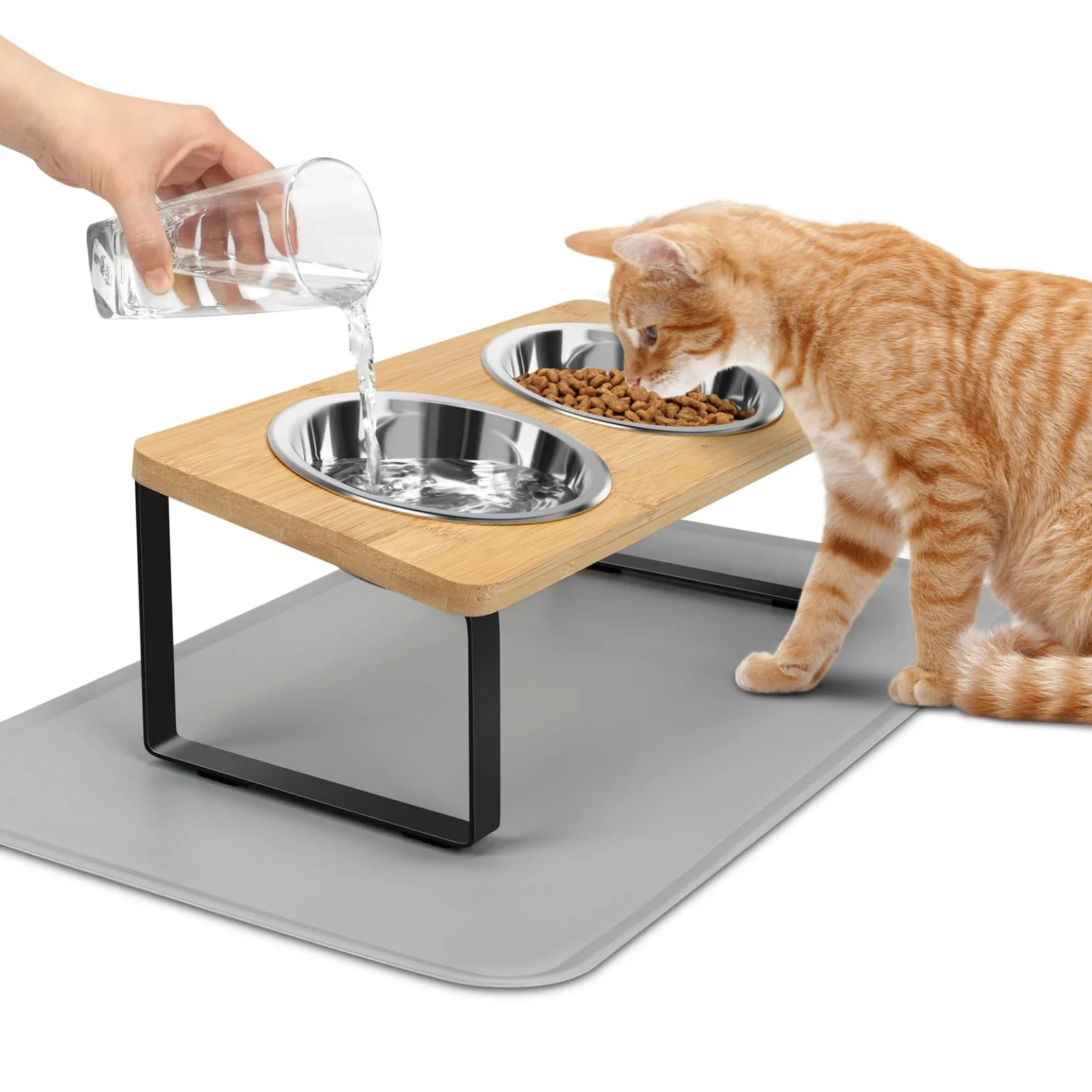 Feeding Mats
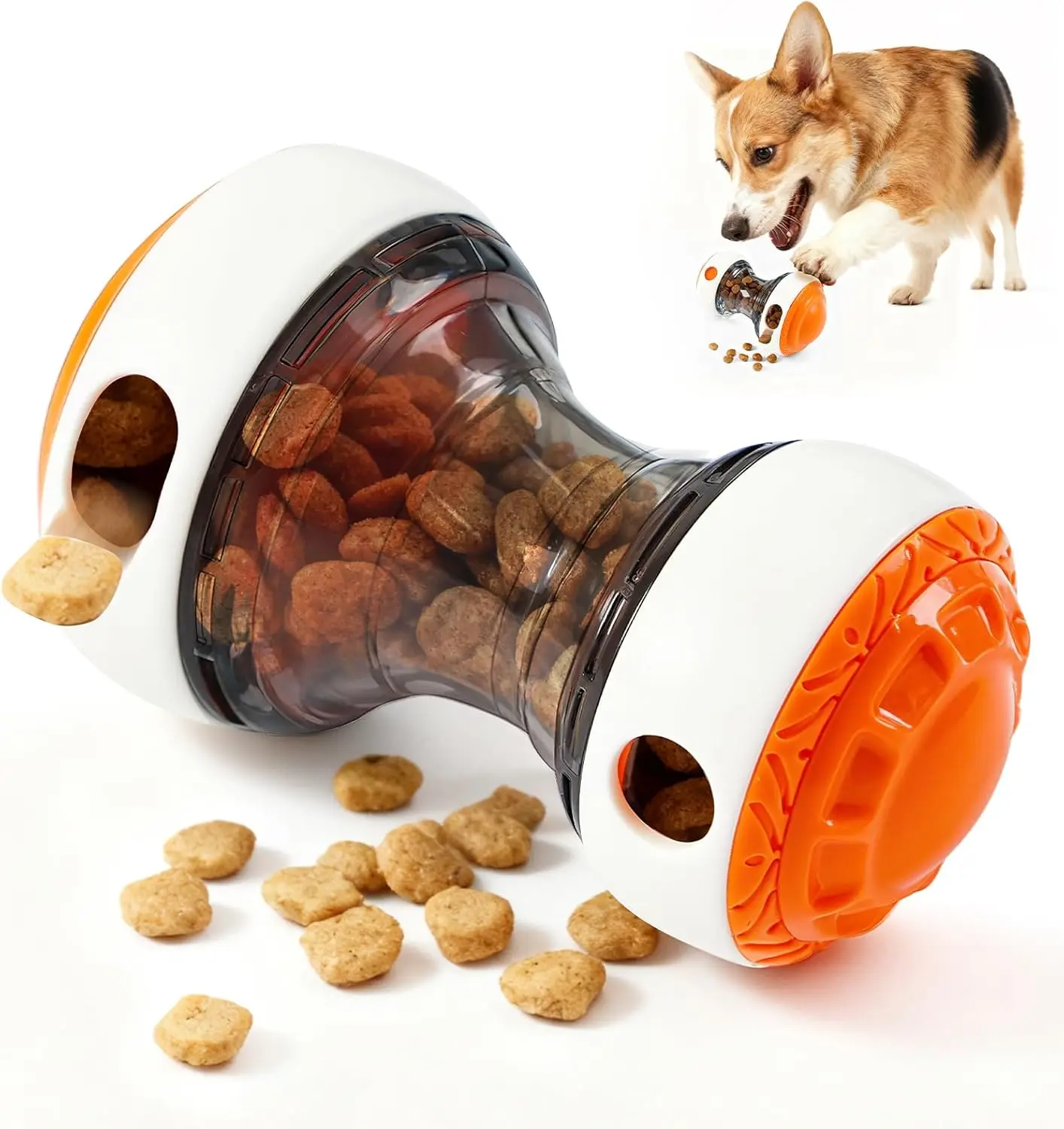 Pet Bowls
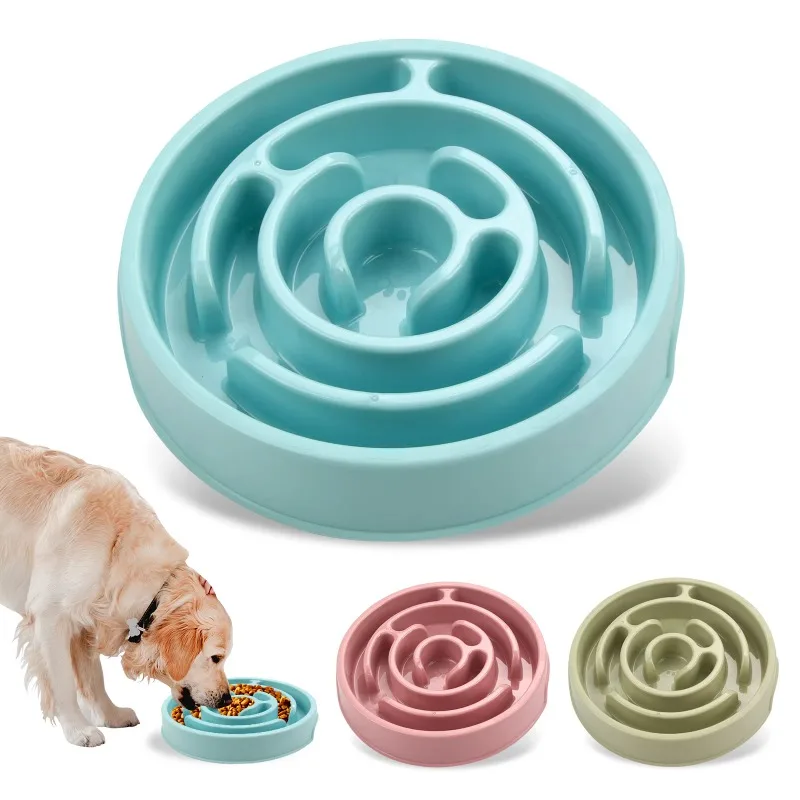 Slow Feed Bowls
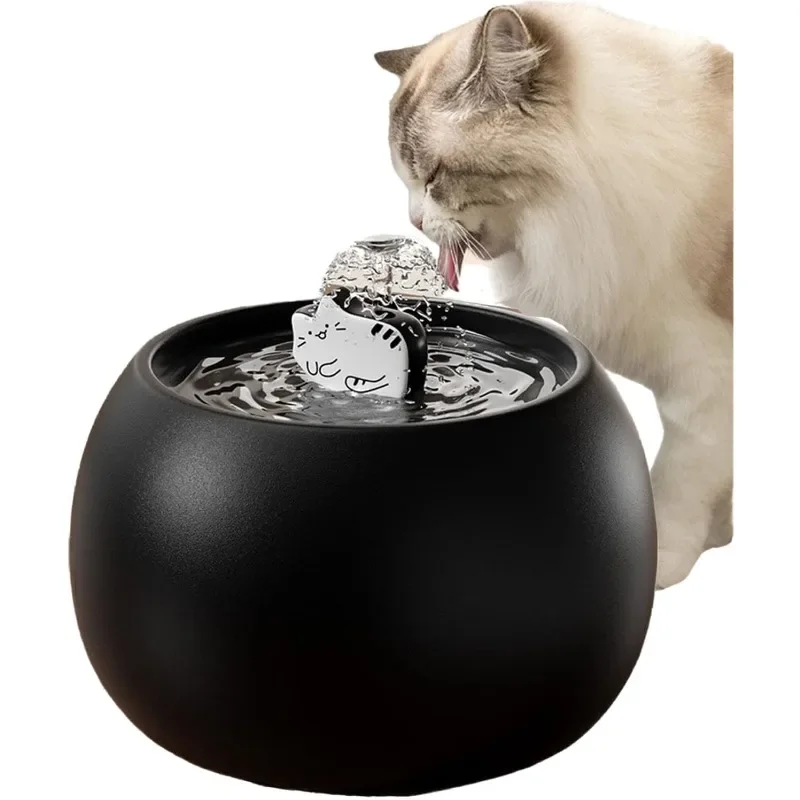 Water Dispensers
 Grooming & Care
 Cleaning Tools
 Grooming Gloves
 Nail Clippers
 Pet Brushes
 Other
Other Pet Accessories
 Harnesses
 Leashes
 Tags
Tags Pet Apparel
 Cat Apparel
 Pet Costumes
 Pet Diapers
 Pet Life Jackets
 Pet Homes & Crates
 Cat Trees & Scratching Furniture
 Dog Crates
 Indoor Pet Houses
 Pet Beds & Houses
 Pet Carriers
 Small Pet Habitats
 Pet Toys
 Cat Toys
 Dog Toys
 Interactive Toys
 Plush Toys
 Reptile Supplies
 Reptile Accessories
 Reptile Feeders & Bowls
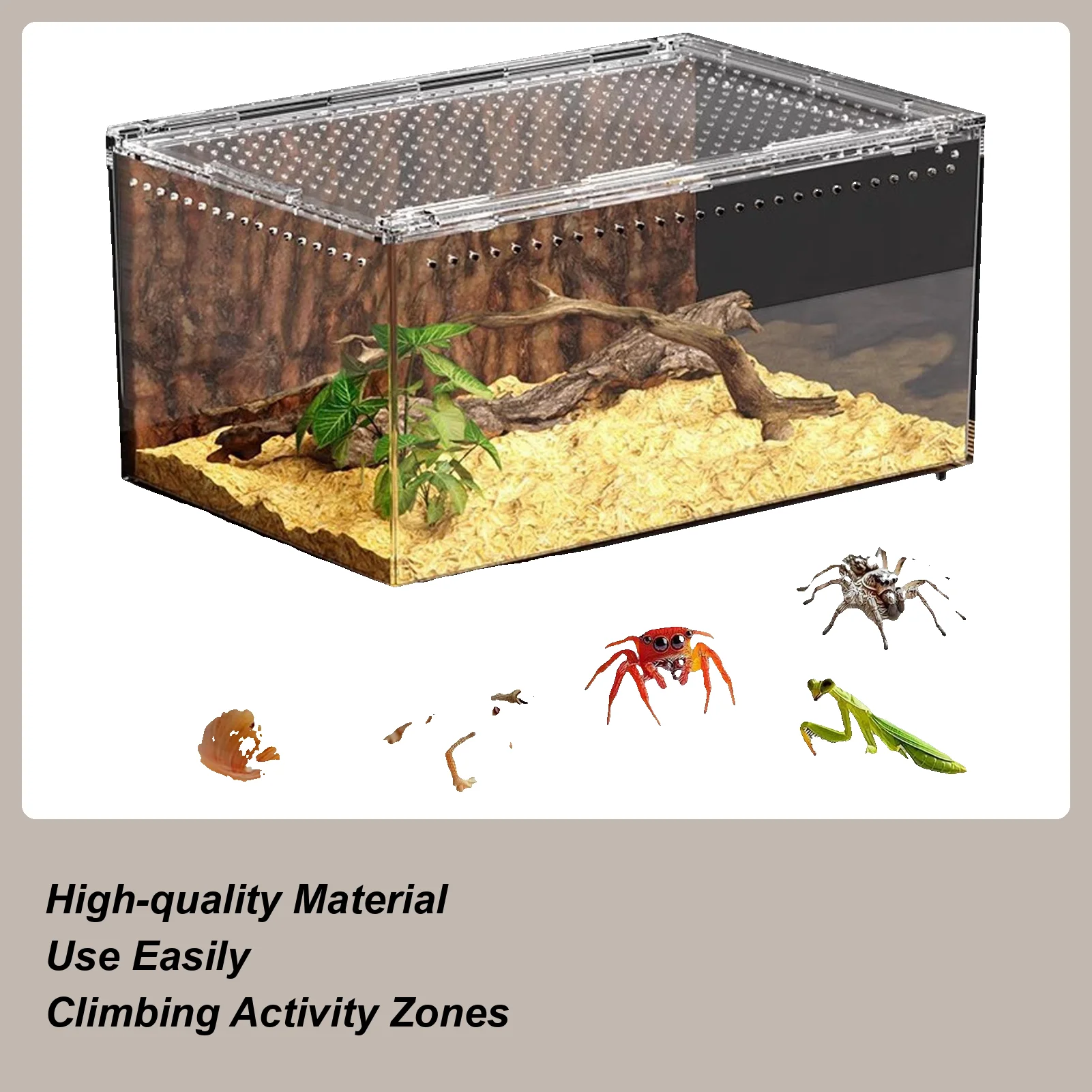 Reptile Habitats & Terrariums
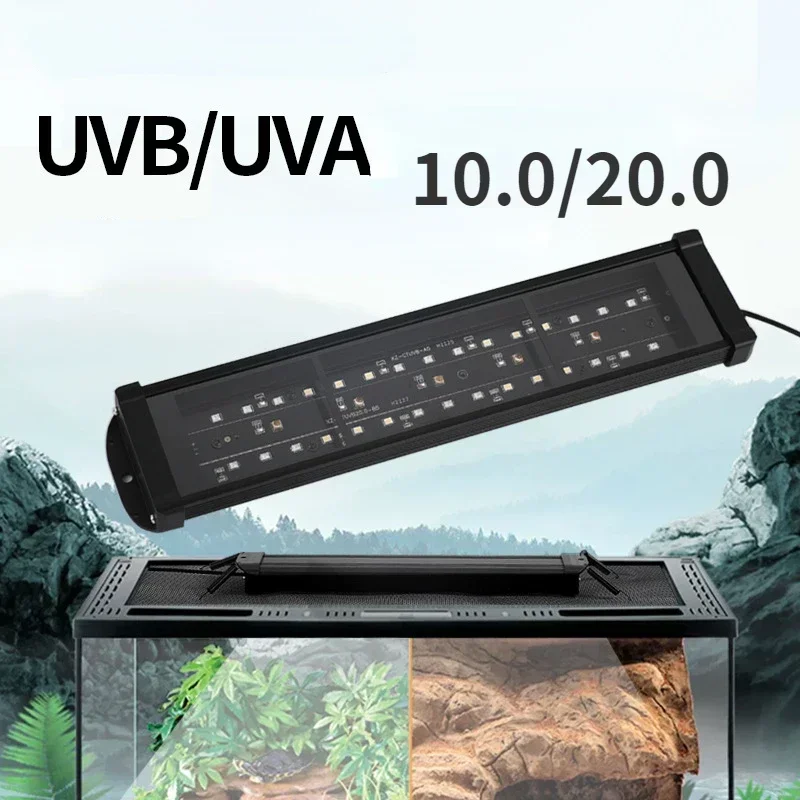 Reptile Heating & Lighting
 Reptile Hideouts & Decor
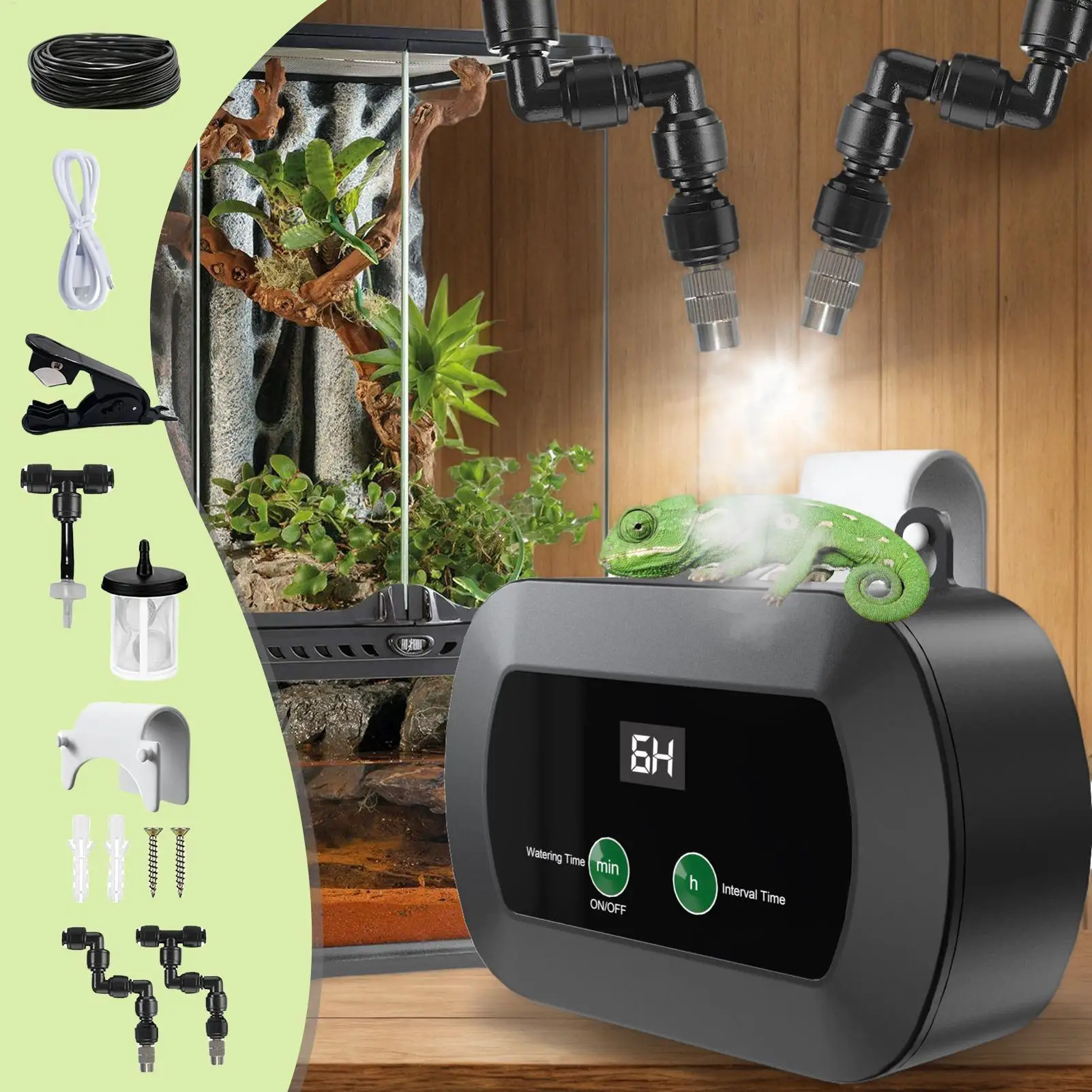 Reptile Humidity & Climate
 Portable Water Bottles
 Travel Bags
Best Slow Feeder Dog Bowl Features for Fast Eaters, Wet Food, and Daily Cleaning
Best Slow Feeder Dog Bowl Features for Fast Eaters, Wet Food, and Daily Cleaning
The best slow feeder dog bowl depends on how fast your dog eats, whether you serve wet food or dry food, and how easy the bowl is to clean every day. For most fast eaters, the right pick is the bowl that slows swallowing without making meals frustrating: shallower maze patterns for wet food, sturdier ridges for dry kibble, and easier-clean materials like stainless steel or simple silicone designs when daily washing matters.
A lot of buyers get distracted by the shape alone, but feature fit matters more than novelty. A bowl can slow eating and still be annoying to wash, too shallow for a large dog, or too complicated for soft food. The smartest way to choose is to match the pattern, material, depth, and base stability to your dog's eating speed and your normal feeding routine.
Quick answer: what features matter most
If you want the short version, look for these features first:
- a pattern that slows eating without trapping too much food
- enough width and depth for your dog's muzzle size
- a non-slip base so the bowl does not skate across the floor
- a material that matches your food type and cleaning routine
- smoother channels if you often serve wet food
- dishwasher-friendly construction if this is a daily-use bowl
- a design that is sturdy enough for enthusiastic or large dogs
The relationship is simple: faster eater -> more control needed, while messier food routine -> easier-clean bowl matters more.
Who actually needs a slow feeder bowl
A slow feeder dog bowl is most useful for dogs that inhale meals, gulp air, leave the bowl too fast, or turn every feeding into a race. That includes many puppies, food-motivated adults, multi-dog households, and larger dogs that can clear a standard bowl in seconds.
It is especially helpful when your dog:
- gulps food and then coughs, belches, or seems uncomfortable
- finishes meals so fast that portion control barely slows them down
- gets overexcited at feeding time and pushes the bowl around
- needs a more controlled pace for digestion and meal management
- eats wet food or mixed meals so fast that cleanup gets messy
A slow feeder is less impressive when a dog already eats calmly. If your dog naturally takes time and does not bolt meals, an elaborate maze bowl can become unnecessary friction instead of a real improvement.
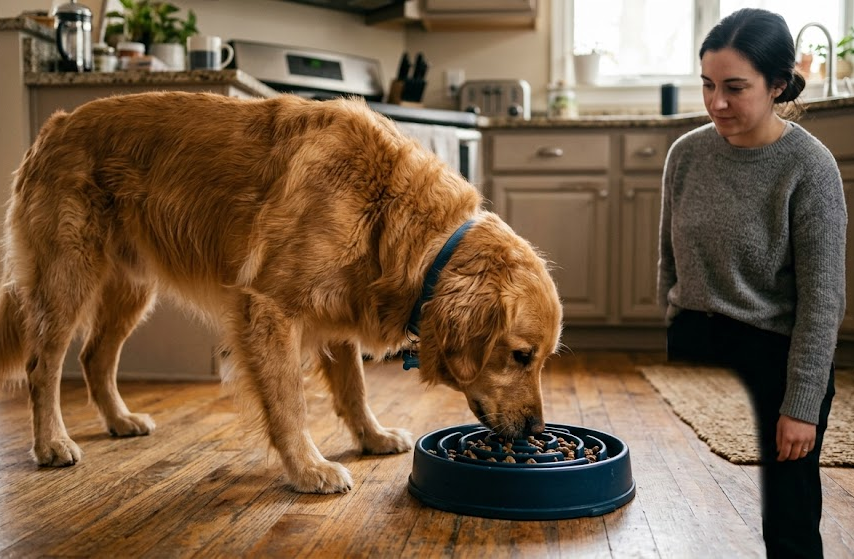
Best bowl patterns for fast eaters
Not every maze pattern works the same way. The best slow feeder dog bowl for a very fast eater usually has clear raised sections that break up mouthfuls without becoming so deep or narrow that the dog gives up or flips the bowl.
Best for very fast eaters: stronger ridges and distinct channels
Dogs that vacuum dry kibble often do best with more pronounced ridges and multiple lanes. Those features force smaller mouthfuls and create pauses between bites.
Look for:
- several separate eating pockets instead of one wide spiral
- ridge height that interrupts scooping but does not block access entirely
- a heavier or non-slip base to resist pushing
- a wide footprint for larger dogs with more force at mealtime
Best for moderate fast eaters: open maze layouts
Some dogs do not need a difficult puzzle. They just need enough interruption to stop gulping. In those cases, an open pattern is better because it slows the pace without making meals irritating.
This matters because more aggressive pattern -> slower eating, but too aggressive pattern -> more frustration and harder cleanup.
Wet food vs dry food compatibility
This is where many shoppers buy the wrong bowl. A pattern that works well for kibble can become a daily nuisance with canned food, raw toppers, yogurt, or broth.
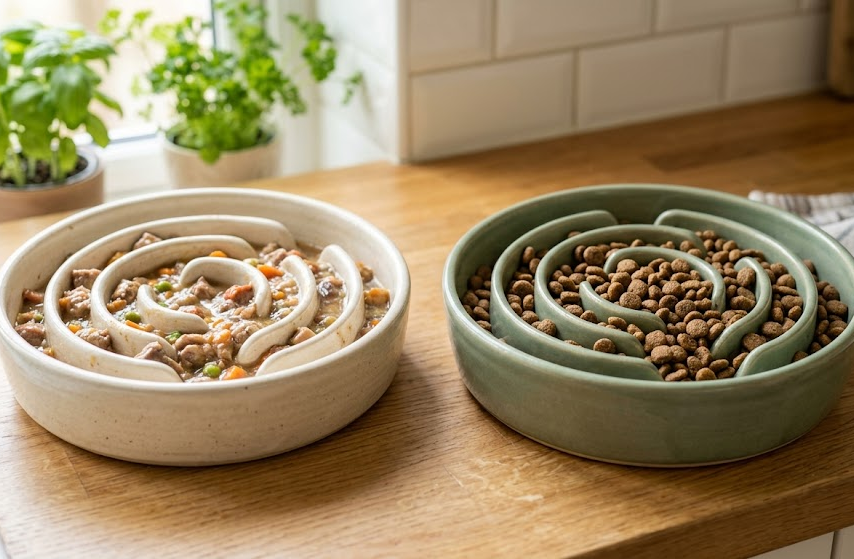
Slow feeder dog bowl wet food use: choose smoother channels
If you serve wet food often, prioritize rounded grooves and simpler layouts. Wet food spreads into corners, so deep puzzle-style mazes can trap residue and make daily cleaning annoying fast.
For owners who want flexibility, a stainless steel slow feeder bowl with a non-skid base is one of the more practical fits for mixed wet-and-dry use because the smoother metal surface is easier to rinse than many intricate plastic designs.
Dry food compatibility is more forgiving
Dry kibble works with a broader range of patterns because pieces do not smear into every corner. If you feed mostly kibble, you can tolerate deeper ridges and more complex shapes as long as the bowl size still matches your dog.
Mixed feeding routines need balance
If you alternate between kibble and wet meals, avoid bowls that are either too flat to slow dry food or too intricate to clean after soft food. Mixed feeding usually rewards moderate channel depth and simple, washable geometry.
Material comparison table
| Material | Best for | Strengths | Watch-outs |
|---|---|---|---|
| Stainless steel | Wet food, daily cleaning, long-term durability | Easier to sanitize, less odor retention, sturdy feel | Fewer pattern shapes, may need a non-slip ring |
| Silicone insert | Dogs that already have a bowl, mixed feeding, travel | Flexible, lighter, easier to adapt into an existing bowl | Can shift if fit is poor, not always ideal for extreme gulpers |
| Plastic full bowl | Budget buying, many pattern choices, dry kibble use | Lots of maze options, easy to find sizes | Can trap residue or scratches over time, quality varies |
| Ceramic slow feeder dog bowl | Home use where weight and appearance matter | Heavy, stable, often attractive on the floor | Can chip, often heavier, fewer good pattern options |
Stainless steel vs silicone vs ceramic
Stainless steel: best for practical daily use
A slow feeder dog bowl stainless steel option makes the most sense when cleanup is part of the buying decision, not an afterthought. Stainless steel handles repeated washing well, tends to release oily wet-food residue more easily, and often feels more durable for everyday use.
Silicone insert: best when you already like your current bowl
A slow feeder dog bowl insert works well when the dog already eats from a stable bowl and you just want to reduce speed. Inserts can be especially useful for wet food because simpler silicone patterns are often easier to flex and rinse clean.
The trade-off is stability. If the insert does not grip well, strong eaters may lift, shift, or partly defeat it.
Ceramic: best for stability, but not always for convenience
A ceramic slow feeder dog bowl can be stable and attractive, but it is not automatically the best everyday answer. Ceramic is heavier and can stay put well, yet it is less forgiving if dropped and sometimes comes with fewer truly practical slow-feeding layouts.
Size-by-dog-type guide
Small dogs
Small dogs usually need shallower bowls with narrower spacing. Oversized mazes can make them work harder than necessary and turn feeding into fussiness instead of slower eating.
Best traits:
- lower ridge height
- smaller bowl diameter
- shallow depth for short muzzles
- easy-access channels for tiny kibble or wet food portions
Medium dogs
Medium dogs are the easiest group to fit because many standard slow feeder bowl sizes work well. Focus more on eating speed and food type than on extreme depth.
Large dogs
Slow feeder dog bowls large breed buyers should care about footprint, base grip, and wall strength. Large dogs apply more pressure at mealtime, so a bowl that is too light or too narrow can slide, tip, or become useless quickly.
For larger dogs, choose:
- wider bowl diameter
- stronger non-slip base
- enough depth for full meals without overflow
- patterns that slow scooping without hiding food too deeply
Cleaning and dishwasher considerations
This section matters more than many people expect. A bowl that technically slows eating but is miserable to wash often gets abandoned.
Features that make cleaning easier
Look for:
- rounded channels instead of sharp interior corners
- fewer hidden pockets where soft food can dry
- dishwasher-safe labeling when you want daily convenience
- materials that do not hold greasy residue easily
- simple one-piece construction when possible
Why wet food changes the cleaning equation
Wet food creates the biggest difference in real-life use. Residue settles into seams, under inserts, and around deep ridges. That means wet food -> more residue -> higher cleaning burden, so the best slow feeder dog bowl for wet meals is usually the one you will actually keep washing properly.
Mistakes to avoid when buying
The most common buying mistakes are predictable:
- choosing the most complicated maze instead of the most suitable one
- ignoring bowl size and buying for the photo instead of the dog
- assuming all materials clean equally well after wet food
- picking a lightweight bowl for a large, forceful eater
- expecting an insert to solve stability problems in a slippery bowl
- buying a decorative bowl that looks good but is awkward to wash
A better buying rule is this: pick the simplest bowl that solves your real problem. If your dog is only a moderate fast eater, you do not need the hardest puzzle. If wet food and cleanup are your pain points, material and channel shape should beat novelty every time.
Feature checklist before you buy
Before you order, confirm these five things:
- the maze pattern matches your dog's eating speed
- the bowl size matches your dog's muzzle and meal volume
- the material suits your usual food type
- the base will stay put on your floor
- the bowl is realistic for your cleaning routine
FAQ
Can a slow feeder dog bowl be used for wet food?
Yes, but wet food works best in bowls with smoother, more open channels. Deep or complicated mazes can hold soft food in corners and make cleanup much harder.
Is stainless steel better than plastic for a slow feeder bowl?
For many owners, yes—especially when daily cleaning and wet food matter. Stainless steel is often easier to sanitize and less likely to hold odor or oily residue, though plastic bowls usually offer more pattern variety.
Do slow feeder inserts work as well as full bowls?
They can work very well when the insert fits tightly inside a stable bowl. They are usually best for dogs that need moderate slowing, not the most extreme gulpers.
How hard are slow feeder bowls to clean?
It depends on the pattern and the food. Simpler layouts are usually easy to rinse, while deep maze bowls used with wet food can become tedious if you wash them every day.
Summary takeaway
The best slow feeder dog bowl is not the most dramatic-looking one. It is the bowl that matches your dog's eating speed, handles your usual food type, and stays easy enough to clean that you will still like using it every day. For fast eaters on wet or mixed meals, prioritize smoother channels, stable bases, and practical materials over gimmicky maze complexity.