 Bird Supplies
 Bird Accessories
 Bird Cages & Carriers
 Bird Feeders
 Bird Nests & Beds
 Bird Toys
 Feeding Supplies
 Automatic Feeders
 Feeding Mats
 Pet Bowls
 Slow Feed Bowls
 Water Dispensers
 Grooming & Care
 Cleaning Tools
 Grooming Gloves
 Nail Clippers
 Pet Brushes
 Other
Other Pet Accessories
 Harnesses
 Leashes
 Tags
Tags Pet Apparel
 Cat Apparel
 Pet Costumes
 Pet Diapers
 Pet Life Jackets
 Pet Homes & Crates
 Cat Trees & Scratching Furniture
 Dog Crates
 Indoor Pet Houses
 Pet Beds & Houses
 Pet Carriers
 Small Pet Habitats
 Pet Toys
 Cat Toys
 Dog Toys
 Interactive Toys
 Plush Toys
 Reptile Supplies
 Reptile Accessories
 Reptile Feeders & Bowls
 Reptile Habitats & Terrariums
 Reptile Heating & Lighting
 Reptile Hideouts & Decor
 Reptile Humidity & Climate
 Portable Water Bottles
 Travel Bags
Pet Ramp for Bed or Car: What to Check Before You Buy One
A **bed ramp** and a **car ramp** solve different problems, so buyers should compare **height, incline, traction, portability, and pet size** before choosing one. In most homes, a pet ramp for bed use can be shorter and more furniture-friendly, while a pet ramp for car use usually needs to be longer, sturdier, and easier to carry.
If your pet struggles with jumping, the right ramp can reduce daily joint stress and make routines safer. But many shoppers buy the wrong style because they focus on the word *ramp* and not the actual use case. A ramp that works beside a bed may feel too steep at the back of an SUV, and a heavy-duty folding car ramp may be overkill in a bedroom.
Quick answer: what should you check first?
- **Use location first:** a pet ramp for bed use and a pet ramp for car use need different lengths and build styles.
- **Measure the height:** taller surfaces need longer ramps to keep the incline manageable.
- **Check traction:** the ramp surface should help paws grip, not slide.
- **Match the weight capacity to your pet:** especially for large dogs or nervous pets that climb slowly.
- **Think about portability:** car ramps often need folding designs and handles.
- **Consider stairs only in the right case:** stairs can work for confident pets and lower furniture, but they are not always the best choice for seniors or dogs with mobility issues.
Summary takeaway
Choose a bed ramp if your priority is stable everyday access to furniture at a moderate height. Choose a car ramp if your priority is safer entry into a vehicle, better portability, and a gentler angle for a higher climb.
Bed ramp vs car ramp: what changes?
| What to compare | Pet ramp for bed | Pet ramp for car |
|---|---|---|
| Main goal | Easy daily access to beds or couches | Safe entry into cars, SUVs, or trucks |
| Typical ramp length | Shorter to medium | Usually longer to reduce steepness |
| Surface needs | Soft or carpet-like grip for indoor paws | High-traction surface that still grips if paws are dusty or damp |
| Portability | Often stays in one place | Often needs to fold, lock, and store easily |
| Best for | Senior pets, small dogs, cats, and repeat daily use | Travel, larger height differences, and heavier dogs |
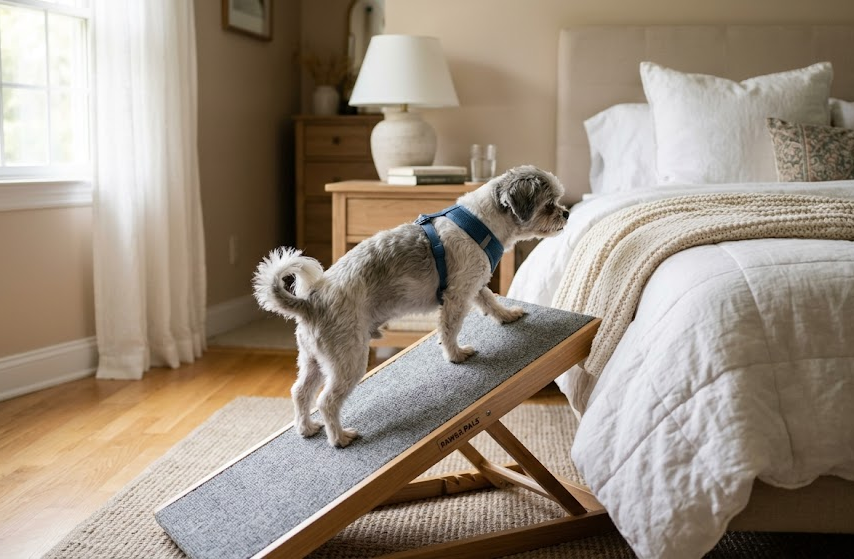
A bed ramp is usually about routine and comfort. It sits in the same place, gets used multiple times a day, and needs to feel stable enough that a hesitant pet will trust it. A car ramp is more about portability and height management. It often gets set up outside, moved often, and used at a steeper overall climb if the vehicle is tall.
Ramp length, height, and incline basics
The higher the target surface, the more important ramp length becomes. A short ramp placed against a tall bed or SUV creates a sharper incline, and that steeper angle can make climbing harder for both small dogs and large dogs.
Simple incline rule
A **longer ramp usually feels easier and safer** because it spreads the climb over more distance. For many pets, especially seniors, dogs recovering from strain, and cautious cats, a gentler incline matters more than a compact footprint.
Measurement checklist
- Measure from the floor to the top of the bed, couch edge, or car cargo area.
- Check how much floor space you actually have for the ramp to extend outward.
- Ask whether your pet walks confidently on sloped surfaces or prefers shallow climbs.
- For very high vehicles, avoid short ramps that force a steep takeoff angle.
- For bedroom use, make sure the ramp length still fits the room without becoming a tripping hazard.
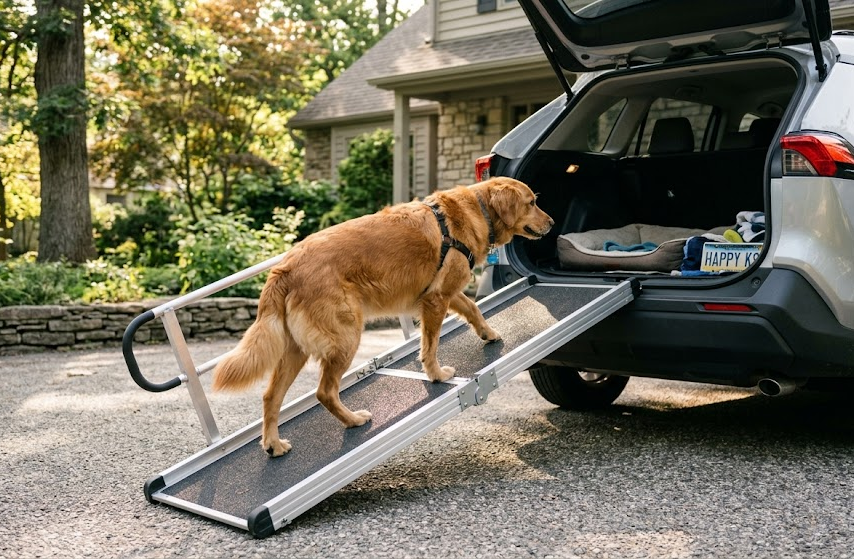
If you are shopping for vehicle access, a longer folding design such as this folding pet ramp for cars, trucks, and SUVs makes more sense than a short indoor-style ramp because the extra length and side rails better match the height and travel use case.
Grip and surface traction features
Traction is one of the easiest details to underestimate. A ramp can look sturdy, but if the surface is slick, many pets will hesitate halfway up or slide while coming down.
Good traction features include:
- textured carpet or dense fabric for indoor use
- ribbed or high-grip walking surfaces for outdoor or vehicle use
- side rails or raised edges that help pets stay centered
- a base that does not shift on tile, wood, or pavement
A bed ramp often benefits from a softer walking surface because pets use it barefoot inside the home and may step on it while sleepy. A car ramp needs dependable grip even when the ramp is set up on dirt, asphalt, or a damp driveway.
Weight capacity and pet size fit
A ramp should not just support your pet’s body weight on paper. It should feel secure when the pet moves slowly, pauses midway, or shifts its weight sideways.
Pet ramp for small dogs
Small dogs and cats often need a surface they can trust more than an extreme load rating. Look for a ramp with close-set traction, stable footing, and a height that does not overwhelm short legs.
Pet ramp for large dogs
A pet ramp for large dogs needs more than a bigger number on the label. The frame should feel rigid, the joints should not wobble, and the ramp should stay planted during use. Large dogs also benefit from longer ramps because their joint load rises quickly on steep climbs.
Best-for scenarios
- **Best for senior small dogs:** a lower, stable bed ramp with soft traction and a gentle incline
- **Best for large dogs getting into SUVs:** a longer foldable car ramp with strong weight capacity and side rails
- **Best for dogs and cats sharing furniture access:** an indoor ramp with secure footing and a quiet surface
- **Best for travel-focused owners:** a portable pet ramp that folds flat and locks securely
Foldable vs fixed ramps
A fixed ramp often feels sturdier for daily indoor use. If the ramp will stay beside a bed or couch, fewer moving parts can be a real advantage.
A foldable ramp is usually the better match for travel. It is easier to store in a trunk, move between vehicles, and keep out of the way at home. The trade-off is that folding joints and locks need closer attention, especially if your pet is heavy or hesitant.
Before buying, check:
- how the ramp locks when opened
- whether the hinge feels stable under weight
- how much the ramp itself weighs to carry
- whether the folded size fits your car or home storage spot
When stairs may be considered instead
Pet stairs may work when the furniture is not very high, the pet is confident, and the goal is compact indoor access. They can be convenient in smaller bedrooms where a long ramp would take too much floor space.
But stairs are not automatically easier. Many senior dogs, dogs with back concerns, and pets with weak rear legs do better on a ramp because a ramp allows a smoother walking motion and often less repeated impact.
If your pet hesitates on individual steps, needs a more gradual climb, or is using the setup several times every day, a ramp is often the safer choice.
Final buying advice
The best pet ramp is the one that matches the **actual climb**, not just the label on the product page. For bed use, think about furniture height, room space, and whether your pet wants stable everyday access. For car use, focus on ramp length, traction, portability, and how secure the ramp feels under real outdoor conditions.
If you compare those basics first, you will make a much better choice than shopping by price or appearance alone.
FAQ
Is a pet ramp for a bed different from one for a car?
Yes. A bed ramp usually prioritizes indoor stability, furniture height, and everyday convenience, while a car ramp usually needs more length, stronger portability, and better outdoor traction.
How long should a pet ramp be for a high bed?
A high bed usually needs a longer ramp than many buyers expect. The goal is to keep the incline gentle enough that your pet can climb without hesitation or heavy joint strain.
What ramp surface gives pets the best grip?
For indoor use, carpeted or textured fabric surfaces often feel secure. For car use, a non-slip textured surface with reliable paw grip and side guidance usually works better.
Can large dogs use foldable pet ramps safely?
Yes, if the ramp has a strong weight capacity, a rigid frame, dependable locking points, and enough length to avoid a steep climb. Large dogs need stability more than compact storage.