 Bird Supplies
 Bird Accessories
 Bird Cages & Carriers
 Bird Feeders
 Bird Nests & Beds
 Bird Toys
 Feeding Supplies
 Automatic Feeders
 Feeding Mats
 Pet Bowls
 Slow Feed Bowls
 Water Dispensers
 Grooming & Care
 Cleaning Tools
 Grooming Gloves
 Nail Clippers
 Pet Brushes
 Other
Other Pet Accessories
 Harnesses
 Leashes
 Tags
Tags Pet Apparel
 Cat Apparel
 Pet Costumes
 Pet Diapers
 Pet Life Jackets
 Pet Homes & Crates
 Cat Trees & Scratching Furniture
 Dog Crates
 Indoor Pet Houses
 Pet Beds & Houses
 Pet Carriers
 Small Pet Habitats
 Pet Toys
 Cat Toys
 Dog Toys
 Interactive Toys
 Plush Toys
 Reptile Supplies
 Reptile Accessories
 Reptile Feeders & Bowls
 Reptile Habitats & Terrariums
 Reptile Heating & Lighting
 Reptile Hideouts & Decor
 Reptile Humidity & Climate
 Portable Water Bottles
 Travel Bags
Why Your Pet Water Dispenser Stops Working and What to Check First
Why Your Pet Water Dispenser Stops Working and What to Check First
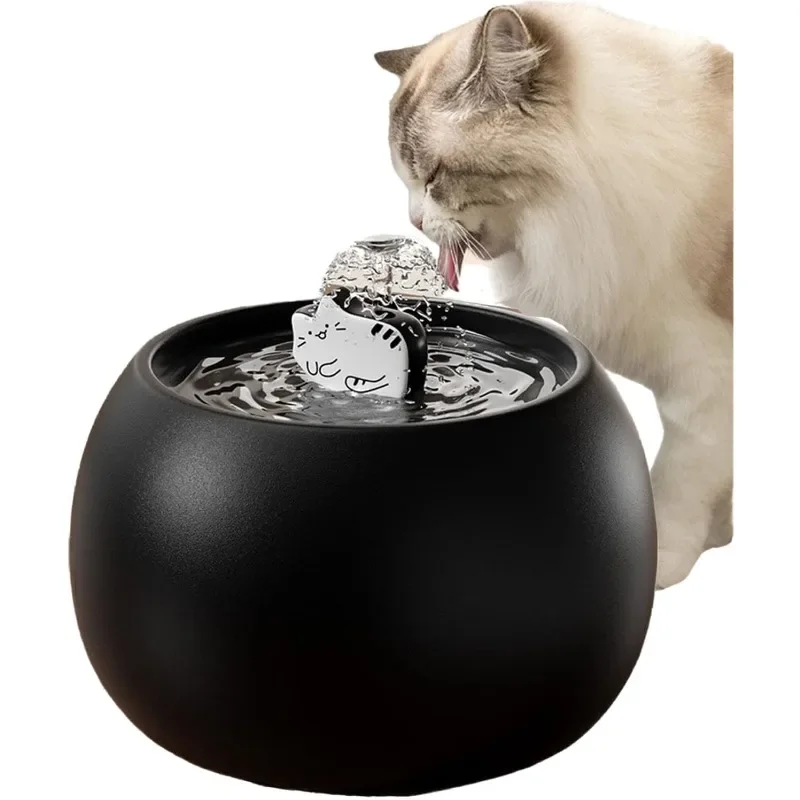
Most pet water dispensers stop working because of low water level, clogged filters, dirty pumps, or assembly issues, so those are the first things to check before you assume the whole unit is dead. In many cases, a **pet water dispenser not working** is a maintenance problem rather than a true motor failure.
If your **automatic pet water dispenser** suddenly stops flowing, sounds weak, or seems completely silent, the smartest move is to diagnose it in order. Start with water level, then check the **filter**, then open and clean the **pump**, and only after that decide whether the **motor** or the whole unit needs replacement.
Quick answer: the most common reasons a dispenser stops working
Here are the most common causes, in the order they are worth checking:
- **Low water level:** many pumps stop circulating properly when the intake is not fully covered.
- **Clogged filter:** a dirty **filter** can restrict flow and make the fountain seem weak or stalled.
- **Dirty pump:** hair, slime, and mineral buildup can jam the impeller inside the **pet water dispenser pump**.
- **Loose assembly:** lids, tubes, and intake covers that are slightly out of position can interrupt water movement.
- **Power issue:** unplugged USB cables, weak adapters, or loose connections can make the unit appear dead.
- **Worn motor:** if cleaning and reassembly do not restore flow, the **motor** may be failing.
Step-by-step checklist before you replace anything
- Refill the basin to the recommended water line.
- Remove and rinse the filter.
- Open the pump housing and clean the impeller area.
- Reassemble the unit carefully and confirm the lid and tubing sit correctly.
- Check the cable, adapter, and power source.
- Listen for humming, vibration, or intermittent restarting.
- Replace the pump or dispenser only after the earlier steps fail.
Summary takeaway
If your pet fountain stopped working, the fastest high-value fix is usually cleaning the pump and checking the filter, because **pump buildup -> weak flow** and **low water level -> pump strain** are far more common than sudden full-unit failure.
Symptom table: what the problem usually means
| Symptom | Likely cause | What to check first |
|---|---|---|
| No water flow at all | No power, stuck pump, or dead motor | Outlet, cable, adapter, and pump housing |
| Weak stream or slow bubbling | Low water level, dirty filter, or partial blockage | Water line, filter, intake slots, and tubing |
| Pump is noisy | Air in pump, buildup around impeller, or worn parts | Water level and pump cleaning |
| Works after cleaning, then fails again quickly | Filter saturation, recurring residue, or aging motor | Filter replacement schedule and pump wear |
Check water level, filter, and pump blockage first
When a **pet water fountain stopped working**, the biggest mistake is assuming the electronics failed right away. Most units first lose performance because the **water level** drops too low for steady intake, or because the **filter** and pump area collect enough debris to choke the flow.
1. Refill to the correct water level
A pump needs enough water around the intake to move water consistently. If the basin is too low, the fountain may:
- make a dry rattling sound
- pulse instead of flowing smoothly
- stop after a few seconds
- run hot and wear out faster
This relationship matters: **low water level -> air intake -> noisy or weak pump behavior**. Even if the unit still powers on, that does not mean it can circulate correctly.
2. Remove the filter and inspect for clogging
A soaked or dirty **water dispenser filter clogged** with hair, food dust, or residue can slow the stream so much that owners think the pump is failing. Take the filter out and check whether flow improves temporarily. If it does, the problem may be restricted filtration rather than a bad motor.
A useful test order is simple:
- run the unit briefly with a freshly rinsed filter
- if still weak, run a short test with the filter removed if the manufacturer allows it
- if flow improves sharply, the filter is the issue
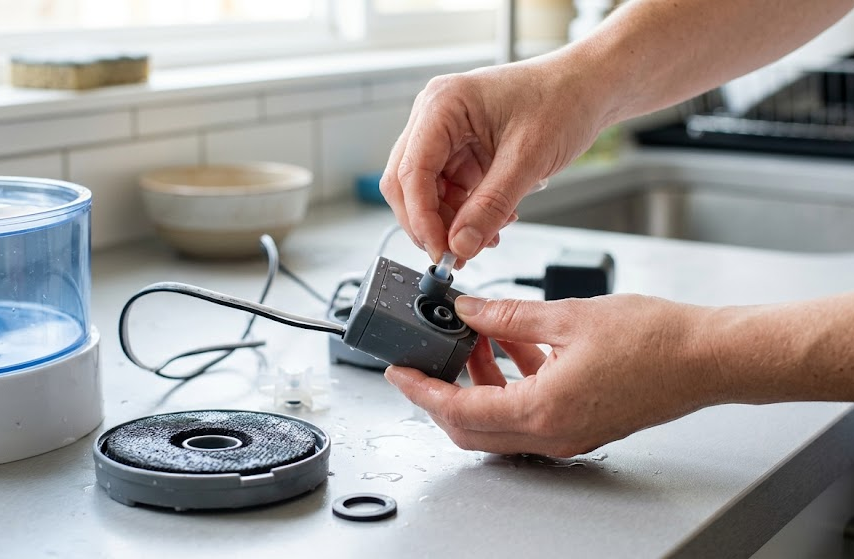
3. Open the pump and clean the impeller
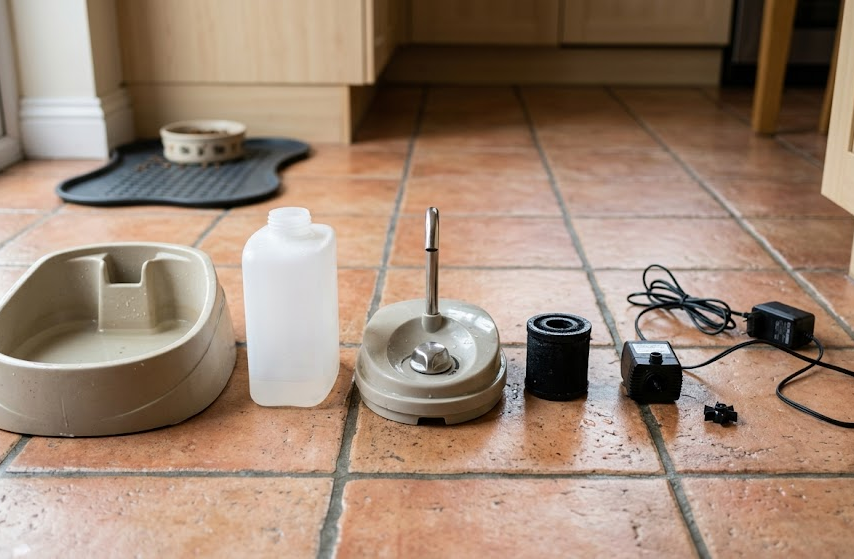
This is the step many owners skip, and it is often the one that fixes the problem. A **cat fountain pump fix** usually means opening the small front cover, removing trapped hair or slime, and cleaning the impeller chamber thoroughly.
Good **pet water dispenser instructions** should show how the impeller cover opens. If your model has been running for weeks without a deep clean, expect buildup even if the bowl itself looks clean.
How to inspect assembly and tubing alignment
A fountain can be fully powered and still fail because the parts are sitting slightly wrong after washing. That is why **pet water dispenser troubleshooting** should always include a quick reassembly check.
Common assembly problems
Look for these issues:
- the lid is not seated flat, so water cannot rise through the intended channel
- the tube is loose, bent, or not connected tightly to the pump outlet
- the intake cover is clipped on backward
- the pump is not resting flat in its slot
- the filter frame is inserted upside down or blocking the path
These are small alignment errors, but they matter because **assembly error -> broken water path** even when the pump is technically running.
A quick reassembly routine
After cleaning:
- seat the pump flat in the base
- reconnect any tube firmly
- reinstall the filter in the correct direction
- close the lid without forcing it
- refill the bowl before turning power back on
If the unit starts working again after this, you were dealing with an assembly issue rather than a broken component.
When cleaning solves the issue vs when replacement is smarter
Cleaning solves the issue when the dispenser returns to normal flow, runs quietly again, and stays stable for several days after reassembly. That usually means the real problem was dirt, trapped hair, or a filter restriction.
Replacement is smarter when you see a repeated pattern like this:
- the pump starts only after tapping it
- the motor hums but does not move water
- flow stays weak even with a new filter and correct water level
- the unit overheats or becomes unusually loud again almost immediately
- the same clogging symptoms return even after proper cleaning
If the rest of the fountain body is still in good shape, a replacement motor can make sense. A product like this replacement water fountain motor accessory is the kind of part worth comparing when the dispenser housing is fine but the **pet water dispenser pump** itself seems worn out.
If the body, lid, and pump all feel flimsy or the model has recurring issues, replacing the whole **automatic pet water dispenser** may be the less frustrating option.
Signs the motor or pump is failing
A true **motor** problem usually shows up after the easy fixes stop helping. Signs of likely pump failure include:
- no vibration or sound even though power is confirmed
- repeated stopping after a few seconds with proper water level
- grinding or harsh noise from the impeller chamber
- visible wear or wobble in the impeller
- inconsistent restarts after cleaning
The key difference is this:
- **dirty pump -> improves after cleaning**
- **failing motor -> briefly improves or does not improve at all**
That distinction helps you avoid buying a whole new dispenser when the problem is only residue, and it also helps you avoid wasting time on endless cleaning when the pump is clearly wearing out.
Maintenance habits that prevent repeat failures
The best fix for a **pet water dispenser not working** is often a better maintenance rhythm. Preventive care reduces both clogging and surprise pump wear.
A practical routine
| Task | Why it matters | Typical rhythm |
|---|---|---|
| Top off fresh water | Keeps intake covered and protects the pump | Daily |
| Rinse bowl surfaces | Reduces residue before it reaches the filter | Every few days |
| Deep-clean pump | Prevents impeller jams and noise | Weekly or by manufacturer guidance |
| Replace filter | Maintains water flow and filtration quality | Usually every 2 to 4 weeks |
Summary takeaway
In most homes, **cleaning habit -> better flow reliability** and **ignored pump maintenance -> repeat failures**. If you keep water level up, clean the pump regularly, and replace the filter on time, most fountain problems become easier to fix and less likely to come back.
FAQ
Why did my pet water dispenser suddenly stop working?
Most pet water dispensers stop suddenly because the water level dropped too low, the filter clogged, the pump got dirty, or a cable or assembly part came loose. Sudden failure does not always mean the motor is dead.
How do I clean a pet water dispenser pump?
Unplug the unit, remove the pump, open the cover if your model allows it, and rinse away slime, hair, and debris from the impeller chamber. A full pump cleaning is one of the most common fixes for weak or noisy flow.
When should I replace the filter in a pet water dispenser?
Most filters need replacement every 2 to 4 weeks, though the exact schedule depends on pet count, water quality, and manufacturer guidance. If flow improves when the filter is removed or rinsed, the filter is likely due for replacement.
How can I tell if the pump is broken?
If power is confirmed, water level is correct, the filter is clean, and the pump still does not move water or only works briefly after cleaning, the pump or motor may be failing.
Final recommendation
When your **pet water dispenser not working** becomes the problem of the day, resist the urge to replace the whole unit first. Check the **water level**, inspect the **filter**, clean the **pump**, and reassemble the fountain carefully in that order. Most failures come from maintenance or setup, and that means a calm diagnostic routine usually saves both time and money.