 Bird Supplies
 Bird Accessories
 Bird Cages & Carriers
 Bird Feeders
 Bird Nests & Beds
 Bird Toys
 Feeding Supplies
 Automatic Feeders
 Feeding Mats
 Pet Bowls
 Slow Feed Bowls
 Water Dispensers
 Grooming & Care
 Cleaning Tools
 Grooming Gloves
 Nail Clippers
 Pet Brushes
 Other
Other Pet Accessories
 Harnesses
 Leashes
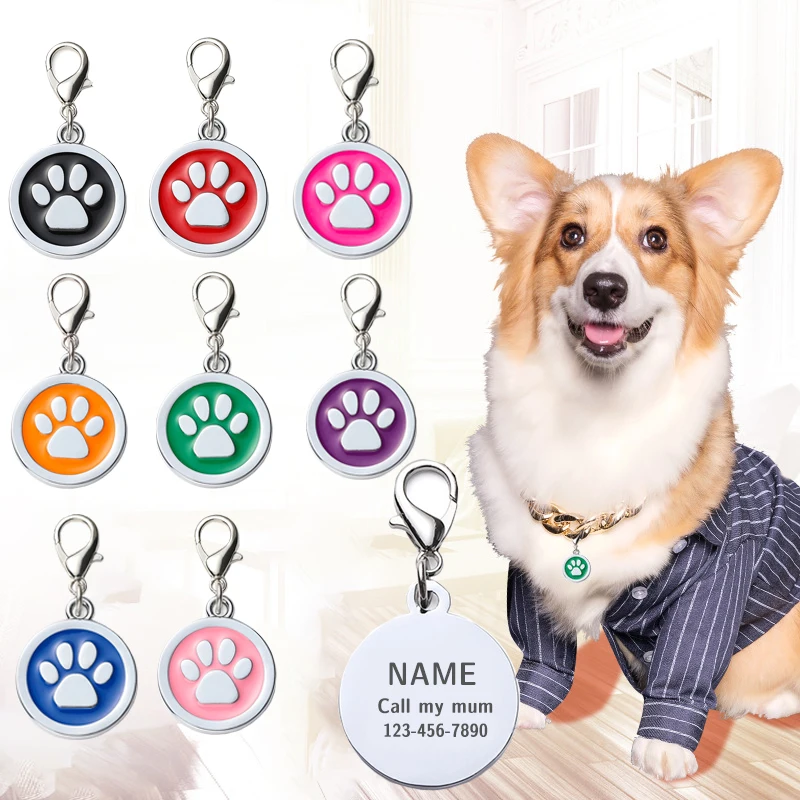 Tags
Tags Pet Apparel
 Cat Apparel
 Pet Costumes
 Pet Diapers
 Pet Life Jackets
 Pet Homes & Crates
 Cat Trees & Scratching Furniture
 Dog Crates
 Indoor Pet Houses
 Pet Beds & Houses
 Pet Carriers
 Small Pet Habitats
 Pet Toys
 Cat Toys
 Dog Toys
 Interactive Toys
 Plush Toys
 Reptile Supplies
 Reptile Accessories
 Reptile Feeders & Bowls
 Reptile Habitats & Terrariums
 Reptile Heating & Lighting
 Reptile Hideouts & Decor
 Reptile Humidity & Climate
 Portable Water Bottles
 Travel Bags
Collar or Harness for Puppy Training: Which Is Better for Leash Skills, Control, and Safety?
Collar or Harness for Puppy Training: Which Is Better for Leash Skills, Control, and Safety?
For most puppies, a well-fitted harness is the safer default for early leash training because it spreads pressure away from the neck and gives new owners better control during sudden pulling, stopping, or darting. A collar still matters for ID tags, short calm walks, and puppies that already handle leash pressure well, but for early leash skills and safety, most young dogs do better starting with a harness.
New dog owners often compare a puppy harness vs collar as if one option has to win in every situation. In reality, the better choice depends on training stage, your puppy’s walking habits, and how much control you need right now. The goal is not to buy the “stronger” piece of gear. The goal is to choose the setup that helps your puppy learn loose-leash skills without creating fear, choking pressure, slipping, or constant frustration.
Quick comparison: collar vs harness for puppy training
| Training need | Collar | Harness |
|---|---|---|
| Early leash training | Fair | Best choice for most puppies |
| Neck safety | Lower | Higher |
| Control during pulling | Lower | Better |
| Best for calm puppies already walking well | Good | Good |
| Best for puppies that lunge, zigzag, or spook | Limited | Better |
| ID tag attachment | Best | Often needs collar backup |
| Escape resistance | Depends on fit | Depends on fit, but better with secure design |
Best for by scenario
- Best for first walks: a soft, secure puppy harness.
- Best for puppies that pull or hit the end of the leash: a harness.
- Best for puppies that already walk calmly in low-distraction areas: a lightweight flat collar can be enough.
- Best for safety and identification together: use both a collar and a harness.
- Best for tiny puppies or sensitive necks: a harness with careful fit checks.
Why puppies need a different setup than adult dogs
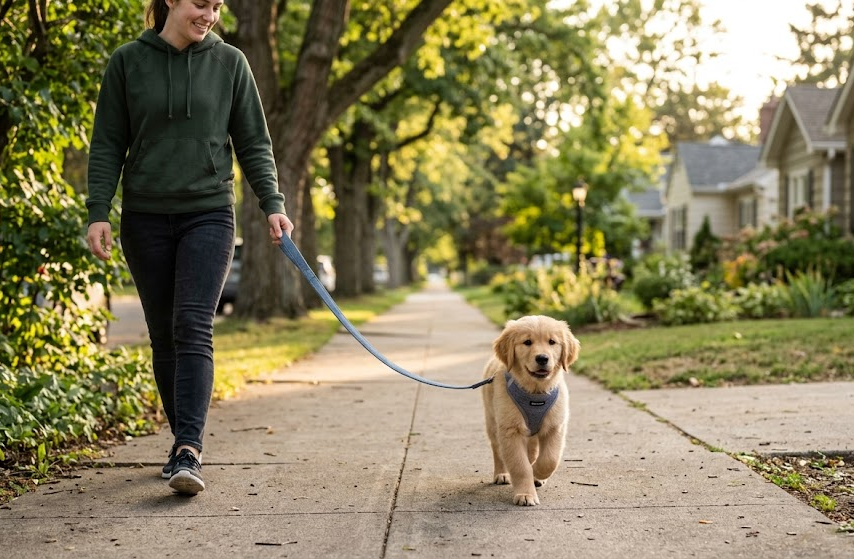
Puppies are not just smaller adult dogs. Their coordination is worse, their focus is shorter, and their reactions are less predictable. One second they are walking nicely, and the next they are bouncing sideways toward a leaf, freezing at a trash can, or trying to sprint toward another dog.
That matters because a puppy collar puts leash pressure directly on the neck. When a young dog is still learning leash pressure, stopping, turning, and following your pace, repeated tension at the throat can create discomfort and confusion fast. A puppy harness changes that pressure path. Instead of concentrating force around the neck, it distributes it across the chest and body, which is usually better for comfort and safety during early training.
A harness also helps when your puppy’s behavior is still inconsistent. Poor leash skills plus low impulse control usually means you need management before precision. In that phase, better body control often matters more than minimal gear.
When a collar is enough and when a harness is safer
When a collar is enough
A flat collar can be enough when all of the following are true:
- your puppy walks with only light leash tension
- your walking area is quiet and low-distraction
- your puppy does not lunge, panic, or try to back out
- the collar is lightweight, properly fitted, and used mainly for identification plus simple leash guidance
A collar is often the simpler option once leash skills are already developing well. It is lighter, less bulky, and easy to leave on for tags. For a calm puppy doing short practice walks, it can work just fine.
When a harness is safer
A harness is usually the safer choice when:
- your puppy is just starting leash training
- your puppy pulls hard or hits the leash suddenly
- your puppy startles easily
- you need better control crossing streets, passing dogs, or handling distractions
- your puppy has a delicate neck, toy-breed frame, or brachycephalic build
In those cases, a harness gives you a wider safety margin. It does not magically teach loose-leash walking, but it reduces the risk that training mistakes turn into neck strain or scary experiences.
How leash training goals change the best choice
The best answer to collar or harness for puppy training changes with the skill you are teaching.
Goal: teach calm following
If your main goal is to teach your puppy to walk next to you without forging ahead, a harness is often easier in the beginning. It gives you more control while you reward position, stop when the leash tightens, and restart when your puppy reconnects.
Goal: build tolerance for wearing gear
Some puppies accept collars easily but resist harnesses at first. In that case, short positive sessions matter more than forcing fast progress. Let your puppy investigate the gear, reward calm behavior, and practice wearing it indoors before the walk starts.
Goal: transition to simpler daily walking gear
A collar may become more practical later, once your puppy understands leash pressure and walks with less chaos. That is why many owners start with a harness for puppy leash training, then use a collar more often once the dog matures and the walking pattern becomes predictable.
Goal: improve safety in busy places
If you are training near cars, bikes, kids, or other dogs, control matters more than gear minimalism. In those environments, the harness usually wins because it gives you more secure handling when your puppy makes a sudden decision.
Best for by puppy training stage
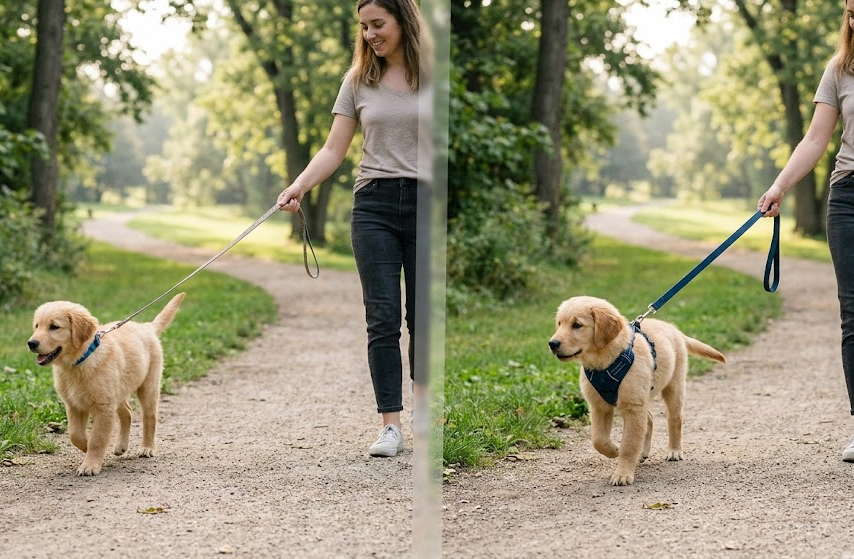
| Puppy stage | What is happening | Better starting choice | Why |
|---|---|---|---|
| First week on leash | stopping, zigzagging, sudden pulling | Harness | better comfort and control |
| Early loose-leash practice | learning to follow and reorient | Harness | safer while mistakes are frequent |
| Calm short walks in quiet spots | fewer abrupt pulls | Collar or harness | either can work if fit is right |
| Busy public walking | distractions and fast reactions | Harness | more control and less neck pressure |
| Mature puppy with reliable leash manners | smoother walking pattern | Collar often works | less management needed |
Fit mistakes that create rubbing, slipping, or poor control
Bad fit ruins both options. A poorly fitted puppy collar can be too loose and slip over the head, or too tight and create pressure all day. A poorly fitted harness can rub under the legs, shift sideways, or let a nervous puppy reverse out of it.
Collar fit checklist
- you should be able to fit two fingers under the collar
- it should not slide over the puppy’s head easily
- it should sit flat without twisting constantly
- tags should not be so heavy that they drag on a very small puppy
Harness fit checklist
- the chest piece should sit clear of the throat
- straps should not cut into the armpits
- the harness should stay centered while walking
- the puppy should not be able to back out when startled
- movement should look natural, not short or restricted
The fit-safety link is simple: poor fit reduces control, poor control creates more leash tension, and more leash tension increases the chance of frustration or injury.
Should puppies wear both a collar and a harness?
In many cases, yes. This is often the most practical setup.
Use the collar for identification and the harness for the leash attachment during training walks. That gives you the daily convenience of tags and the training safety of body-based control. It is especially useful for new puppy owners who want a safer training setup without giving up the basic security of visible ID.
This combination also helps during the transition stage. Your puppy can learn to wear both pieces of gear, and you can decide later whether the leash should stay on the harness full time or move to the collar for some calm walks.
Common mistakes when choosing puppy walking gear
- choosing by looks instead of fit and function
- using a collar for a puppy that constantly lunges or panics
- assuming a harness will fix pulling without training
- buying oversized gear “to grow into” right away
- skipping indoor practice before using new gear outdoors
- keeping the same fit even after a fast growth spurt
Growth changes everything with puppies. Gear that fit two weeks ago may already be rubbing, rotating, or becoming easy to escape.
Collar vs harness for puppy training: the practical answer
If you want the safest and most forgiving starting point, choose a harness. If your puppy already walks calmly, a flat collar may be enough for short, low-distraction outings. If you want the most flexible everyday setup, use both: a collar for ID and a harness for leash training.
The best puppy walking gear is the one that matches your dog’s current skill level, not the one you hope they will be ready for next month.
FAQ
Is a harness better than a collar for leash training?
For most puppies, yes. A harness is usually better for early leash training because it improves control and reduces direct pressure on the neck when the puppy pulls or stops suddenly.
When can a puppy walk on just a collar?
A puppy can often walk on just a collar once leash manners are calmer, the environment is low-distraction, and the dog is not lunging, choking, or trying to slip free.
How tight should a puppy harness be?
A puppy harness should be snug enough that your dog cannot back out, but loose enough for natural shoulder movement and normal breathing. Check fit often because puppies grow quickly.
Should puppies wear both a collar and a harness?
That is often the smartest setup for early training. The collar carries identification, while the harness handles leash pressure and control.
Summary takeaway
For early puppy leash training, a harness is usually the better tool for safety, control, and comfort. A collar still has an important role for ID and for puppies that already walk calmly, but most new owners should start with a well-fitted harness and add a collar as a simple backup for tags.