 Bird Supplies
 Bird Accessories
 Bird Cages & Carriers
 Bird Feeders
 Bird Nests & Beds
 Bird Toys
 Feeding Supplies
 Automatic Feeders
 Feeding Mats
 Pet Bowls
 Slow Feed Bowls
 Water Dispensers
 Grooming & Care
 Cleaning Tools
 Grooming Gloves
 Nail Clippers
 Pet Brushes
 Other
Other Pet Accessories
 Harnesses
 Leashes
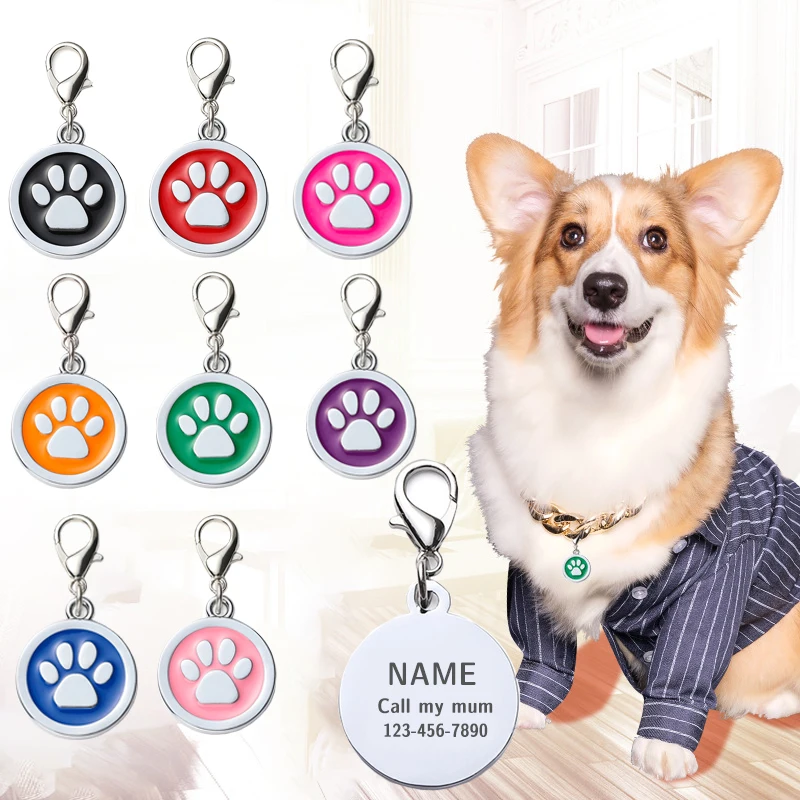 Tags
Tags Pet Apparel
 Cat Apparel
 Pet Costumes
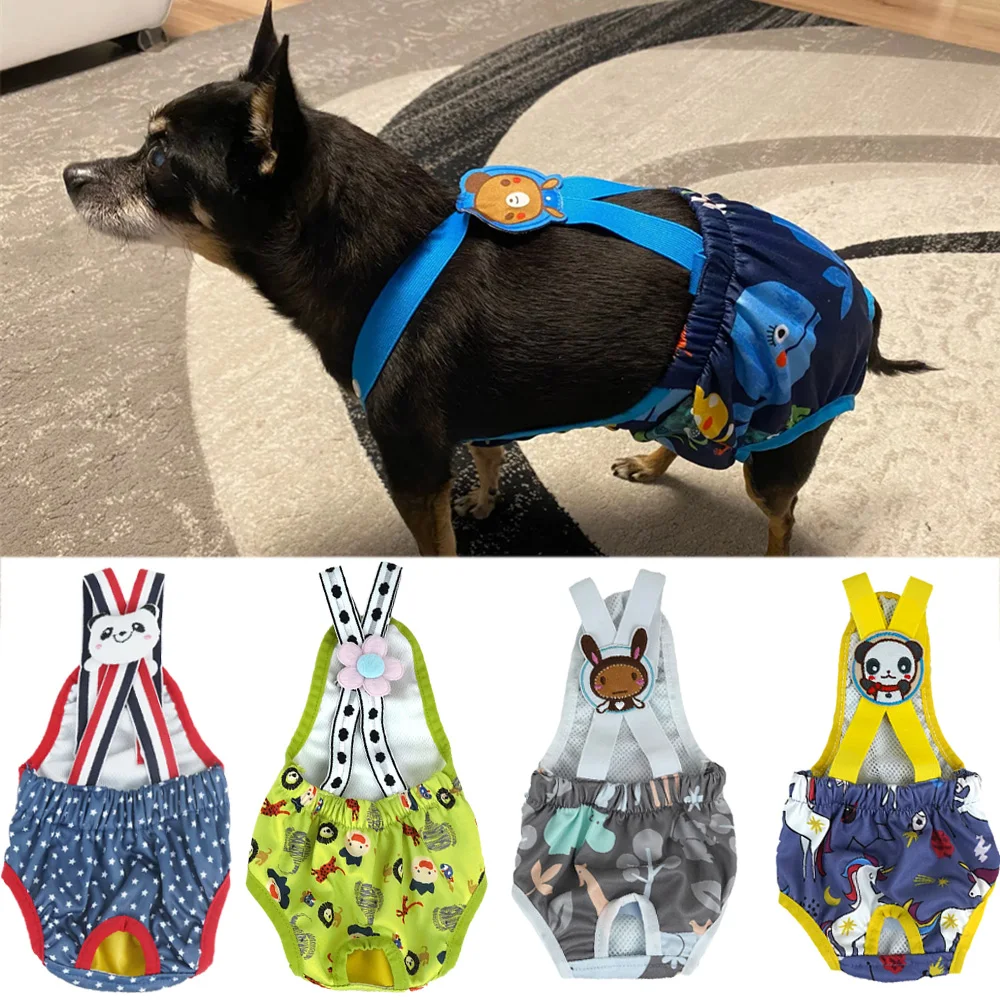 Pet Diapers
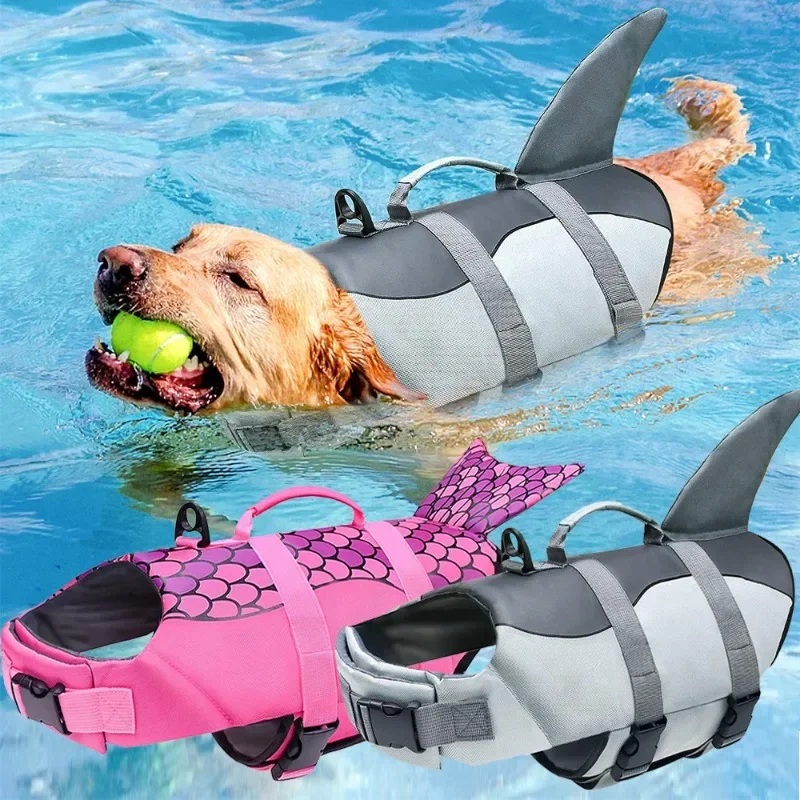 Pet Life Jackets
 Pet Homes & Crates
 Cat Trees & Scratching Furniture
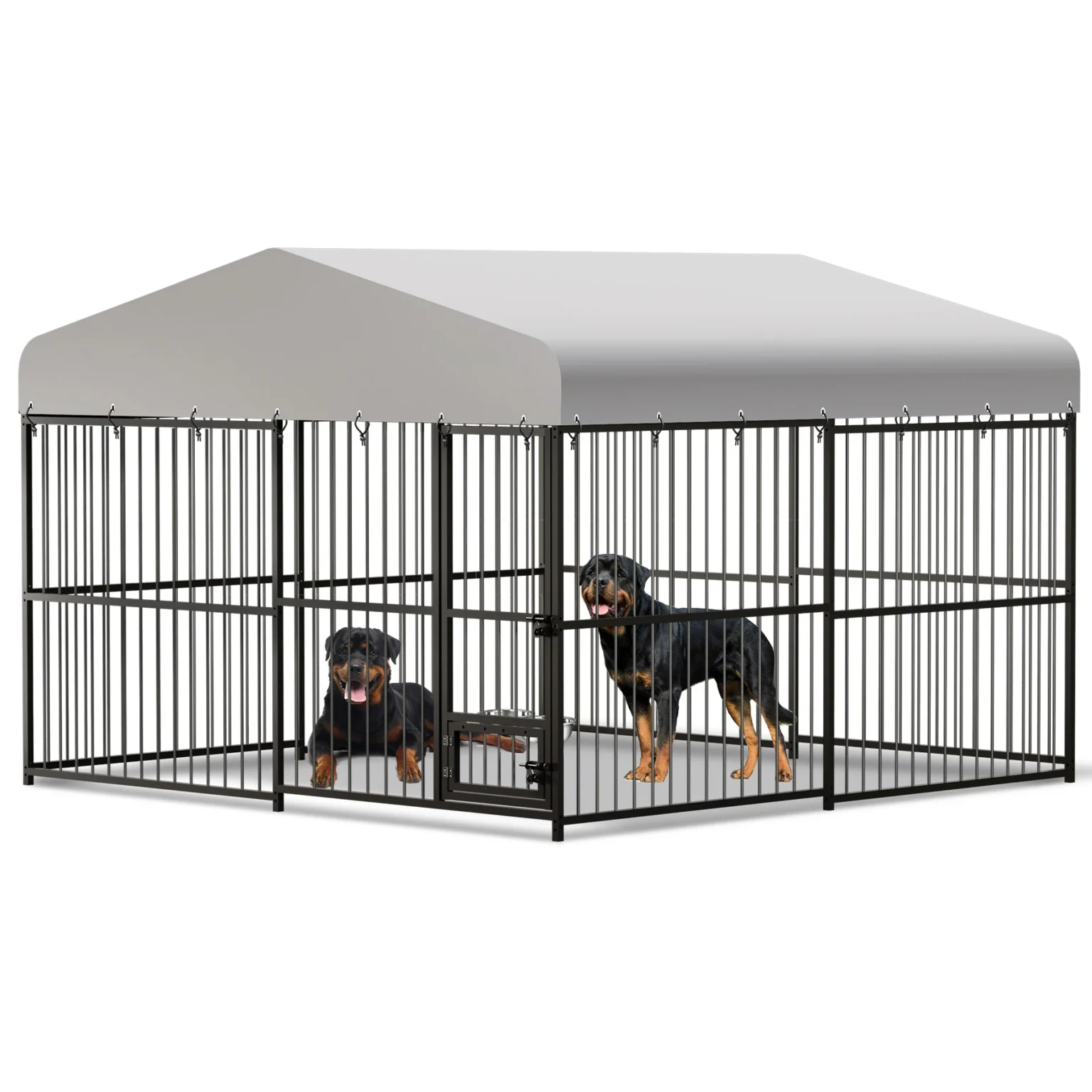 Dog Crates
 Indoor Pet Houses
 Pet Beds & Houses
 Pet Carriers
 Small Pet Habitats
 Pet Toys
 Cat Toys
 Dog Toys
 Interactive Toys
 Plush Toys
 Reptile Supplies
 Reptile Accessories
 Reptile Feeders & Bowls
 Reptile Habitats & Terrariums
 Reptile Heating & Lighting
 Reptile Hideouts & Decor
 Reptile Humidity & Climate
 Portable Water Bottles
 Travel Bags
Best Dog Leash Length for Puppies, Everyday Walks, and Recall Practice
Best Dog Leash Length for Puppies, Everyday Walks, and Recall Practice
A standard 4-to-6-foot dog leash length works best for most daily walks, while shorter leashes help with close control and long lines are better for recall practice in safe open areas. The right choice depends less on a single “best” number and more on your dog’s size, training stage, and how much freedom is actually safe in the situation.
Choosing the best dog leash length matters because too much slack can reduce control, while too little length can make walking uncomfortable and frustrating for both dog and handler. If you are deciding between a 4-foot leash, 6-foot leash, or a long leash for training, the safest answer is to match leash length to the job instead of expecting one leash to do everything.
Quick Answer: Which Dog Leash Length Should You Choose?
For most owners, a 6-foot leash is the best all-around option because it gives a good balance of freedom and control. A 4-foot leash works well in busier areas or with dogs that need closer guidance. A long line—often 10 to 30 feet or more—is best reserved for structured training, especially recall practice, in open and low-risk spaces.
If you want the simplest rule:
- Puppies: usually 4 to 6 feet for early guidance and safety
- Everyday neighborhood walks: usually 6 feet
- Busy sidewalks or high-distraction areas: often 4 feet
- Recall practice and distance training: long line, typically 10 to 30 feet
Dog Leash Length Chart
| Leash Length | Best For | Main Advantage | Main Caution |
|---|---|---|---|
| 3 to 4 feet | Close control, crowded walks, strong pullers in training | Keeps dog near you | Less freedom for natural walking |
| 5 to 6 feet | Everyday walks, most adult dogs, many puppies | Balanced freedom and control | Can feel long in crowded settings |
| 10 to 15 feet | Early distance work, hiking practice, supervised exploration | More room without full off-leash risk | Needs space and handler attention |
| 20 to 30+ feet | Recall practice, field training, open-space drills | Builds distance reliability | Unsafe on streets or crowded parks |
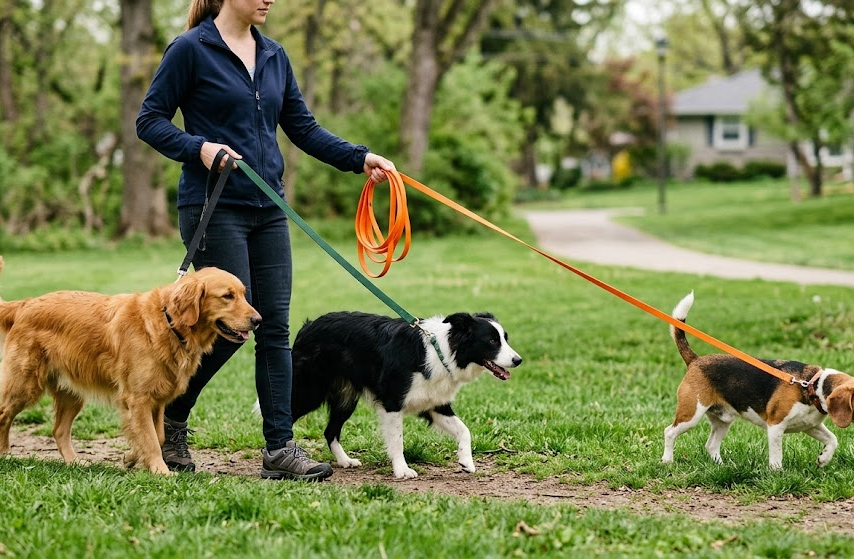
Common Leash Lengths and What Each Is For
4-Foot Leash
A 4-foot leash gives you tighter handling and is often the better pick when your dog is still learning walking manners or when your route includes parking lots, storefronts, apartment hallways, or crowded sidewalks. This is also a practical option for owners who want less drifting and quicker response.
That said, a shorter leash is not automatically better. For relaxed walks, some dogs end up feeling restricted on a very short leash, especially if they walk politely and do not need constant correction.
6-Foot Leash
The standard leash length for dog walking is usually 6 feet, and that reputation is well earned. It gives most dogs enough space to move naturally while still keeping them close enough for safe guidance. For owners who only want one main leash, this is usually the best starting point.
A 6-foot leash is especially useful for:
- neighborhood walks
- basic obedience practice during walks
- moderate-distraction environments
- dogs that are past the earliest puppy stage but still need structure
Long Line
A long line is not just a longer everyday leash. It is a training tool. Lengths such as 10, 15, 20, or 30 feet are used to practice distance behaviors like coming when called, checking in, and moving with more independence while still staying physically connected.
For recall practice, a long line can be one of the safest ways to build reliability before considering any off-leash freedom. But it should be used in open spaces, not on busy sidewalks or around tangled obstacles.
Best Leash Length for Puppies vs Adult Dogs
When people ask about the best dog leash length for puppy training, the answer is usually 4 to 6 feet—not because puppies need the shortest leash possible, but because they need safe, consistent guidance.
For Puppies
Puppies are still learning:
- where to walk
- how to respond to leash pressure
- how to stay engaged around distractions
- how to avoid darting, chewing, or wrapping around legs and objects
A leash around 4 to 6 feet usually makes those lessons easier. Very long lines can create too much chaos too early, especially if a puppy has poor focus or a habit of sprinting suddenly.
A best leash length for small dog puppies may lean closer to 4 feet in crowded areas because tiny dogs can cover less space safely and are easier to protect when kept near you. Larger-breed puppies often still do well with 6 feet, as long as the environment is manageable.
For Adult Dogs
Adult dogs vary more by behavior than age alone. A calm, leash-trained dog may do beautifully on 6 feet for daily walking. A strong dog that surges ahead may temporarily benefit from shorter working distance while training improves. A reliable adult dog in structured training may also use a long line for hiking, recall drills, or field work.
The better question is not “puppy or adult?” but “how much freedom can this dog handle safely in this situation?”
Everyday Walking vs Training vs Recall Practice
Scenario Guide: Match the Leash Length to the Task
Everyday Walks
For typical sidewalks, neighborhood loops, and casual outings, the best dog leash length is usually 6 feet. It gives dogs room to sniff, turn, and walk comfortably without constantly hitting the end of the leash.
Choose 6 feet when:
- your dog has basic walking manners
- the area is not extremely crowded
- you want one leash for daily general use
- you need a balance of comfort and control
High-Control Public Walks
Use a shorter leash—often around 4 feet—when the environment itself increases risk. Think traffic, crowds, outdoor shopping areas, vet parking lots, or any setting where letting your dog range farther creates avoidable problems.
Choose 4 feet when:
- you need quicker redirection
- your dog is excitable or still learning impulse control
- you are walking near cars, bikes, or heavy foot traffic
- your dog tends to zigzag or pull toward distractions
Recall Practice
For recall work, the leash should be long enough to create meaningful distance but not so long that you lose practical control. A 15- to 30-foot long line is common for this job.
Choose a long line when:
- you are teaching “come” in a field or open park area
- you want to reward check-ins from a distance
- your dog is not ready for off-leash reliability
- you need a safety backup during training
A long line lets you simulate freedom while keeping a safety connection. That makes it far better for recall practice than simply unclipping the leash and hoping for the best.
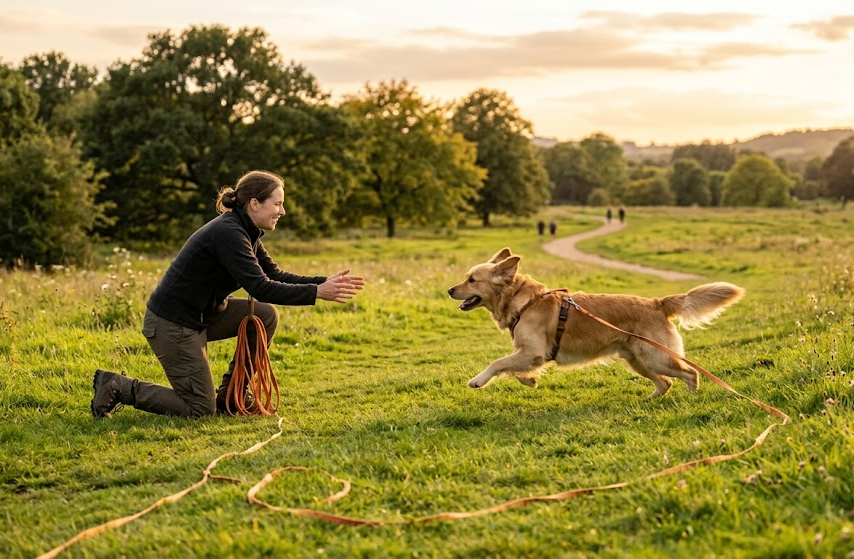
When a Long Line Is Useful and When It Is Not
A long leash for training is useful when you want to build skills at distance while keeping safety in place. It works well for:
- recall practice
- hiking manners in open areas
- boundary work
- proofing cues around mild distractions
- supervised sniffing and decompression in safe spaces
It is not a smart choice for:
- busy sidewalks
- crowded dog parks
- narrow trails with many people passing
- places with lots of trees, benches, or obstacles that can tangle the line
- dogs likely to bolt at full speed toward roads or hazards
Long lines are excellent tools, but they are not safer just because they stay attached to the dog. Used in the wrong setting, they can actually increase risk.
Safety Notes for Public Walks and Open Spaces
A good leash-length decision is always tied to safety. Keep these points in mind:
- Use shorter lengths when traffic, crowds, or distractions reduce your margin for error.
- Use long lines only where there is enough open space to avoid tangles and sudden hazards.
- Do not use extra leash length as a substitute for training.
- Check clips, stitching, and handle grip before outdoor sessions.
- Match the leash length to your dog’s current skill level, not your ideal future goal.
If you are unsure, it is better to choose slightly more control in public and save extra freedom for lower-risk environments.
How to Choose the Right Dog Leash Length
If you still feel stuck, use this simple decision framework:
1. Start with the environment. Busy public areas call for shorter practical control.
2. Consider your dog’s training stage. Puppies and impulsive dogs usually need a more manageable range.
3. Decide the purpose. Walking, loose-leash practice, and recall training are different jobs.
4. Err on the side of safety. More length is only helpful if you can still manage it well.
For most owners, this leads to a very simple setup: one 6-foot leash for everyday use and one long line for recall practice.
FAQ
What leash length is best for a puppy?
A leash between 4 and 6 feet is usually best for a puppy because it gives enough room to move while still keeping early walks and training manageable.
Is a 6 foot leash better than a 4 foot leash?
For most everyday walks, yes. A 6-foot leash usually offers a better balance of comfort and control, while a 4-foot leash is better when you need closer handling.
When should I use a long line for dog training?
Use a long line when practicing recall, distance cues, or supervised exploration in safe open areas where extra leash length will not create avoidable danger.
What leash length is safest for everyday walks?
For most dogs, a 6-foot leash is the safest and most practical everyday choice, though a 4-foot leash may be safer in crowded or high-traffic settings.
Final Takeaway
The best dog leash length depends on what you are asking the leash to do. A 6-foot leash is the best all-purpose choice for most daily walks, a 4-foot leash helps when close control matters, and a long line is the better tool for recall practice and other distance-training exercises in safe open spaces.
Instead of looking for one perfect number, match the leash length to the situation. That is what gives you the best balance of comfort, control, and safety.