 Bird Supplies
 Bird Accessories
 Bird Cages & Carriers
 Bird Feeders
 Bird Nests & Beds
 Bird Toys
 Feeding Supplies
 Automatic Feeders
 Feeding Mats
 Pet Bowls
 Slow Feed Bowls
 Water Dispensers
 Grooming & Care
 Cleaning Tools
 Grooming Gloves
 Nail Clippers
 Pet Brushes
 Other
Other Pet Accessories
 Harnesses
 Leashes
 Tags
Tags Pet Apparel
 Cat Apparel
 Pet Costumes
 Pet Diapers
 Pet Life Jackets
 Pet Homes & Crates
 Cat Trees & Scratching Furniture
 Dog Crates
 Indoor Pet Houses
 Pet Beds & Houses
 Pet Carriers
 Small Pet Habitats
 Pet Toys
 Cat Toys
 Dog Toys
 Interactive Toys
 Plush Toys
 Reptile Supplies
 Reptile Accessories
 Reptile Feeders & Bowls
 Reptile Habitats & Terrariums
 Reptile Heating & Lighting
 Reptile Hideouts & Decor
 Reptile Humidity & Climate
 Portable Water Bottles
 Travel Bags
Are Pet Grooming Gloves Worth It? Best Coat Types, Uses, and Limits to Know
Are Pet Grooming Gloves Worth It? Best Coat Types, Uses, and Limits to Know
Pet grooming gloves are worth it for light shedding, nervous pets, and bath-time grooming, but they are usually not the best standalone tool for thick coats or heavy matting. If you are wondering are grooming gloves any good, the honest answer is yes—for the right coat type and the right job. They are most useful as a gentle maintenance tool, not as a universal replacement for a brush, comb, or de-shedding tool.
For most shoppers, the buying decision comes down to one practical question: will a grooming glove solve your pet's actual coat problem, or just feel nicer to use? Once you look at coat type, shedding level, and your pet's tolerance for handling, the answer gets much clearer.
Quick answer: when grooming gloves are worth buying
Pet grooming gloves are usually worth buying if your dog or cat has a short to medium coat, sheds lightly to moderately, or dislikes the feel of a traditional brush. They are also useful during baths and for pets who need slow desensitization to grooming.
They are usually not the best buy if your pet has:
- a dense double coat that needs deep undercoat removal
- long fur that tangles easily
- mats or compacted knots
- heavy seasonal shedding that overwhelms soft rubber nubs
In other words, a grooming glove works best as a comfort-first grooming tool. A brush works better when you need deeper coat reach, more pulling power, or better detangling.
Pros and cons at a glance
What grooming gloves do well
- feel less intimidating than many brushes
- collect loose surface hair during calm daily sessions
- help some nervous pets accept grooming more easily
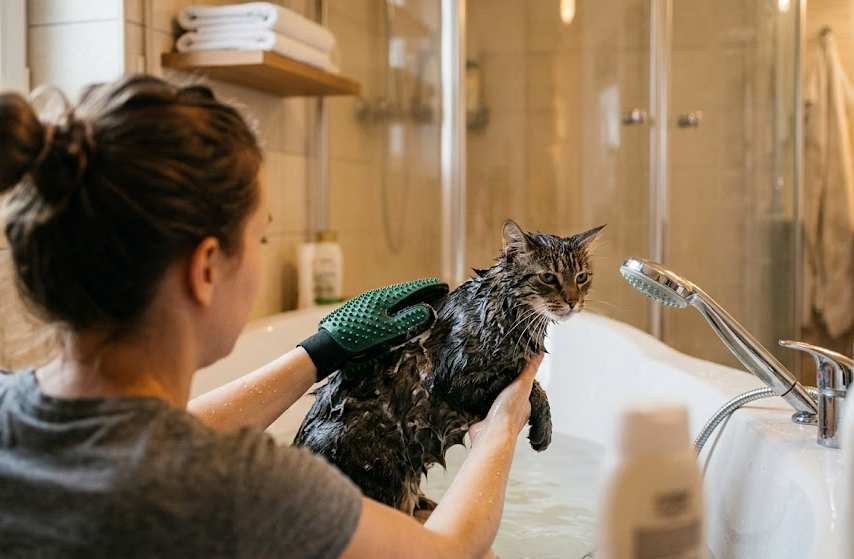
- work well for bath-time scrubbing with shampoo
- let you groom hard-to-reach or sensitive areas more gently
Where grooming gloves fall short
- they do not remove mats well
- they struggle with thick undercoats
- results can be inconsistent on long or curly coats
- they often need more passes than a proper brush
- some gloves trap fur poorly when the material quality is weak
Best coat types and pet temperaments for gloves
Best fit: short coats and smooth coats
Grooming gloves for dogs and grooming gloves for cats tend to work best on pets with short, sleek, or smooth coats. Think short-haired cats, Labrador-type coats, Beagles, Boxers, or similar coat textures where loose fur sits close to the surface.
Why? Because the glove's rubber or silicone tips mainly lift hair that is already near the top layer. On a short coat, that can feel surprisingly effective. On a deeper coat, the glove often cannot reach far enough to do the real work.
If you want a low-pressure option for regular de-shedding on short coats, a pet grooming glove for gentle daily de-shedding can make sense as a simple everyday tool rather than a full grooming replacement.
Good secondary fit: medium coats and grooming-sensitive pets
A grooming glove can also be useful on medium coats when your real goal is light maintenance between fuller brush sessions. It is often a decent choice for pets that squirm, flatten their ears, or walk away when they see a slicker brush.
That makes gloves especially helpful for:
- rescue pets still learning to trust handling
- cats that tolerate petting better than tools
- puppies getting used to regular grooming
- older pets that need a gentler touch around bony or sensitive areas
Weak fit: long coats, curly coats, and dense double coats
This is where many pet grooming glove review complaints come from. The glove itself is not necessarily bad—it is just being asked to do work it is not built for.
If your pet has a Husky-style undercoat, a doodle-type curly coat, or long silky fur that tangles, a glove usually underperforms compared with a de-shedding brush, slicker brush, pin brush, or comb. It may remove some top-layer fur, but it often leaves the deeper coat issues untouched.
Coat-type guide: what to expect by coat category
| Coat type | Are grooming gloves worth it? | Why |
|---|---|---|
| Short, smooth coat | Yes, usually | Good for loose surface hair and daily maintenance |
| Medium straight coat | Sometimes | Useful between brush sessions, but not a full replacement |
| Long coat | Limited | Gentle surface grooming only; weak for tangles |
| Curly coat | Usually no as a standalone tool | Does not detangle deeply enough |
| Dense double coat | Usually no as a standalone tool | Weak undercoat reach during shedding season |
| Hairless or very sparse coat | Rarely needed | Better for massage or bathing than de-shedding |
Where grooming gloves underperform vs. brushes and combs
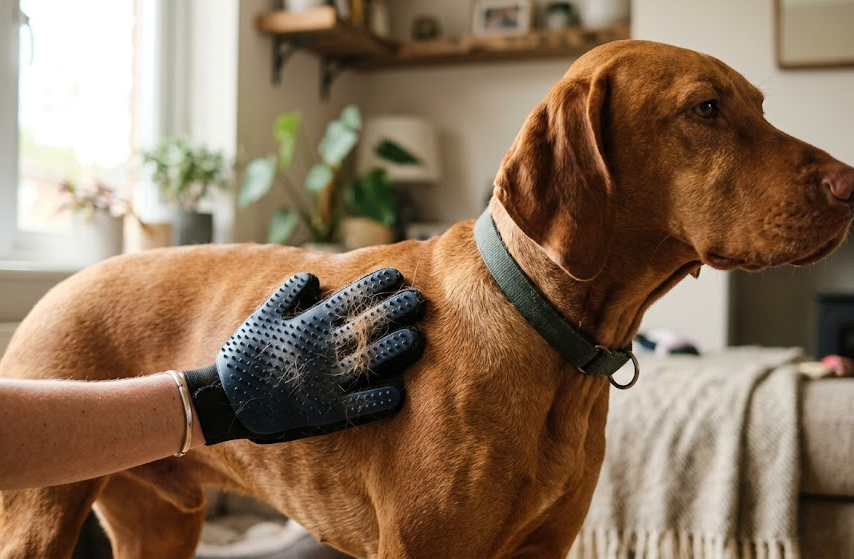
If your real goal is coat maintenance beyond light shedding, a brush usually wins for one simple reason: it reaches deeper and applies more structure.
Brushes are better for deep fur removal
A proper brush can separate fur, pull out more loose undercoat, and cover the coat more efficiently. That matters when your pet sheds heavily or has a coat that traps loose hair underneath the top layer.
Combs are better for tangles and finishing work
A grooming glove cannot replace a comb when you need to work through tangles, feathering, or small problem areas behind the ears, under the legs, or around the collar line.
Gloves are better for cooperation and comfort
This is the main reason gloves still earn a place in many grooming kits. For a pet that hates tools but tolerates petting, a glove can turn "no grooming at all" into "some grooming regularly." That alone can make it worth buying.
Shedding, bathing, and desensitization use cases
Light daily shedding control
If your pet leaves a manageable layer of fur on furniture but does not blow coat heavily, a grooming glove is often enough to reduce the daily mess. It will not replace more serious de-shedding sessions, but it can stretch the time between them.
Bath-time grooming
One of the best uses for a grooming glove is the bath. Soap, water, and the glove's texture often help loosen surface hair while making the wash feel more like rubbing than scrubbing. This is one area where gloves can genuinely outperform some brushes for ease of use.
Desensitization for nervous pets
For pets that distrust grooming tools, gloves are often a smart entry point. Because the motion feels closer to petting, they can help build tolerance before you introduce a brush or comb later.
Buying checklist: material, grip, and cleaning ease
If you are comparing the best dog grooming gloves or a grooming glove for short hair cats, focus on build details rather than hype.
1. Nubs and material quality
Soft silicone or rubber tips usually feel gentler and grab fur better than very stiff, cheap plastic-like surfaces.
2. Fit and wrist security
A loose glove slides around and reduces control. An adjustable wrist strap usually makes the glove more usable.
3. Hair release and cleanup
Some gloves peel off collected fur cleanly. Others make you pick hair out in clumps. That difference matters more than many listings admit.
4. Wet and dry usability
If you want one tool for both de-shedding and bathing, make sure the material is designed for both uses and dries reasonably fast.
5. Left/right hand and palm coverage
Some gloves are more like mitts with one active side. Others cover more of the palm and fingers, which can improve contact on curved body areas.
Are grooming gloves worth it for dogs vs. cats?
For dogs, grooming gloves are most worth it on short coats, mild shedders, and dogs that dislike firmer tools. For cats, they are often a good fit for short-haired cats that already enjoy petting and for timid cats that resist standard brushes.
They are less impressive for either species when the coat needs real detangling or undercoat management. So the better question is not whether grooming gloves for dogs or grooming gloves for cats are good in general. It is whether your pet's coat problem is light enough for a glove to solve.
FAQ
Are grooming gloves better for short-haired pets?
Usually yes. Short-haired pets are where grooming gloves tend to feel most effective because the glove can actually reach the loose surface hair without fighting through a dense or tangled coat.
Do grooming gloves remove mats?
No, not well. A grooming glove may glide over small snags, but it is not a mat-removal tool. For mats, tangles, or compacted undercoat, a proper brush or comb is the better option.
Can you use grooming gloves on cats and dogs?
Yes. Most grooming gloves can be used on both cats and dogs, but the results depend much more on coat type, shedding level, and temperament than on species alone.
Final takeaway
So, are pet grooming gloves worth it? Yes—when you buy them for the right reason. They are a sensible, low-pressure tool for light shedding, bath-time grooming, and pets that dislike standard brushes. They are not the best standalone answer for thick coats, deep de-shedding, or mat removal. If you want comfort and cooperation, a grooming glove can be a smart buy. If you need serious coat work, buy the brush or comb first and treat the glove as a helpful extra.