 Bird Supplies
 Bird Accessories
 Bird Cages & Carriers
 Bird Feeders
 Bird Nests & Beds
 Bird Toys
 Feeding Supplies
 Automatic Feeders
 Feeding Mats
 Pet Bowls
 Slow Feed Bowls
 Water Dispensers
 Grooming & Care
 Cleaning Tools
 Grooming Gloves
 Nail Clippers
 Pet Brushes
 Other
Other Pet Accessories
 Harnesses
 Leashes
 Tags
Tags Pet Apparel
 Cat Apparel
 Pet Costumes
 Pet Diapers
 Pet Life Jackets
 Pet Homes & Crates
 Cat Trees & Scratching Furniture
 Dog Crates
 Indoor Pet Houses
 Pet Beds & Houses
 Pet Carriers
 Small Pet Habitats
 Pet Toys
 Cat Toys
 Dog Toys
 Interactive Toys
 Plush Toys
 Reptile Supplies
 Reptile Accessories
 Reptile Feeders & Bowls
 Reptile Habitats & Terrariums
 Reptile Heating & Lighting
 Reptile Hideouts & Decor
 Reptile Humidity & Climate
 Portable Water Bottles
 Travel Bags
Hard vs Soft Cat Carrier: Which Is Better for Car Rides, Flights, and Everyday Vet Trips?
Hard vs Soft Cat Carrier: Which Is Better for Car Rides, Flights, and Everyday Vet Trips?
Hard cat carriers are usually better for structure, durability, and cleanup, while soft cat carriers are often better for portability and some travel scenarios, so the best choice depends on how you transport your cat most often.
If your cat mostly rides in the car, visits the vet, or needs a carrier that is easy to wipe down after accidents, a hard cat carrier is often the safer default. If you fly occasionally, need something easier to carry, or want a carrier that can fit under an airline seat when dimensions allow, a soft cat carrier may be the better pick. In short: choose the format that matches your most common travel scenario, your cat’s size, and how much structure your cat needs to stay calm.
Quick Answer: When a Hard or Soft Cat Carrier Is Better
| Travel scenario | Better choice | Why it usually wins |
|---|---|---|
| Car rides | Hard cat carrier | Stable shell, easy cleanup, more structure if the carrier bumps or shifts |
| Flights | Soft cat carrier | Lighter to carry and often easier to fit under a seat when airline rules allow |
| Everyday vet trips | Depends on your cat | Hard carriers are practical for cleanup; soft carriers are easier to store and carry |
| Nervous cats that need firm walls | Hard cat carrier | Rigid shape can feel more secure and less collapsible |
| Cats that resist being loaded | Hard cat carrier | Many hard models have top-loading access |
| Small spaces or apartment storage | Soft cat carrier | Easier to fold down and tuck away |
| Large cats | Usually hard, sometimes structured soft | Better weight support and less sag, though some reinforced soft carriers can work |
Summary takeaway
A hard cat carrier is usually the better all-around choice for routine car travel and messy vet-day realities, while a soft cat carrier is often the better option for portability and flights. The right answer changes when your cat is anxious, large, difficult to load, or you need compact storage.
Best Choice for Car Rides, Flights, and Local Vet Trips
For car rides: hard cat carriers usually make more sense
For most car travel, hard-sided carriers have the edge. A hard cat carrier keeps its shape if you set it on a vehicle seat or floorboard, and it is usually easier to secure around with a seat belt. The rigid shell also helps the carrier feel less floppy when you lift it in and out of the car.
That extra structure matters because car rides are full of small movements: turns, braking, a shifting blanket, a nervous cat pressing against the side. A hard carrier tends to stay more predictable through all of that.
Other reasons hard carriers often work better for car travel:
- plastic shells are easier to sanitize after motion sickness or accidents
- the base usually sags less under a cat’s weight
- side ventilation still gives airflow without the walls collapsing inward
- many models have top-load doors that make vet check-in less stressful
A soft carrier can still work for car travel, especially for calm cats and short trips. But if your cat panics, scratches hard at the sides, or tends to soil the carrier, the cleanup and stability advantages of a hard-sided carrier are hard to ignore.
For flights: soft cat carriers usually fit the travel reality better
Flights are where soft carriers often pull ahead. A soft cat carrier is lighter, easier to carry through an airport, and often has some give around the edges, which can help it fit under an airline seat when dimensions allow.
That flexibility is the main reason travelers often choose soft-sided carriers over hard ones. Airlines vary, so you still need to confirm the exact under-seat measurements and pet rules before buying. But in practical terms, soft carriers are more likely to match what in-cabin air travel demands.
If flying is your main use case, look for features like:
- a sturdy base insert so the carrier does not slump too much
- mesh panels for ventilation
- secure locking zippers
- shoulder strap comfort for airport walking
- dimensions that match the airlines you use most often
For that kind of use, an airline-approved soft cat carrier is a more natural fit than a bulky rigid crate, especially if your goal is occasional air travel rather than daily car transport.
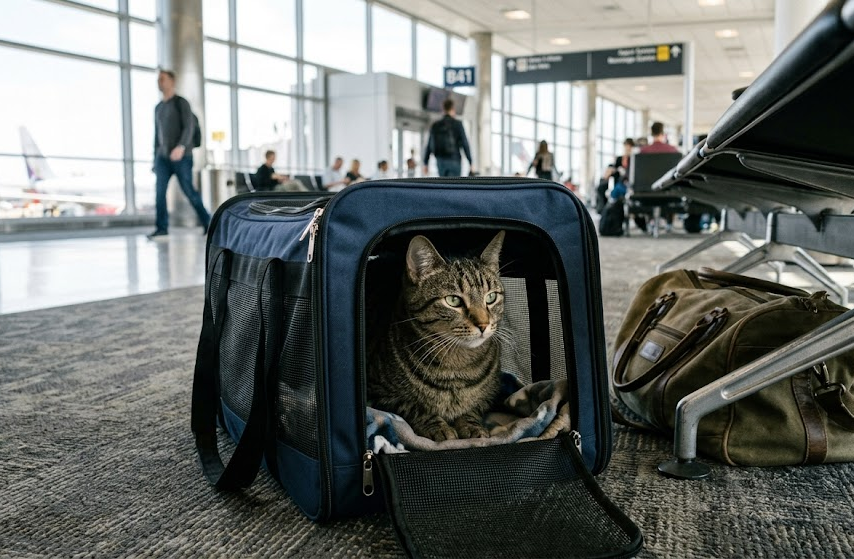
For everyday vet trips: choose based on stress level, cleanup, and storage
Everyday vet trips are where the decision gets less obvious. If your cat hates leaving the house, a hard-sided carrier may still be the better long-term tool because it gives more structure and is easier to clean. If your cat is relatively calm and you live in a small apartment, a soft carrier may be easier to grab, carry, and store.
A simple way to decide is this:
- choose hard if your cat gets carsick, fights being loaded, or has bathroom accidents under stress
- choose soft if your trips are short, your cat is calm, and storage space is limited
- choose a top-loading design if lifting your cat through a front opening is a recurring battle
Comfort, Structure, Ventilation, and Cleanup Differences
Structure and stability
A hard cat carrier gives you a fixed shape. That means the walls do not press inward when your cat leans on them, and the floor is usually more supportive for heavier cats. A soft cat carrier can feel cozier for some cats, but cheaper ones may sag or shift more than owners expect.
This is one reason large-cat buyers often end up preferring hard carriers or reinforced soft models: body weight changes how stable a carrier feels very quickly.
Comfort and noise sensitivity
Soft carriers can feel less exposed because the material is quieter and sometimes less echo-prone than plastic. For some cats, that makes the ride feel less harsh. For others, the opposite is true: they relax more when the carrier keeps a defined box shape and does not move with every bump.
Comfort is not just about padding. It is about how predictable the enclosure feels to your cat.
Ventilation
Both types can offer good ventilation, but the design quality matters more than the label. Hard carriers often have solid shells with vent slats. Soft carriers usually rely on mesh windows. Mesh can improve airflow and visibility, but it also creates more scratchable surfaces and may feel less protective for very reactive cats.
Cleanup after accidents
This is one of the clearest hard-vs-soft differences. Hard carriers are easier to wipe, rinse, and dry. Soft carriers can be washable, but fabric seams, mesh, inserts, and zippers make cleanup slower. If your cat commonly drools, vomits, or urinates under stress, a hard carrier is usually the more practical choice.
Hard Cat Carrier Pros and Cons
Pros
- strong structure for car rides and routine transport
- easier cleanup after accidents
- better support for larger or heavier cats
- often available with top-loading access
- durable shell for repeated use
Cons
- bulkier to store
- heavier and more awkward to carry long distances
- less flexible for under-seat airline travel
- can feel loud or exposed to some cats
Soft Cat Carrier Pros and Cons
Pros
- lighter and easier to carry
- easier to store in smaller homes
- often better for flights and airport walking
- can feel less harsh and less noisy for some cats
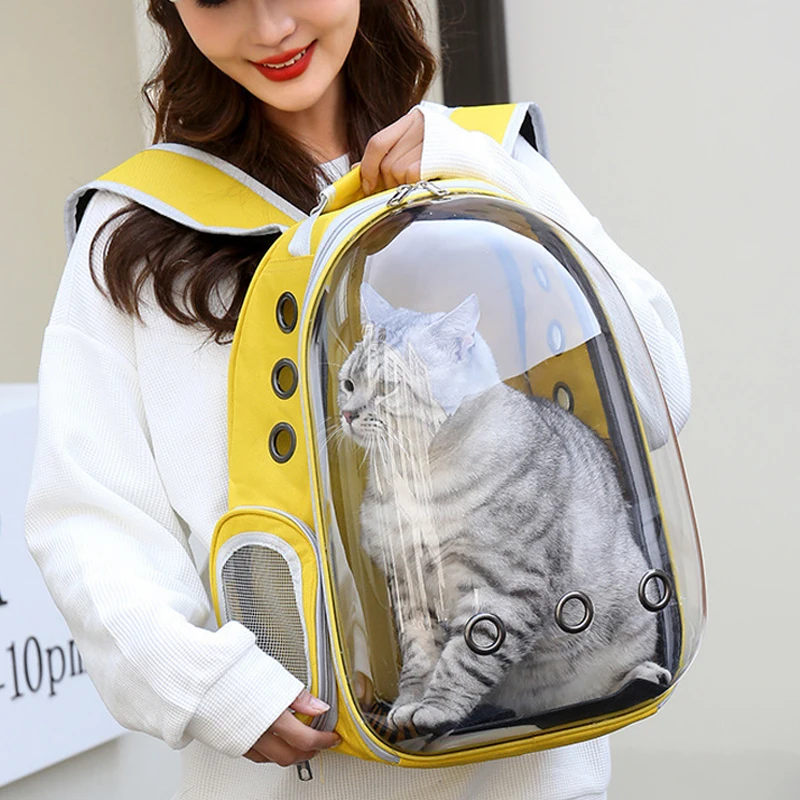
- available in backpack and wheeled formats for specialty use cases
Cons
- less structure if poorly reinforced
- harder to clean after messy trips
- can sag under larger cats
- mesh panels may wear faster under scratching
- not every soft carrier is suitable for airline use just because it looks compact
What Works Better for Anxious Cats or Large Cats?
Anxious cats: structure usually helps more than softness
Owners often assume a soft cat carrier is automatically more comfortable for nervous cats, but that is not always true. Many anxious cats do better in a hard carrier because the walls stay firm and predictable. A stable enclosure can reduce the sensation that the carrier is collapsing or swinging around them.
That said, some cats are more sensitive to noise and movement than to structure. If your cat settles better in a padded, enclosed-feeling space, a high-quality soft carrier with a firm base may work well.
A good rule: if your cat panics when the carrier shifts, choose more structure. If your cat hates hard surfaces and travels calmly, a soft carrier may be perfectly fine.
Large cats: do not underestimate weight support
A large cat carrier needs more than extra inches. It needs a base and sidewalls that still feel stable when your cat turns, braces, or lies down. This is where many soft carriers fall short.
For larger cats, hard carriers are often the safer recommendation because they keep their shape and distribute weight better. Some reinforced soft carriers can work, but you should check the base support, weight rating, and whether the carrier stays level when lifted.
If you are looking at a cat carrier backpack or a cat carrier on wheels, the same rule applies: comfort is meaningless if the carrier sags badly or throws your cat off balance.
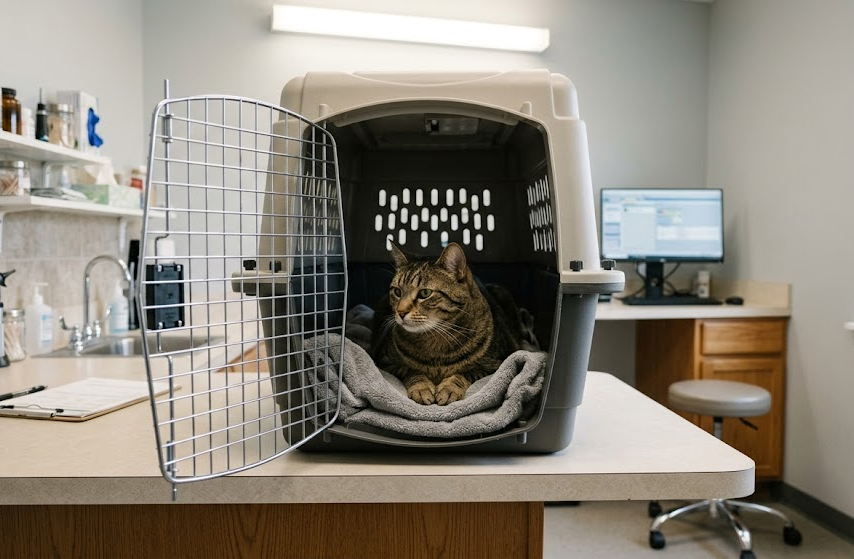
Storage and Portability Tradeoffs
If you have limited closet space, a soft carrier is much easier to live with. Many fold flat, weigh less, and are easier to carry with one hand. This is a real advantage for apartment living, rideshare trips, or owners who do not want a large plastic kennel in sight all week.
But portability has tradeoffs. A very portable carrier is not automatically the best cat carrier for car travel. A backpack model may help your hands, and a carrier on wheels may help in airports or long hallways, but those specialty formats are still best judged by the same basics: stability, ventilation, secure closures, and how your cat behaves inside them.
Checklist Before Buying a Carrier for Your Main Travel Scenario
Use this checklist before choosing between a hard cat carrier and a soft cat carrier:
- What kind of travel do you do most often: car rides, flights, or short vet trips?
- Does your cat get carsick, urinate from stress, or scratch hard at the sides?
- Is your cat small, average-sized, or large for a carrier?
- Do you need the carrier to fit under an airline seat?
- Do you have room to store a rigid carrier at home?
- Would top-loading access make loading easier?
- Does the base stay flat and supportive when lifted?
- Are the zippers, latches, and ventilation openings actually secure?
If most of your answers point toward structure, cleanup, and stability, go with a hard carrier. If they point toward portability, storage, and airline-style travel, go with a soft one.
Final Verdict
If you want one carrier for routine car rides, stressful vet visits, and easier cleanup, a hard cat carrier is usually the smarter buy. If your biggest priority is portability, compact storage, or occasional flights, a soft cat carrier often makes more sense.
Neither type is universally better. The best cat carrier for airplane travel is not always the best cat carrier for car travel, and the best everyday vet trip carrier depends heavily on your cat’s temperament. Match the carrier to the situation you deal with most often, and you will make a better choice than chasing a one-size-fits-all answer.
FAQ
Are soft cat carriers safe for car travel?
Yes, they can be safe for short car trips if the carrier is sturdy and secured properly, but hard carriers usually offer better structure and easier cleanup for routine car travel.
Is a hard carrier better for nervous cats?
Often, yes. Many nervous cats do better with a rigid shell because it feels more stable and predictable during movement.
Which cat carrier is better for flights?
Soft carriers are usually better for flights because they are lighter and more likely to work with under-seat cabin travel, but you still need to check the airline’s exact size and pet rules.
What carrier works best for large cats?
Large cats usually do best in a hard carrier or a very well-reinforced soft carrier with a strong flat base and realistic weight support.