 Bird Supplies
 Bird Accessories
 Bird Cages & Carriers
 Bird Feeders
 Bird Nests & Beds
 Bird Toys
 Feeding Supplies
 Automatic Feeders
 Feeding Mats
 Pet Bowls
 Slow Feed Bowls
 Water Dispensers
 Grooming & Care
 Cleaning Tools
 Grooming Gloves
 Nail Clippers
 Pet Brushes
 Other
Other Pet Accessories
 Harnesses
 Leashes
 Tags
Tags Pet Apparel
 Cat Apparel
 Pet Costumes
 Pet Diapers
 Pet Life Jackets
 Pet Homes & Crates
 Cat Trees & Scratching Furniture
 Dog Crates
 Indoor Pet Houses
 Pet Beds & Houses
 Pet Carriers
 Small Pet Habitats
 Pet Toys
 Cat Toys
 Dog Toys
 Interactive Toys
 Plush Toys
 Reptile Supplies
 Reptile Accessories
 Reptile Feeders & Bowls
 Reptile Habitats & Terrariums
 Reptile Heating & Lighting
 Reptile Hideouts & Decor
 Reptile Humidity & Climate
 Portable Water Bottles
 Travel Bags
How to Choose the Right Dog Harness Size and Fit for Everyday Walks
How to Choose the Right Dog Harness Size and Fit for Everyday Walks
The right dog harness size is the one that matches your dog's chest measurement first, sits snugly without pinching, and stays in place when your dog walks, turns, and pulls lightly on the leash. If you are wondering what size dog harness do I need, start with the chest girth, compare it to the brand's size chart, and then check the final fit using the two-finger rule and a short walk test.
A harness that is too loose can slip, rub, or let a dog back out. A harness that is too tight can restrict shoulder movement, create chafing behind the front legs, and make everyday walks uncomfortable. That is why learning how to measure dog harness size matters more than guessing based on breed name or buying the same size your dog wears in sweaters.
Quick answer: how should a harness fit a dog?
A dog harness should feel secure, even, and comfortable. In most cases, a good fit means:
- the chest strap sits around the widest part of the rib cage, not up in the armpits
- you can slide two fingers under the straps without forcing them
- the neck opening does not choke or press into the throat
- the back panel stays centered instead of twisting to one side
- your dog can walk, sit, and sniff naturally without the harness shifting or riding up
If the harness slides around easily, leaves deep marks, or changes your dog's gait, the fit is wrong even if the label says the size should work.
Why correct harness sizing matters
Good harness fit is not just about comfort. It affects safety, control, and whether your dog wants to wear the harness at all.
Safety on everyday walks
A loose harness creates escape risk, especially with nervous dogs, puppies, or dogs that back up when startled. If the chest strap hangs too low or the neck opening is too wide, a dog can slip out faster than many owners expect.
Comfort and movement
A poorly sized harness can rub under the front legs, press on the shoulders, or limit natural stride length. Over time, that can turn a simple walk into something your dog resists.
Better buying decisions
Sizing correctly before you buy helps you avoid return headaches and makes brand size charts easier to read. If you are shopping for an adjustable walking option, something like this adjustable reflective no-pull dog harness vest makes more sense once you already know your dog's chest range and fit priorities.
How to measure dog harness size correctly
When people ask how to measure dog harness size, the biggest mistake is relying on weight alone. Weight can help narrow the range, but chest size is usually the key measurement.
Step 1: Measure the chest girth
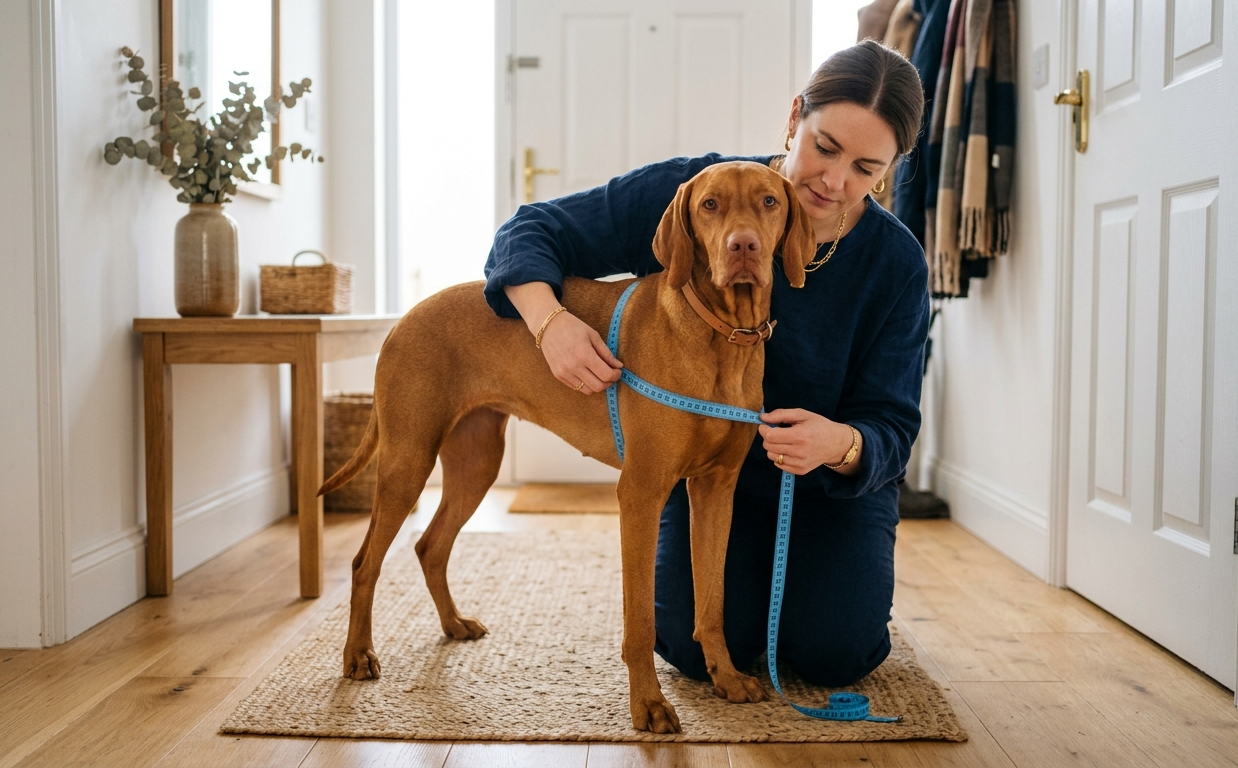
Wrap a soft measuring tape around the widest part of your dog's chest, usually just behind the front legs. The tape should sit flat against the coat without squeezing.
Tips:
- measure while your dog is standing, not sitting
- keep the tape snug but not tight
- write the number down in inches and centimeters if possible
- if your dog has thick fur, avoid compressing the coat too much
For most harness brands, this is the most important number on the dog harness size chart.
Step 2: Measure the lower neck if the brand asks for it
Some harnesses, especially step-in and over-the-head styles, also use a lower neck measurement. Measure around the base of the neck where the harness would actually sit, not high up where a collar rests.
This matters because a collar-sized neck can be misleading. A dog may have a slim collar size but still need more room at the lower neck opening of a harness.
Step 3: Check your dog's weight range
Weight is a supporting measurement, not the main one. Use it to confirm that your dog is generally in the expected size band. If the weight suggests medium but the chest measurement lands at large, follow the chest measurement first unless the brand clearly says otherwise.
Step 4: Compare your numbers to the brand chart
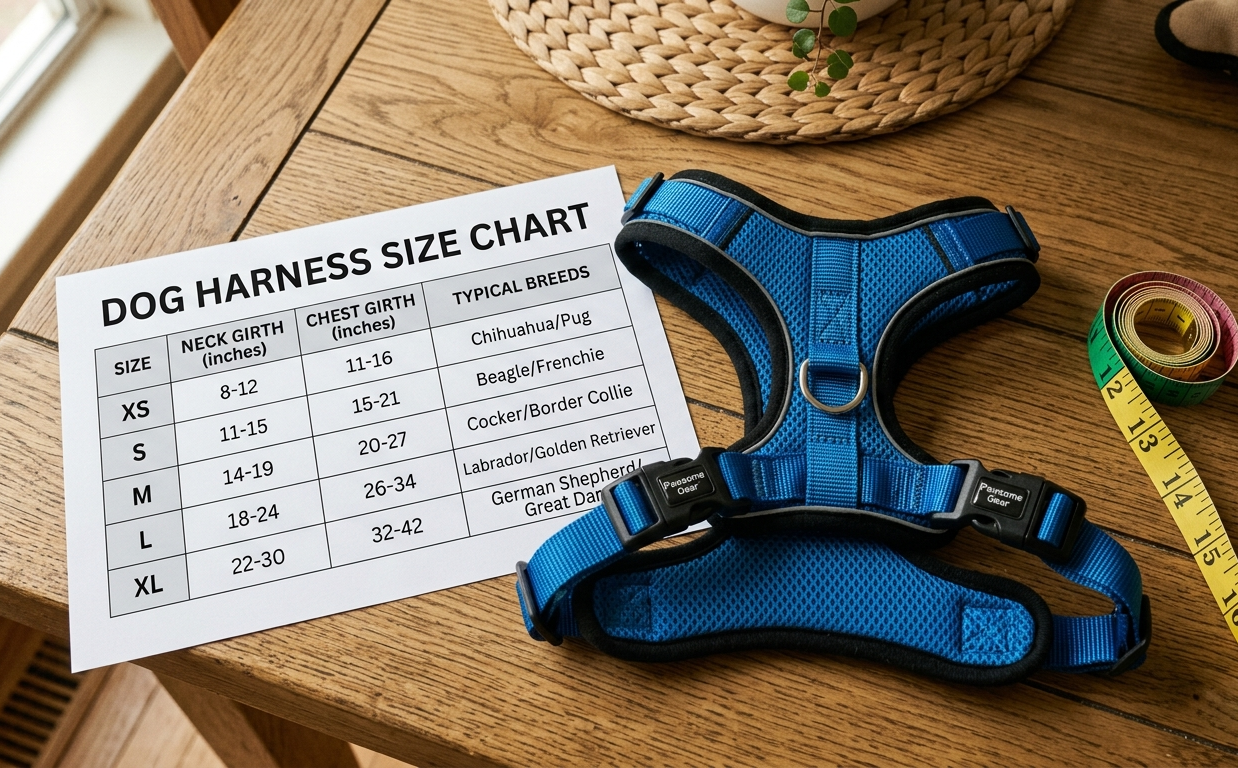
Now look at the specific brand's dog harness sizing chart. Do not assume a medium in one brand equals a medium in another. One brand's medium may start at a 20-inch chest while another's medium may top out there.
Step 5: If your dog is between sizes, decide based on build and adjustability
If your dog's chest falls between two sizes:
- size up if your dog is broad-chested, fluffy-coated, still growing, or the harness has limited adjustment
- size down only if the chart overlap is small and the harness offers plenty of room to loosen the straps safely
- be extra cautious with escape-prone dogs, because a slightly oversized neck opening is often a bigger problem than a snug adjustable chest strap
Dog harness size chart: how to read it without guessing
A dog harness size chart is useful only if you know what each measurement refers to. Some charts list chest only. Others combine chest, neck, and suggested weight. Read the labels carefully before choosing.
What the chart is really telling you
Most charts are trying to answer three questions:
- Will the chest strap wrap securely around the rib cage?
- Will the neck opening sit comfortably without gaping or choking?
- Is the dog's body type likely to work with this harness design?
Example of how to use a chart
If your dog measures:
- chest: 24 inches
- lower neck: 16 inches
- weight: 42 pounds
and the chart says:
- Medium: chest 20-24 inches
- Large: chest 24-28 inches
then you should not stop at the word "24." You also need to ask:
- Is your dog still growing?
- Is the coat thick?
- Does the harness have four adjustment points or only one?
- Is the neck opening fixed or adjustable?
If the harness has generous adjustment, the smaller size may give a more secure fit. If the neck opening is fixed or your dog is broad through the chest, the larger size may be the safer choice.
Signs a chart is not enough by itself
A chart alone is not enough when:
- your dog has a barrel chest or deep chest
- your dog is very slim through the waist
- your dog is between puppy and adult proportions
- your dog has a heavy coat that changes seasonally
- the harness design has unusual cut lines near the shoulders
Signs a dog harness is too tight or too loose
Knowing how to fit a dog harness matters just as much as measuring it.
Signs the harness is too tight
Watch for these clues:
- the straps leave obvious indentations after a short walk
- your dog resists moving forward or takes shorter steps
- the harness presses into the skin behind the front legs
- the chest panel sits so high that it crowds the throat area
- you cannot fit two fingers under the straps comfortably
A snug fit is good. A pinching fit is not.
Signs the harness is too loose
A harness is likely too loose when:
- the back strap slides from side to side
- the chest piece hangs low between the legs
- the neck opening gaps when your dog lowers the head
- the dog can back up and nearly slip one shoulder free
- the harness rotates during a normal walk
Loose harnesses often look fine indoors for thirty seconds and fail once the dog starts moving naturally.
Do a movement check, not just a standing check
After putting the harness on, ask your dog to:
- walk forward
- turn left and right
- sit
- sniff with the head lowered
- take a few light leash-pressure steps
If the harness stays centered and your dog moves normally, you are much closer to a correct fit.
Fit tips for puppies, deep-chested dogs, and strong pullers
Different body types change how a harness should fit.
Puppies
Puppies grow fast, so a perfect fit today may be too tight in a few weeks. Choose enough adjustment to accommodate growth, but do not buy so large that the puppy can step out of it now. For everyday walks, secure fit today still matters more than theoretical room for later.
Deep-chested dogs
Breeds with a deeper chest often land between standard sizes. In these dogs, chest depth and shoulder freedom matter more than breed-based assumptions. Look for a harness with multiple adjustment points and enough chest coverage to stay stable without cutting into the armpits.
Strong pullers
Dogs that pull hard expose bad fit quickly. A loose harness may shift and rub, while a tight harness may dig in under load. Strong pullers usually need a harness that stays balanced across the chest and back, with secure strap adjustment that does not loosen during use.
Long-haired or thick-coated dogs
Fluffy coats can make a harness seem tighter than it really is when you first measure, but they can also hide strap gaps. Run your fingers under the harness against the body instead of judging fit from the coat surface alone.
Common sizing mistakes to avoid
Many returns and fit problems come from the same avoidable mistakes.
Guessing by breed or age
Not all Labradors, French Bulldogs, or mixed-breed dogs fit the same size. Breed can suggest body type, but it is not a reliable replacement for measuring.
Using collar size as harness size
A collar sits higher and uses a different measurement zone. That is why collar size rarely answers the question, what size dog harness do I need.
Measuring too loosely
If the measuring tape sags or floats above the coat, you may size up unnecessarily and create escape risk.
Ignoring adjustment limits
A harness may technically list your dog's chest size, but if that measurement sits at the very end of the adjustment range, the fit may be less secure or less balanced than the next size up.
Skipping the walk test
Indoor fitting is only the first step. The real test happens once your dog walks, turns, and puts light tension on the leash.
Everyday harness fit checklist before you keep it
Use this quick checklist after the harness arrives:
- chest measurement matches the brand range
- lower neck opening sits comfortably at the base of the neck
- two fingers fit under the straps
- straps do not rub the armpits
- back panel stays centered
- harness does not twist during walking
- dog can sit, walk, and lower the head naturally
- no slipping when the dog backs up lightly
If several of these fail, the size or harness shape is probably wrong for your dog.
FAQ
What size dog harness do I need if my dog is between sizes?
Start with the chest measurement, then use build and adjustability to break the tie. Broad-chested dogs, fluffy dogs, and growing puppies often do better sizing up if the harness can still be adjusted securely.
How tight should a dog harness be?
Snug enough that it stays in place, loose enough that you can slide two fingers under the straps. It should not leave deep marks or restrict normal shoulder movement.
Is weight enough to choose a dog harness size?
No. Weight is only a supporting clue. Chest girth is usually the main measurement, and the lower neck may matter too depending on the harness design.
Why does a harness fit indoors but slip outside?
Because many loose harnesses only reveal problems during motion. Walking, turning, sniffing, and backing up show whether the fit is truly secure.
Final takeaway
The best way to choose the right dog harness size is to measure the chest carefully, read the brand-specific dog harness size chart, and confirm the fit with the two-finger rule and a short walk test. For everyday walks, the right harness should stay snug, centered, and comfortable—secure enough to prevent slipping, but never so tight that it limits movement.